


When we look at how rum is marketed, we often see brand “founding” dates several centuries in the past. To wit:
Bacardi 1862
Mount Gay 1703
Saint-James 1765
Worthy Park 1749
Brugal 1888
Angostura 1824
However, students of history need to distinguish between when a distillery started making rum and when that distillery name became a brand name. For example, the Mount Gay distillery dates to 1703, but “Mount Gay Rum” as a brand didn’t appear on store shelves until circa 1930.
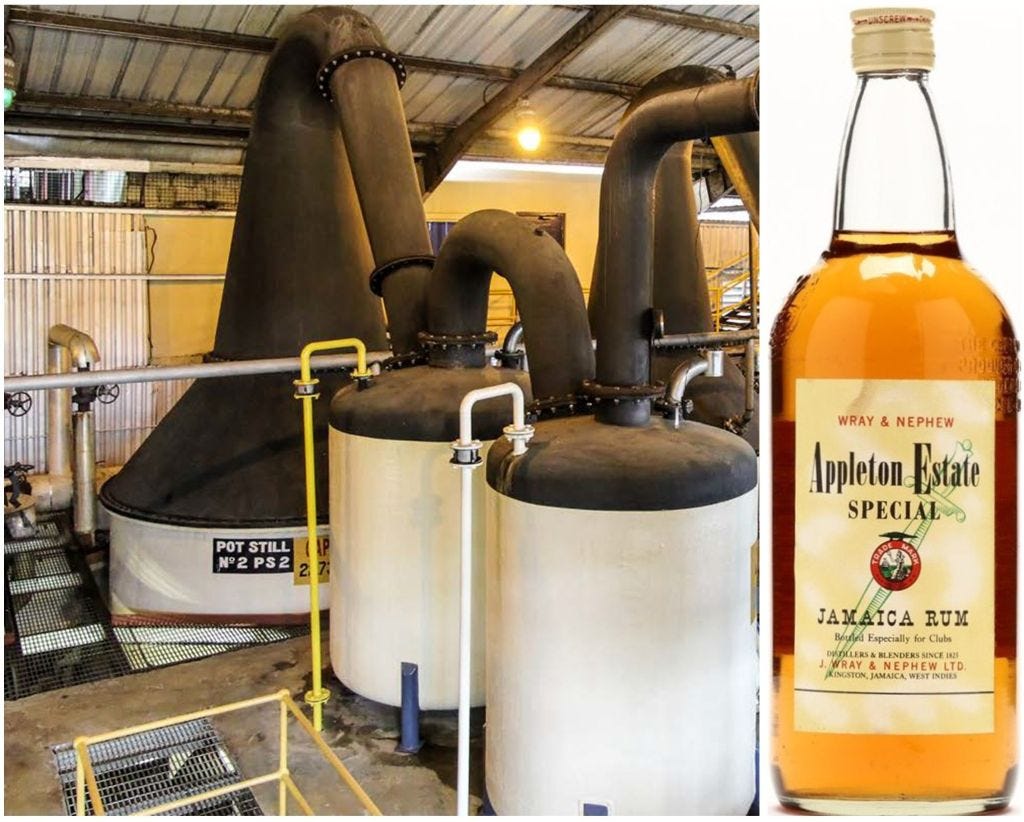
This brings us to Appleton Estate 1749. Like Mount Gay, Appleton Estate—the distillery, and Appleton Estate—the brand, are also separated by nearly 200 years. That itself isn’t surprising, but there’s an interesting story about the very early days of the Appleton Estate brand.
Let’s start with the now well-known basics. The Appleton distillery dates to 1749—or even earlier, per research by rum historian Ian Williams. Appleton Estate’s parent company, J. Wray & Nephew, pegs its start date to 1825, when John Wray opened a Kingston tavern.
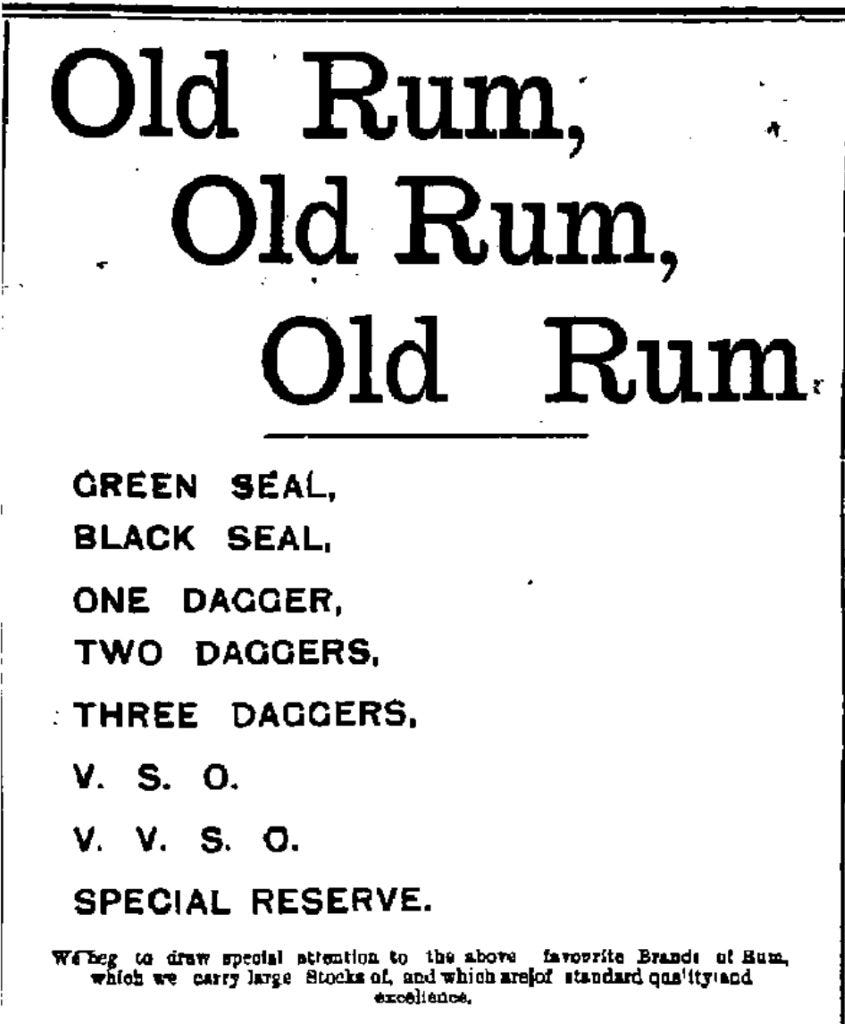
By the late 1800s, Wray & Nephew had become importers and merchants, buying and blending rums from various sources and selling them under the J. Wray & Nephew brand. No later than 1899, we see Wray & Nephew selling expressions like Green Seal, Black Seal, and Three Dagger.
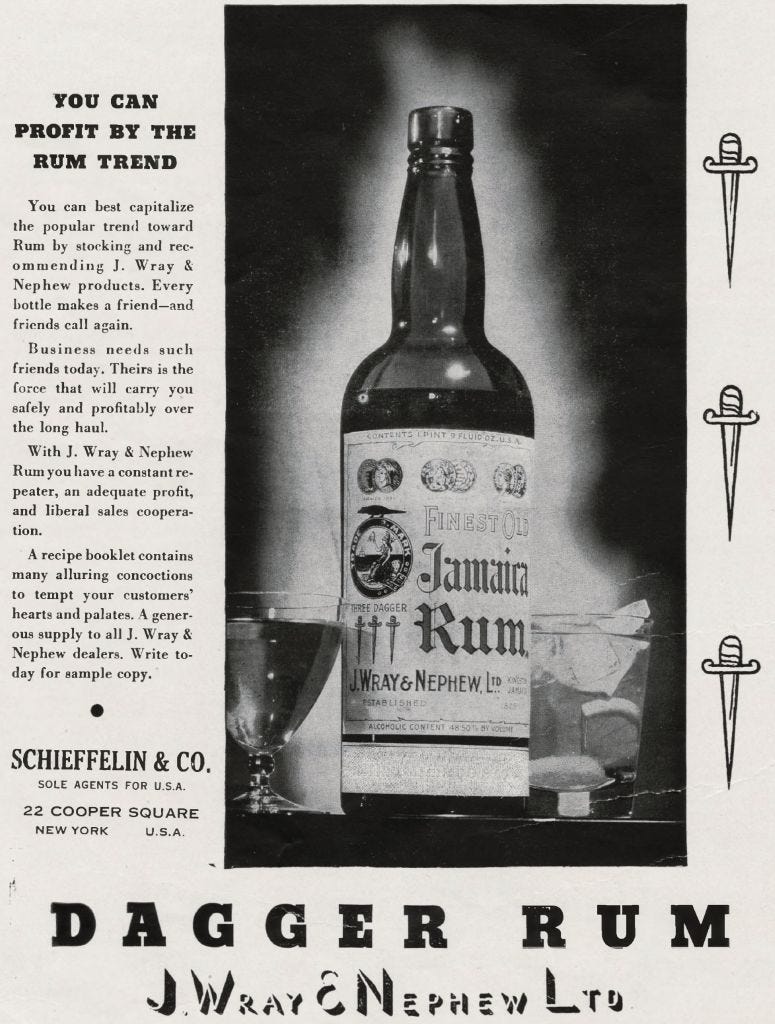
The Wray & Nephew brand underpinned all the company’s expressions, as seen in this 1938 advertisement for Three Dagger rum.
Enter Appleton
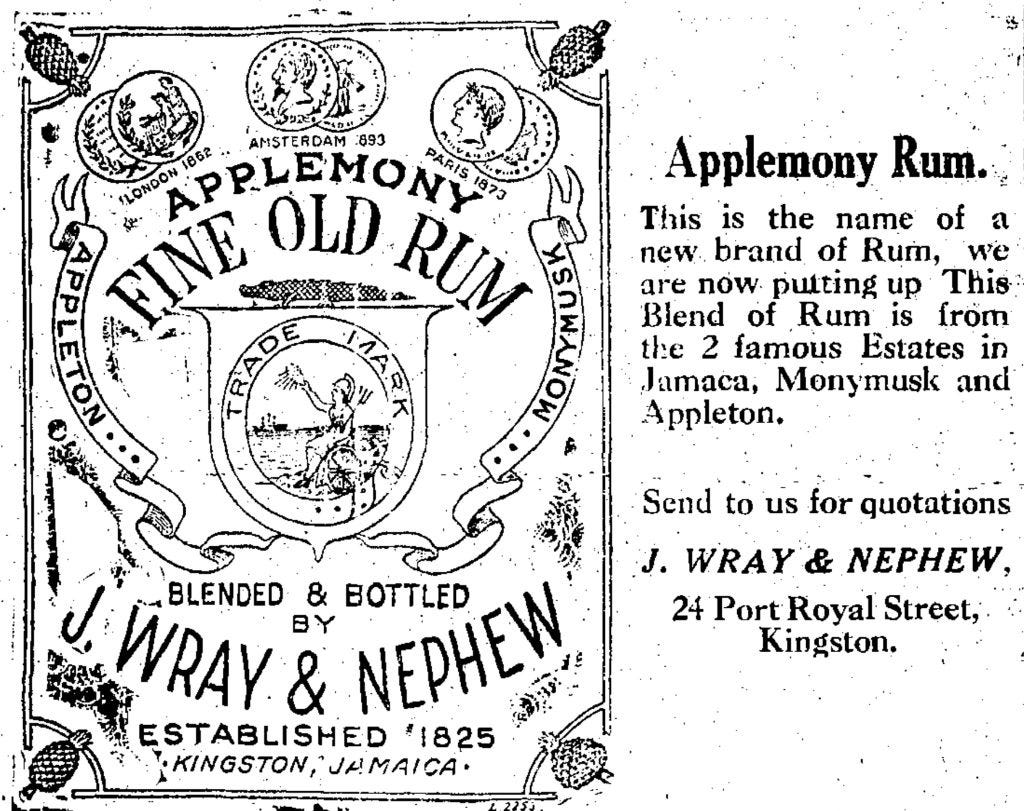
In 1916, the Lindo Brothers purchased both Appleton Estate and J. Wray & Nephew from separate owners. It was the first time that Appleton and J. Wray & Nephew existed under the same ownership. The new owners wasted little time launching an Applemony expression under the J. Wray & Nephew brand. The Applemony name comes from Appleton and Monymusk, which the Lindo Brothers also owned.
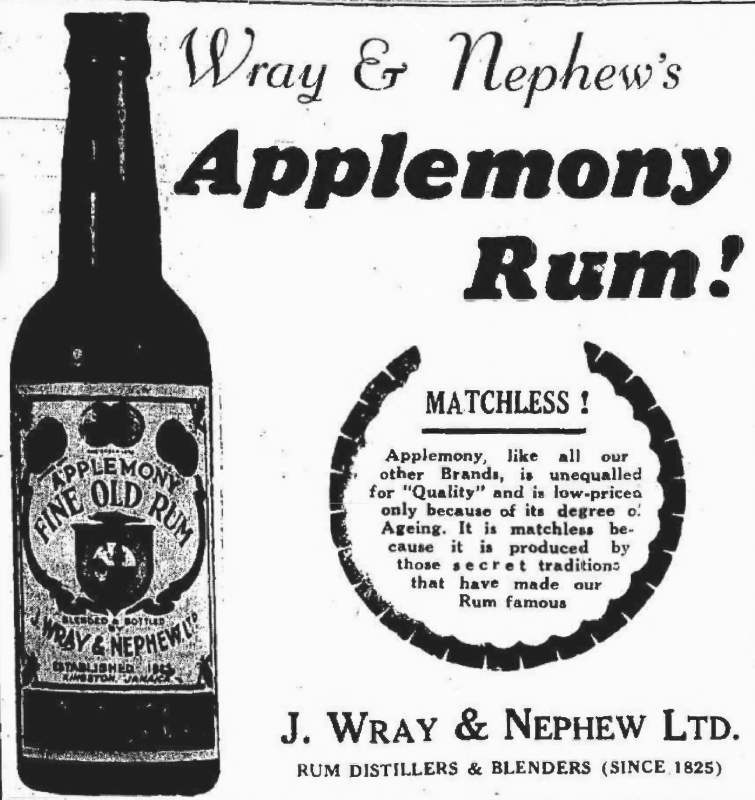
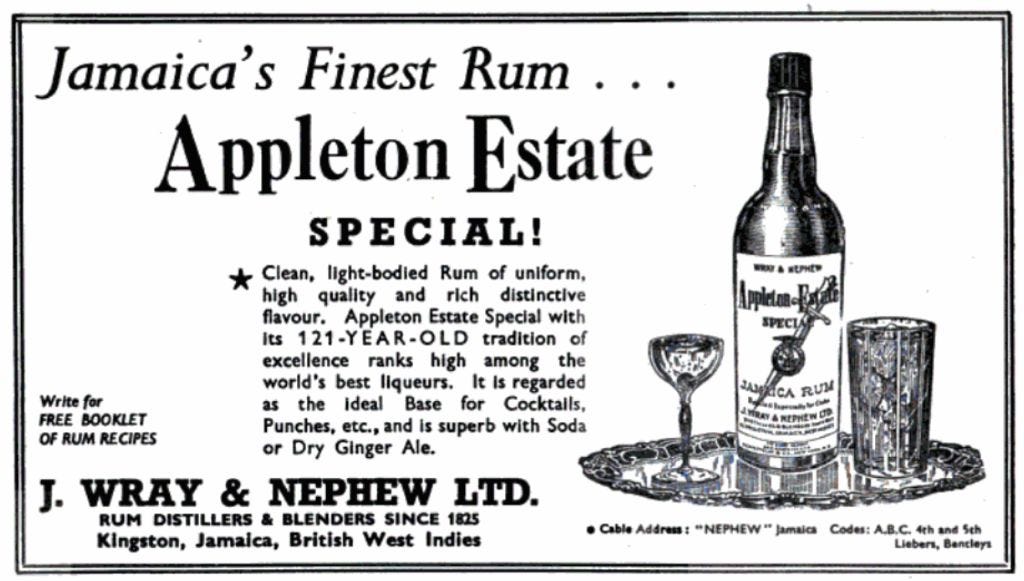
Nonetheless, Applemony isn’t Appleton Estate—the brand. It wasn’t until the 1944 launch of Appleton Estate Special that we see the distillery’s name take the lead role on a Wray & Nephew bottle. At the time, Appleton Estate Special was said to be a clean, light-bodied rum of uniform high quality and rich, distinctive flavour.
Bend Down
Earlier, I said that Appleton Estate Special launched in 1944; that’s the earliest mention I can find. However, Special may have “informally” launched a few years earlier. In his book, 56 Years in the Liquor Industry (and still counting), Wray & Nephew alumnus and rum industry legend Michael Delevante writes:
During the second war when Scotch was unavailable. Special was sold in clubs at 40% ABV. an illegal strength for rum in those days It had to be kept under the bar to avoid scrutiny by Excise officers, so it earned the name Bend Down since the bartender had to bend down to retrieve the bottle
A 1975 Jamaica Gleaner article expands on the above:
YES, SOME PEOPLE, around the country parts called it whisky, but it really was rum —a much finer, smoother rum than the Black Seal and Applemony that were quite popular then. We’re talking about the 1940’s, during the Second World War, when many accustomed tastes could not be indulged…
But the rum that was then called whisky also got another name —“Ben’ Down”! — because of a provision which prohibited rum that was not of a certain “proof” from being sold in ordinary bars and shops. So, Appleton Estate Special, which is the rum that was called whisky, was supposed to be retailed only in private clubs. But this Appleton Special quickly became so widely preferred by Jamaicans in general, that the bars and shops went ahead and sold it. Only they didn’t display it publicly, so when you ordered a drink the barkeeper had to bend down and fetch it from under the counter… It wouldn’t have been wise to say “Appleton Special” out loud in the shop, so the customer would whisper that he wanted a drink of “Ben’ Down”.
That’s all for now. I’m off to Miami this week to take part in the Miami Rum Congress, drink rum, and see some friends. Never fear, I’ve got more stories cooking for when I return.

"YES, SOME PEOPLE, around the country parts called it whisky, but it really was rum"
🥃 🥃 🥃 🥃
A similar phenomenon to some of the "scotch" marketed in India, which is derived from sugar cane rather than barley.