
In my forays through rum history documents I’ve squirreled away, I occasionally see something that triggers a fresh look with new tools. Such was the case with a 2000 document regarding rum at the Caroni distillery in Trinidad. Countless articles over the past decade have covered Caroni rum and its rise to highly collectible rarity.
However, new rum enthusiasts are joining the fold and often don’t know the Caroni story beyond what’s conveyed by brands selling the shuttered distillery’s ever-dwindling stock. So, with new details and fresh data to share, I wrote what follows.
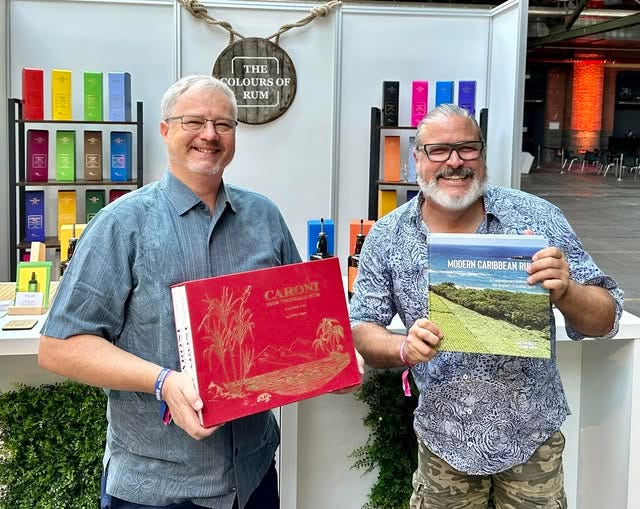
What follows is a combination of my original research in writing Modern Caribbean Rum, along with Steffen Mayer’s research that appears in his book, CARONI 100% Trinidad Rum.
I must stress that certain figures (quantities, pricing) are vague and subject to revision. Detailed accounting records are not available. Many data points come from personal recollections of those involved and extrapolation. The data also has many gaps.
Caroni – The Legend
In the rum world, Italy’s Luca Gargano is one of the best-known and well-traveled personalities. Over the last three decades, his company, Velier, has released some of the most sought-after rum bottles. In addition to being the first independent bottler to release Caroni rum, Luca and Velier are closely tied to prestige bottlings of rare Demerara rums, Haitian clairins, and Hampden Estate. He’s also said to have the largest rum collection in the world. But today’s focus is Caroni.
A page on Velier’s website states:
It was on 9 December 2004 when, together with photographer Fredi Marcarini, Luca Gargano landed on the island of Trinidad and visited the legendary Caroni distillery. Luca didn’t know what he would find there. He certainly had no idea what a big surprise he was in for. Thousands of barrels of rum, the oldest dating back to 1974.
Similarly, a Caroni page on La Maison & Velier’s website notes: “In 2004, Luca Gargano, chairman of Velier, discovered the hundreds of casks stored in the distillery’s warehouse.”
Luca didn’t wait long to put Caroni stock on the market; in 2005, Velier released three single-cask bottlings. Velier’s 2006 catalog lists seven bottlings from 1982, 1983, 1984, 1985, and 1989, along with a blended 15-year-old. The blend retailed for a whopping €23, while the Heavy 1982 stretched wallets at €33. (Said in jest, of course.)
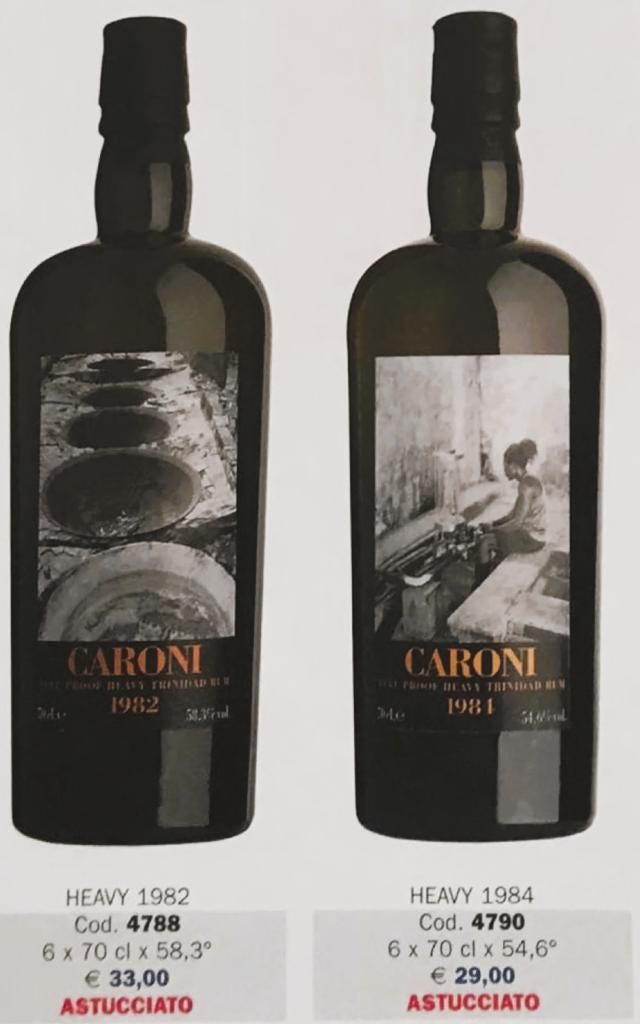
Indeed, the naughts (2000-2009) were a great time to be a rum collector. Today, Velier Caroni bottles from that era start at €1,000 and often go for 2x-5x that price. You might call it a Caroni-Craze.
However, as the 21st century dawned, Caroni was far from undiscovered within the rum industry. Furthermore, the distillery was offering 20,000-liter tanks of aged vintage rums for practically pennies per liter. In 2008, substantial amounts of Caroni rum were offered for sale and remained unsold. Yet a decade later, rum geeks were rushing to buy up Caroni at eye-watering prices before it all disappeared.
How did this happen?
Caroni’s Final Days
In 1970, against a backdrop of the Caribbean sugar industry hemorrhaging money, Trinidad’s government acquired a 51% share of Caroni—both the sugar factory and distillery. Tate & Lyle, the original owner, retained a 49% share and continued to manage. Unfortunately, the sugar industry continued to bleed money, and the government took full ownership in 1975 and merged it with other related holdings to create “Caroni (1975) Ltd.”
A quarter-century later, with things still bleak, the government sought to break up Caroni (1975) into subsidiary companies and encourage private companies to take a 49% minority stake in each. In February 2000, Angostura bid for a 49% stake in the rum distillery subsidiary, and the government later declared it the preferred bidder. However, it wasn’t a slam dunk for the company. Per testimony in TT’s parliament during the 2000 session:
… the negotiations for the price of the 49 per cent shareholding in the rum distillery subsidiary, Rum Distillers of Trinidad and Tobago Limited, should be guided by a valuation report of its rum stocks, which should be prepared by a rum specialist …
Angostura share purchase never happened, so the company never owned the Caroni distillery, despite what some people think. Did the valuation play a role? We may never know, what we do know quite a bit about the valuation.
Caroni Rum Stock Valuation (2000)
Trinidad & Tobago (TT) parliamentary transcripts from Oct. 13, 2000 provide a peek into how Caroni’s rum stocks were valued:
…the decision to have a valuation report prepared by an independent rum specialist was made by the Government back in May 2000… Subsequently, … Ernst & Young [undertook] a stock count of the rum stocks of the rum distillery … the project management team decided to secure a high volume rum trader to undertake the valuation of the rum stocks. Three international high volume traders were identified:
(1) Delevante & Associates of Canada;
(2) E & A Sheer B. V. of the Netherlands; and
(3) The Main Rum Company of the United Kingdom.
…
On August 10, 2000, the project team … agreed that the Main Rum Company of the United Kingdom would be the preferred valuer…
What did the report say? The same parliamentary transcript quotes the valuation’s cover letter:
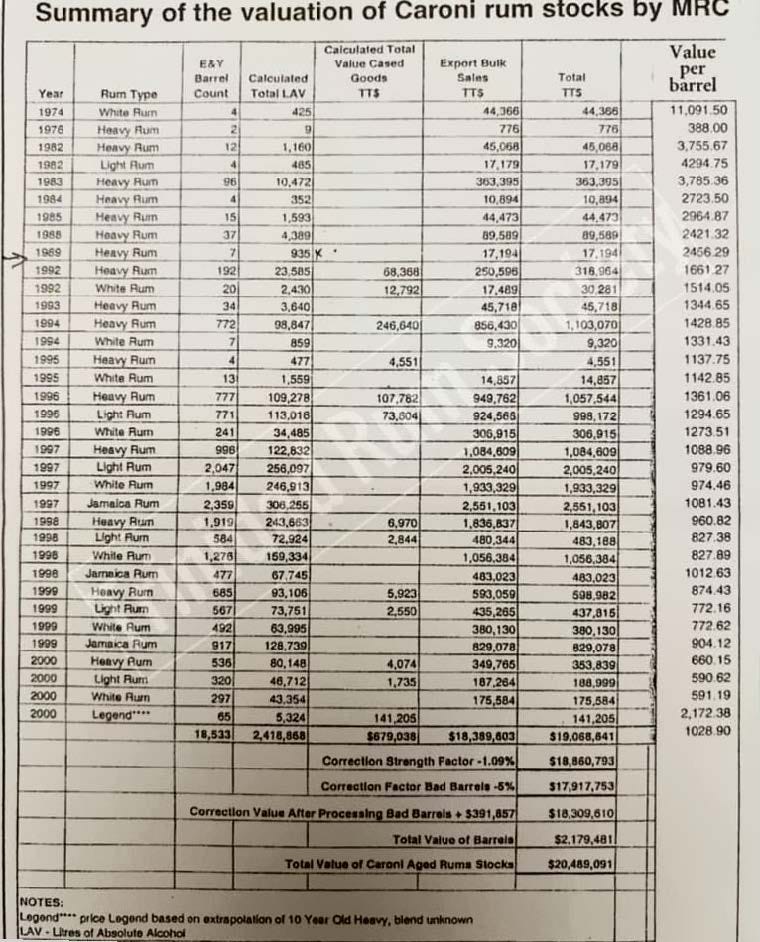
We confirm that in our view the value of the 18,533 barrels of aged rum notified to us by Ernst & Young is, at current market prices, TT $20,489,091.
In US dollars, that was around US$3.25 million in 2000, or around US$6.3 million today (2006), adjusted for inflation.
While Main Rum’s full report has never been made public to my knowledge, a summary page of specific lots, quantities, and prices appears in Mayer’s book.
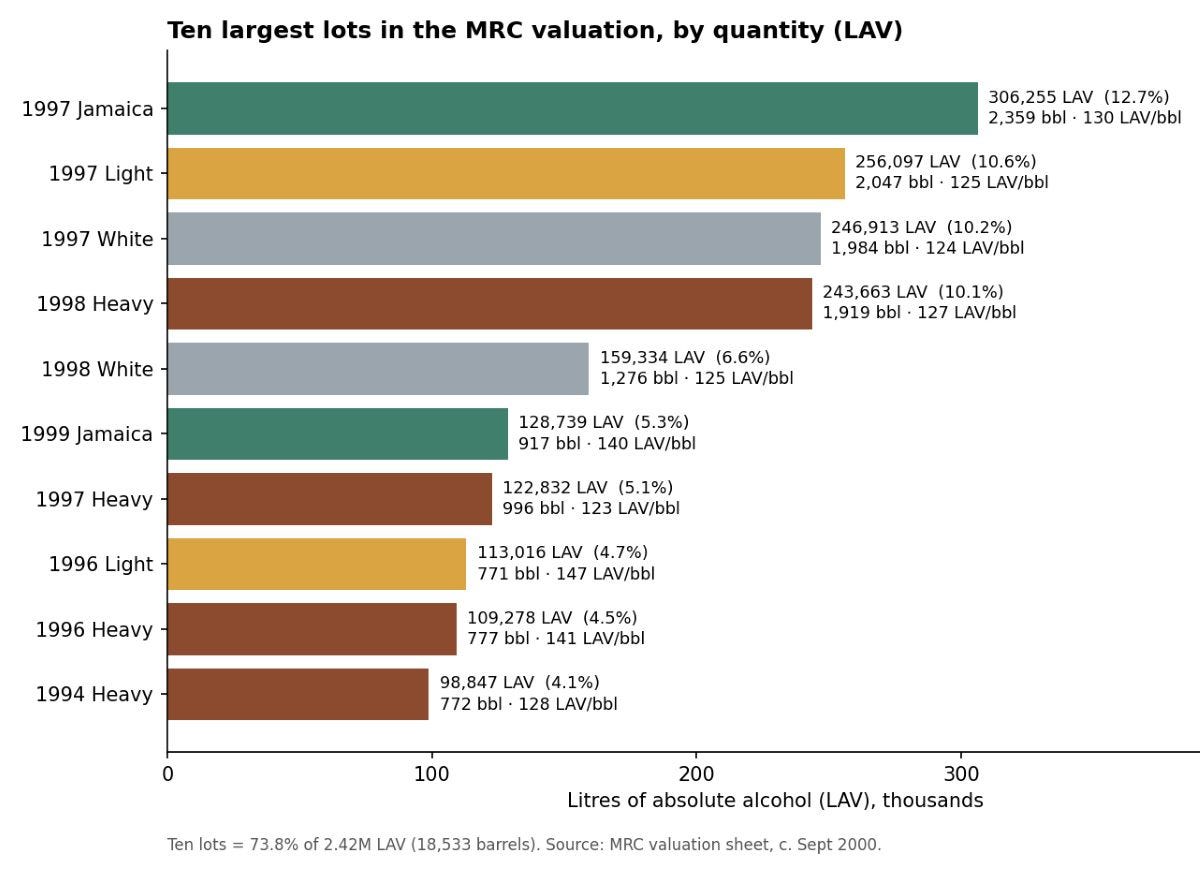
As a data geek, the data begs to be analyzed and graphed. The first shows the ten largest lots by combined vintage and type, e.g., “1997 Heavy”. What immediately pops out is that the largest lot isn’t Caroni at all, or even from Trinidad. Main Rum’s report summary doesn’t disclose the provenance, but an oral history from Mayer’s book suggests it came from National Rums of Jamaica.
What’s LAV? When buying or selling spirits, traders only pay for the alcohol content, not the water. For example, if they buy 10 liters of rum at 60% ABV, they pay for only 6 liters. To keep things simple, a per-liter price “pretends” the spirit is entirely alcohol, no water. From this we get terms like LAA (liters absolute alcohol) and LAV, which is used in what follows.
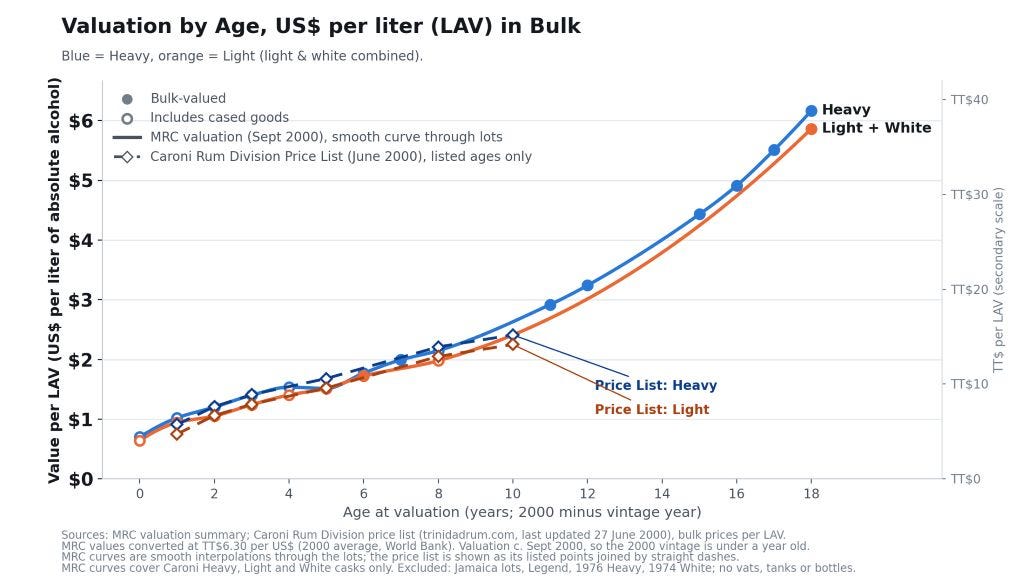
The second graph shows the price per 1 LAV for different vintage/type combinations. The data is surprising in multiple ways. First, heavy rum commands only a very small price premium over light/white rum. Second, the prices are shockingly low when viewed through a modern lens. USD $2.41 per liter of 10-year heavy Caroni alcohol? Extrapolating that cost to a 750ml bottle at 50% ABV, it’s only USD $0.90! (Mind you, you couldn’t buy that bottle for USD $.90, but if you could, it would cost closer to $9, not $90.)
Who Bid For The Valuation?
A brief aside for the three companies that were considered for the valuation:
Delevante & Associates is Michael Delevante, who served in a technical role at Wray & Nephew for several decades, including as Appleton’s distillery manager in the late 1960s. In a recent email, he told me Wray & Nephew was interested in buying Caroni’s rum stocks and asked him to evaluate them.
E&A Scheer had been purchasing Caroni stock from the distillery for years before 2000, so would have had a good handle on Caroni stock prices. Scheer and The Main Rum Company were doing business together well before the 2000 valuation. In 2001, E&A Scheer merged with Main Rum.
Dispute of Main Rum Valuation
Main Rum’s valuation wasn’t accepted by all parties, however. Opponents of TT’s ruling power claimed the true value was much higher. Continuing from the 2000 TT parliamentary transcript:
A few days later, by mid-August, the Main Rum Company commenced the valuation exercise. However, while this exercise was in progress, a report appeared in the Trinidad Guardian of September 9, 2000, in which the Opposition leader, Mr. Patrick Manning, claimed that the rum stocks of Caroni (1975) Limited were valued at $922 million, with details of the number of casks and their respective values.
TT$ 922m is USD $146.3 million — about 45 times higher than the Main Rum Company valuation (in USD) of $3.25 million. The opposing perspectives on the Caroni stock value had a highly contentious matter in Trinidad circles, and I will not weigh in here. However, having read the basis for the TT $922M claim, the underlying logic seems naïve about costs of goods versus shelf pricing and the tiers between them.
Caroni Selling Direct
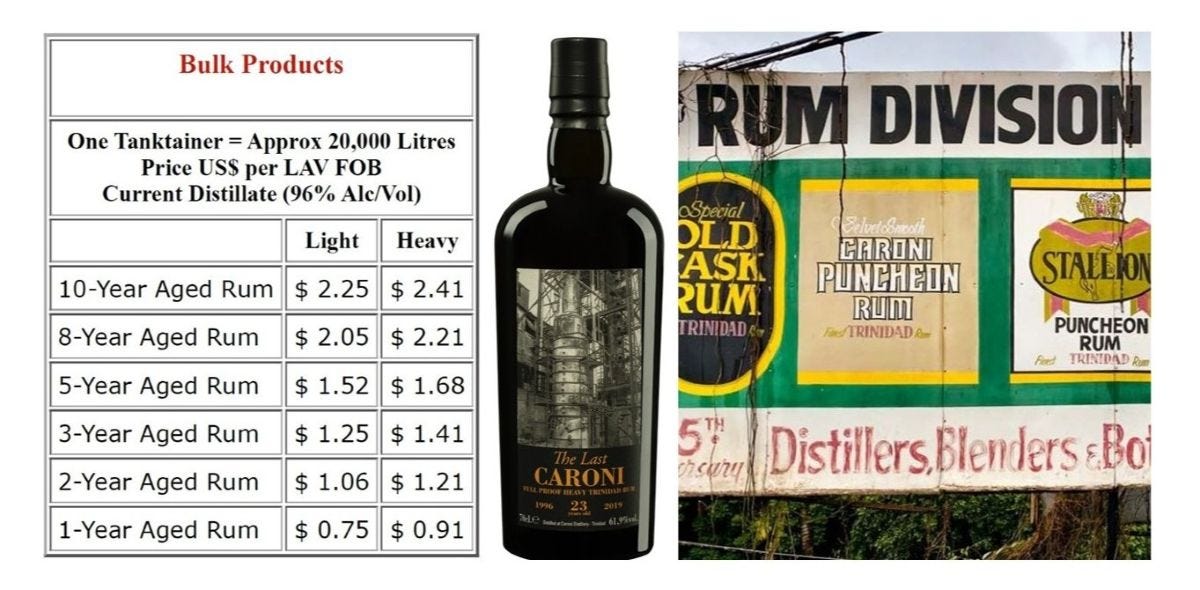
An interesting twist to the above valuation, possibly never previously mentioned, comes via the Internet Wayback Machine. Look up trinidadrum.com there and you’ll find saved pages dating back to September 1st, 2000. One page of this website provided pricing for aged rum—one to ten years—in bulk (20,000-liter containers) at prices between USD $0.91 and $2.41 per liter of alcohol. What a bargain!
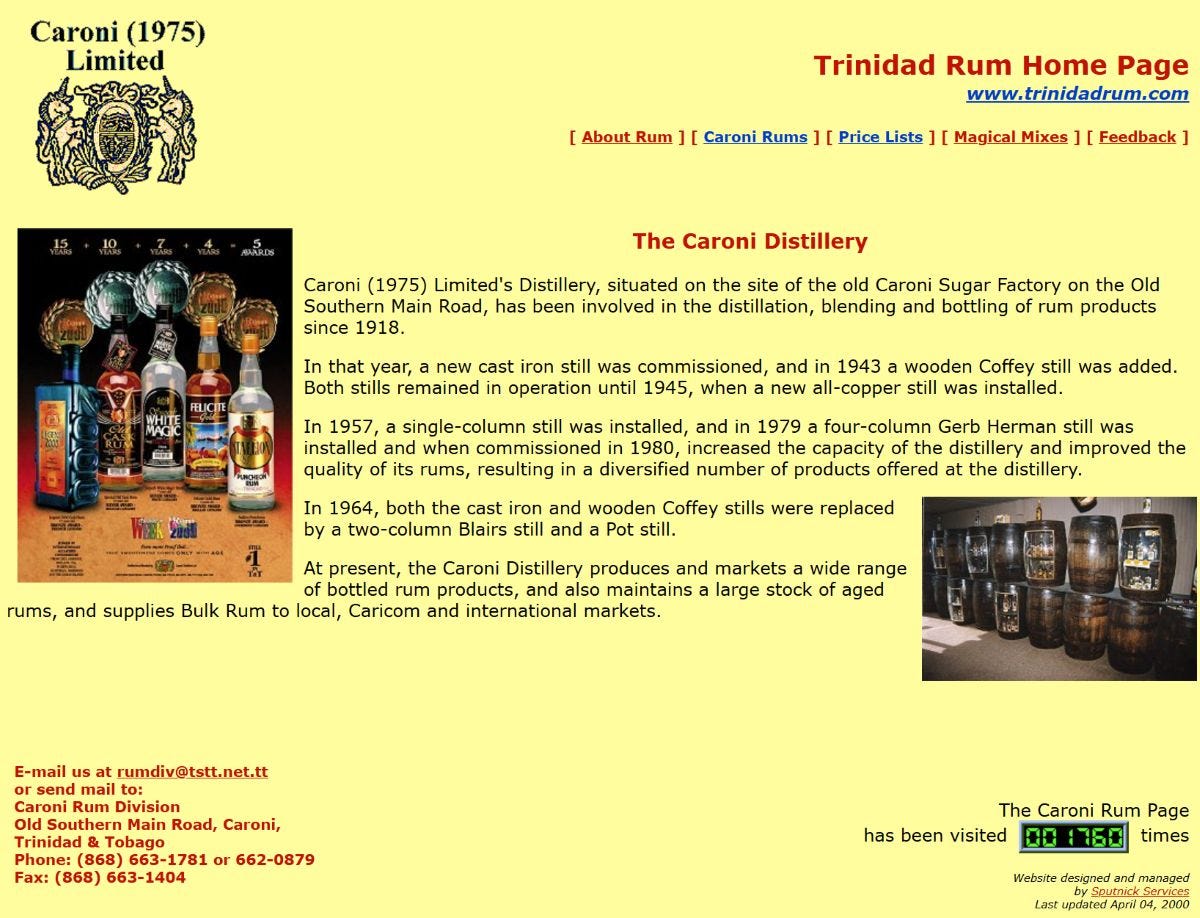
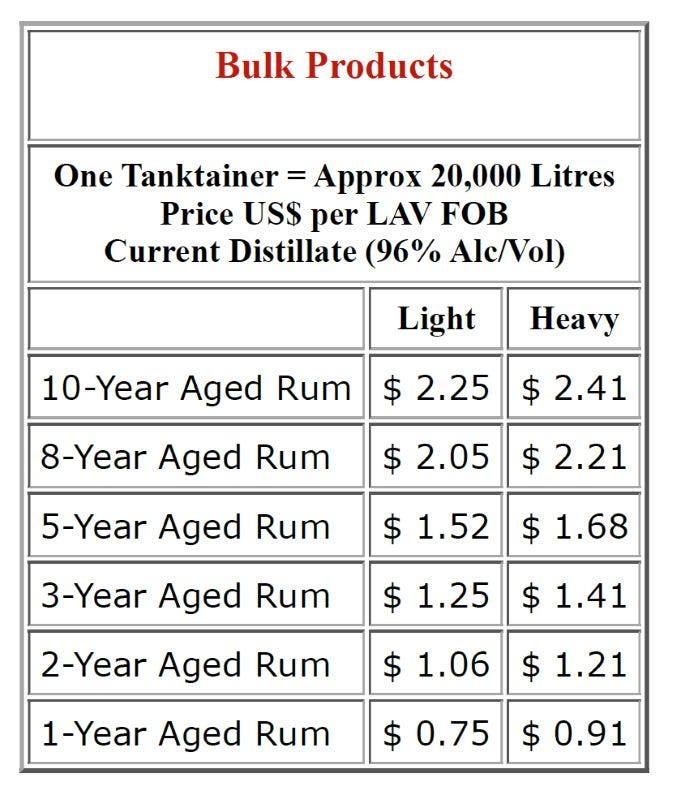
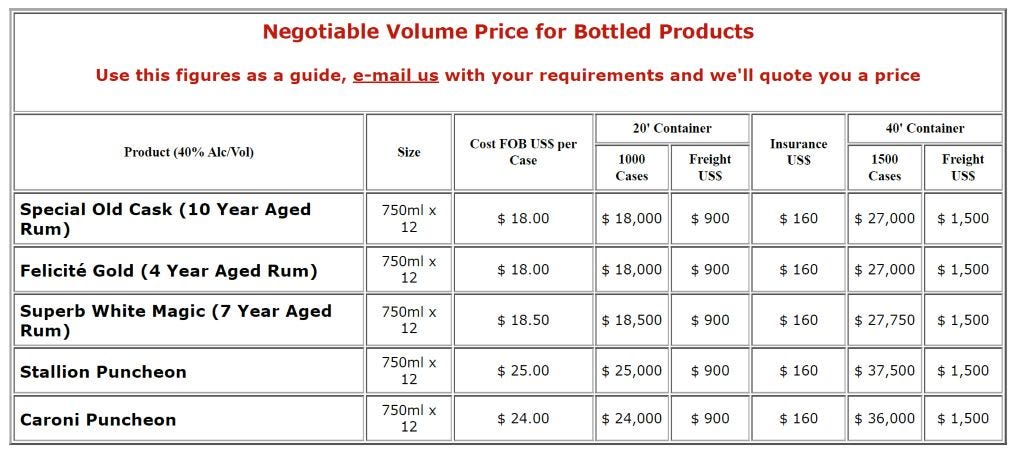
In addition, what the Main Rum valuation summary called “Cased Goods” appears to be listed as well. Stallion Puncheon, the most expensive bottle, is listed at USD $2.08 per bottle—if you were to buy 18,000 bottles.
Having previously analyzed Main Rum valuation and LAV pricing, the website pricing quickly caught my attention: the per-liter prices for 1- to 10-year-aged Caroni rum are effectively the same as Main Rum’s valuation for the same lots when expressed in USD. Go back and look at the Valuation by Age chart above, and look for the points labelled “price list.”
Initially, I assumed that the website pricing was based on Main Rum’s valuation. But the footer on Caroni’s website says it was last updated on June 27th, 2000, roughly two months before Main Rum’s report. If that date is accurate, the website pricing predates Main Rum’s valuation.
Which came first—the Main Rum valuation or the Caroni website price? It’s impossible to be completely sure. Other pages on the 2000-era Caroni site have different last-updated dates from 1999 and 2000, making the June 27th date more plausible. We may never know unless someone with direct knowledge shares that information.
Rum Distillers of Trinidad & Tobago (RDTT)
The Caroni distillery continued making rum between 2001 and 2003, after which it was shuttered. The same year, Caroni business was reformed as Rum Distillers of T&T (RDTT) and the remaining stocks continued to be offered to prospective buyers.
We don’t conclusively know how much rum RDTT was able to sell. But per Mayer’s book, Luca Gargano purchased around 200 casks in 2005. This was a drop in the bucket compared to the rum making up Main Rum’s 2000 valuation, however. A conservative estimate, based on data in Mayer’s book, is that 1/3rd to 1/2 of the original stock may have been sold. More on this later.
Caroni Auction Fails (2008)
In 2008. RDTT put a substantial amount of rum on the auction block:
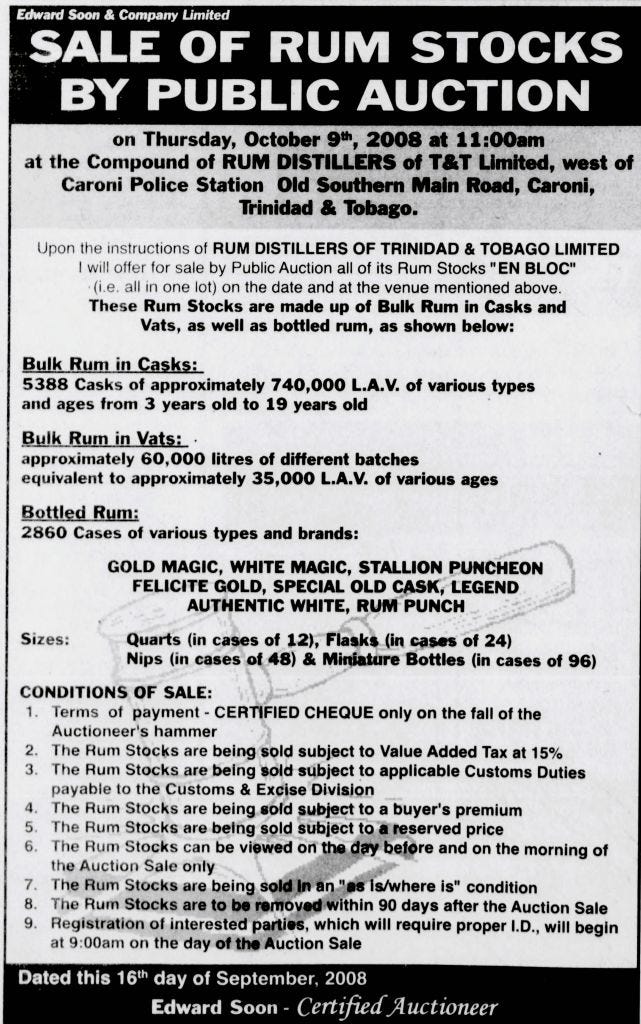
The high-level summary:
5,388 casks (740,000 LAV) of rum between 3 and 19 years old
35,000 LAV of vatted rum of various ages
2,860 cases of bottled rum of different expressions
There’s no claim that all rum was distilled by Caroni. Some of it could have been from Jamaica.
One lot, so the buyer was taking everything.
It’s tempting to try calculating how much of the original 2000-era stock remained in 2008. By total LAV, the 2008 auction offered roughly 30% of the LAV reported in 2000. But going any deeper into where it went is the path to madness for several reasons:
We don’t know exactly how much 2001-2002 stock the auction included. The auction notice lists rum as young as 3 years old.
The angels were continuously buying. Between 2000 and 2008, the rum in casks evaporated at around 7% annually. Had the entirety of the 2000-era casked stock had remained in casks till 2008, about 44% would have evaporated.
Aside from Velier’s relatively small 2005 to 2008 purchases, we don’t know for sure who else bought Caroni stock.
In any event, the October 9th, 2008 auction was a bust; nothing was sold to the nine registered buyers in attendance. The reserve price for the entire lot was set at TT$ 7.8M, or about USD $1.25M.
Why Weren’t Buyers Buying?
A story in the T&T Express published a few days after the auction painted a bleak picture:
San Fernando businessman Alec Elias said the minimum reserved price, the buyer’s premium and the conditions of sale were unrealistic. A registered buyer asked the auctioneer to start the bidding with his offer of [TT]$750,000 and heard another offer of [TT]$1 million carried to [TT]$1.5 million before the auctioneer took control and put an end to the unauthorised bids…. Angostura Ltd’s Robert Wong said the minimum reserved price was way above what buyers were prepared to pay…. ’A minimum reserved price of [TT]$1 million is what most of us expected,’ he said. Not a reserve of[TT] $7.8 million.
Given the prices paid for Caroni stock today, it might seem unfathomable that rum brokers with a sharp eye and good palate weren’t snapping it up in 2008. My calculations put the reserve at about USD $1.60 per LAV, in line with the 2000 valuation pricing. Nonetheless, it was more than buyers were willing to pay for what remained.
Could potential buyers have had strong concerns about the remaining Caroni stock? The 2000 parliament testimony raises some concerns early on:
… [an] organoleptic evaluation of 139 samples sent by Ernst & Young has revealed a number of barrels below average quality, some of poor quality, and others of bad quality. Ten out of the 139 samples were considered by the tasting panel to be of unacceptable quality. The report further went on to note that the variations in alcoholic strength between the figures shown by Ernst & Young on the samples and those measured by E & A Sheer B. V. were, in some instances, as much as 15 per cent.
To put this passage in context, 139 samples taken across 18,533 barrels is a sample rate of less than 1%. In a 2021 interview published in Mayer’s book, E&A Scheer’s Chief Rum Officer, Carsten Vlierboom, who played a central role in the 2000 valuation, is quoted regarding the 2000 Main Rum valuation:
….we looked at all the samples of every single variety and every single vintage. It was a huge amount where we had to determine if there were bad casks. Not bad in the sense of just spoiled, but also with too much fusel or strong flavours of burnt tyres that would stand out too much in the bulk rum for blending, making the whole batch unsaleable.
We might reasonably assume that most lot sales prior to the 2008 auction were relatively small, and that buyers had ample opportunity to sample. But by the time the 2008 auction rolled around, potential buyers were asked to buy all 5,388 casks without having sampled every cask, or even a small fraction of them. Sampling everything offered at the 2008 auction would have been costly and a logistical nightmare.
Given the above, you can see why potential buyers might have had some concerns about buying the entirety of the remaining stock (approximately 800,000 LAV), effectively sight unseen.
Who Bought Caroni Stock?
Today there’s a certifiable flood of Caroni bottlings available from dozens of brands. But most of these brands didn’t buy Caroni stock directly. Instead, they bought from a handful of companies that did. And even those companies bought from each other. Who are they, and when did they become aware of Caroni and its stocks?
Angostura (TDL) was certainly aware of Caroni and its stocks, not least because the company almost bought a 49% share in Caroni circa 2000. We don’t know what cask-aged stock, if any, they purchased in those early days. We do know that Angostura took possession (not ownership) of the remaining stock for safekeeping after the failed 2008 auction. In 2010, Angostura purchased this stock. Mayer estimates the number of casks to be around 1,818. It’s long been rumored that some Angostura-branded expressions over the years contained Caroni stock.
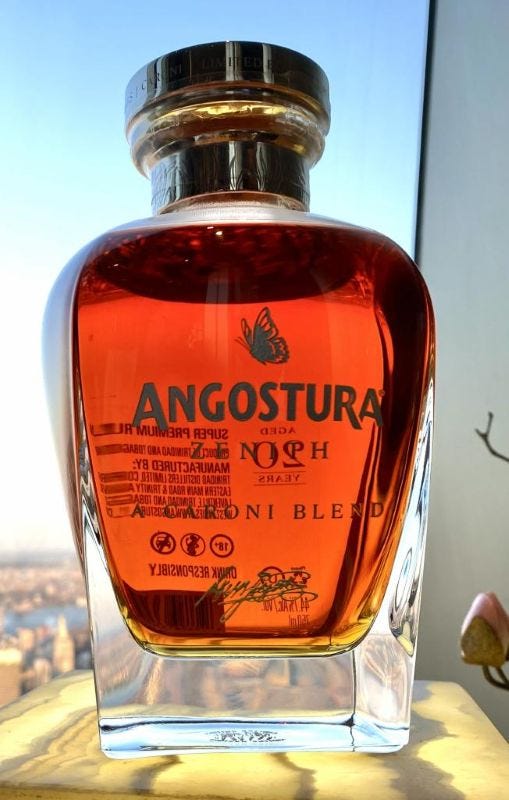
However, Angostura never noted Caroni stock in any of its rums until the 2022 release of Zenith, a 50-50 blend of TDL and Caroni rum listing for US$3,000. The blend is said to contain rums aged between 20 and 23 years. (Fun fact: I was at the Zenith launch event in NYC and was asked to say a few words about Caroni’s history to the assembled press.)
The Main Rum Company, owned at the time by Ben Cross de Chavannes, was involved in the 2000 valuation, so had a front row seat. The company purchased various lots of Caroni casks over the years, although only Main Rum knows which lots. The company still sells Caroni casks today to various independent bottlers.
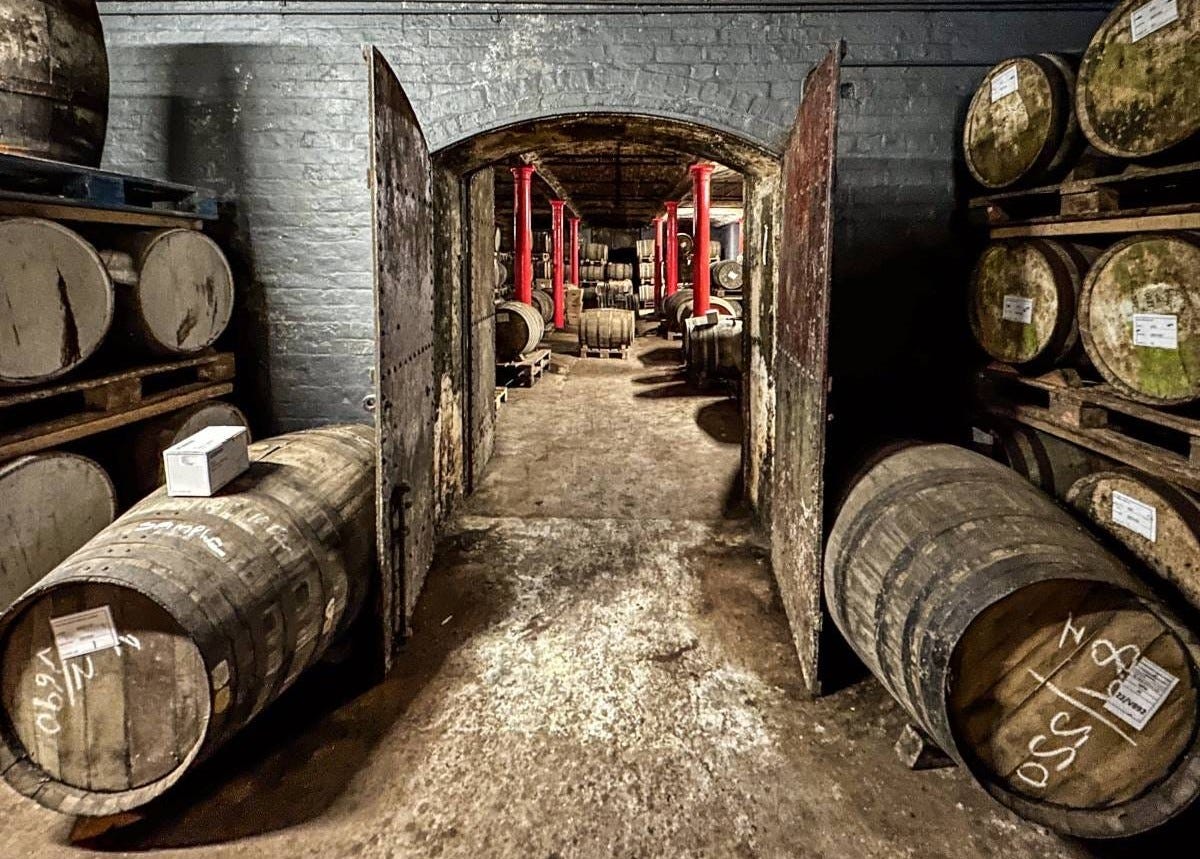
Bristol Spirits Ltd (Bristol Classic Rum), the UK independent bottler operated by John Barrett, also purchased casks. An April 23rd, 2025 Facebook post by Bristol Spirits notes that owner John Barrett visited the distillery in 2001 with Main Rum’s Ben Cross.
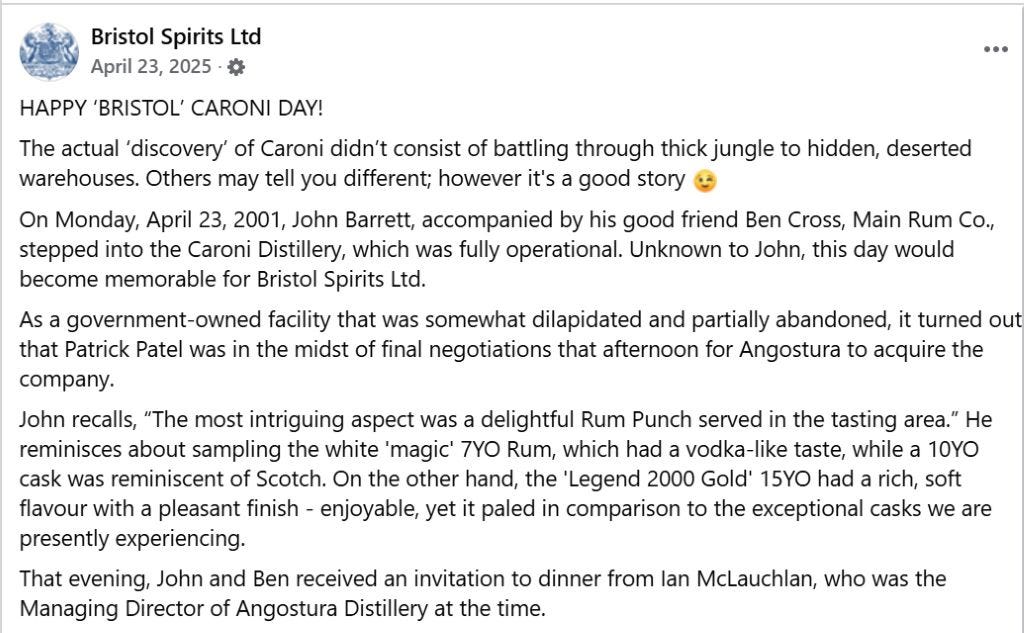
Per Mayer’s book, Bristol Spirits bought 66 casks circa 2009, and may have also purchased around 800 casks via the murky Ejan Worldwide. Mayer’s book also suggests that Bristol purchased their 1974 rum from Velier.
Velier bought several lots of casks directly from RDTT, the successor to the Caroni distillery company. Mayer’s book states:
Luca was able to purchase a total of 1276 casks of Caroni rum over the years. In 2018, all but 140 had been bottled, or lost to the angels.
Per Mayer, Gargano shipped 371 casks (vintages between 1991 and 1996) to Guyana in 2008 for safekeeping.
An indeterminate amount was sold to Santa in Colombia and Varela Hermanos (Ron Abuelos) of Panama. We can guess these lots were blended into other rums, rather than sold as Caroni-made rum.
Wrap Up
Everything above skims the surface of the story, as I know it. Mayer’s book, CARONI 100% Trinidad Rum, goes into much deeper detail, including interviews with Luca Gargano, Rudy Moore, the managing director of Caroni / RDTT, and E&A Scheer’s Carsten Vlierboom. It’s deeply geeky stuff highlighting the inner workings of the rum trade, where lines aren’t as clean-cut as you might imagine.
Today, word on the street is that casked Caroni rum is being offered to independent bottlers at LAV prices 100x or more above what it would have cost circa 2005. (I’ll let you do the math.)
I won’t say that Caroni rum is overvalued; any product is worth what someone will pay for it. I’ve purchased and enjoyed several bottles over the last decade. But when you look at the eye-watering prices for Caroni bottles today—some of the most expensive in the rum world—and contrast them with how Caroni seems to have perceived within the rum trade twenty years prior, you have to marvel at the transformation.