
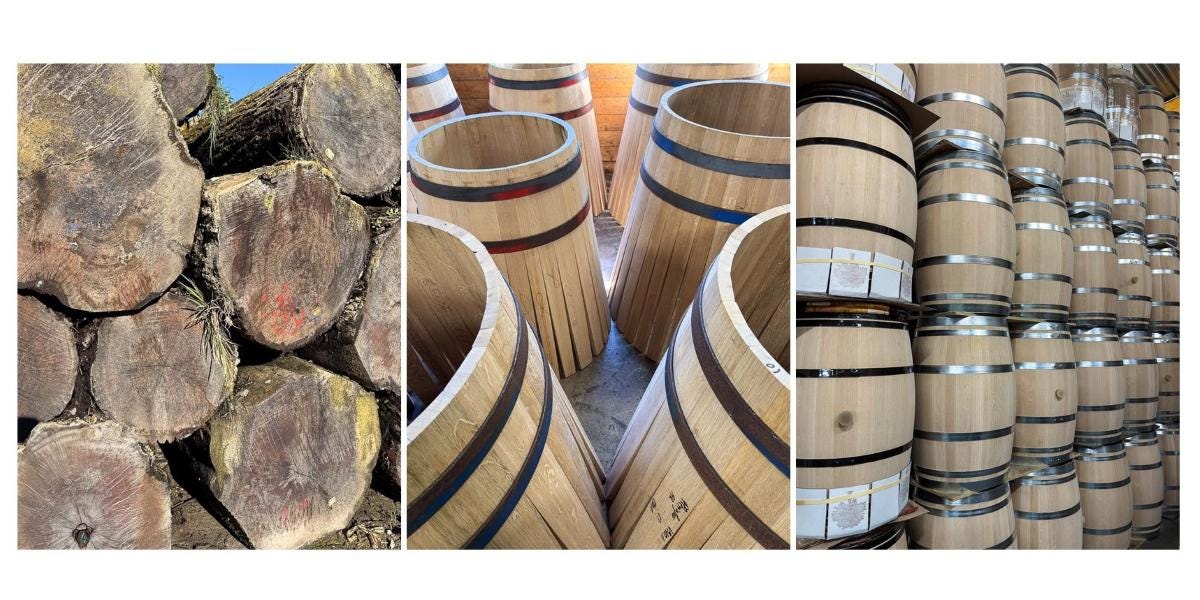
When we geek out about how distilled spirits are made, topics like source material, yeast, stills, and aging locale naturally take center stage. Less discussed are the casks where aging takes place. Sure, we may take note that most rum is aged in ex-bourbon barrels, and that using American oak vs. French oak influences a rum’s flavor, but it’s rare to go deeper. Along the same lines, rum geeks hanker to visit distilleries to see the transition from sugarcane juice or molasses to a distilled spirit; far fewer get to visit a cooperage to see a tree log turned into a new cask.
I was recently invited to tag along with a group of bartenders to visit a cooperage, or, in French, a tonnellerie. There, we saw the entire process, from massive logs cut in French forests to casks ready to ship out to France’s spirit and wine makers and elsewhere around the globe. Join me below for a photo- and video-centric tour of the process.
Tonnellerie Baron
Given the size of France’s wine and spirits trade, it’s not surprising that there are dozens of cooperages turning out casks that start as trees in the country’s famed hardwood forest. Tonnellerie Baron is near Saintes, in the heart of the Cognac region, about 100 km north of Bordeaux. Although established in 1875, the estate underwent a significant expansion and modernization program about 25 years ago.
Fabrice Pajeau, Baron’s oenologist and commercial manager, took us through Baron’s operations. Before starting the tour, he noted that the facility can theoretically produce 20,000 casks per year, but they currently make less than that.
Forest and Trees
Baron selects trees individually from France’s forests and brings whole logs to the Tonnellerie. Upon arrival, they lie outside in the fresh air for a bit, with occasional watering to keep the wood at the desired humidity.
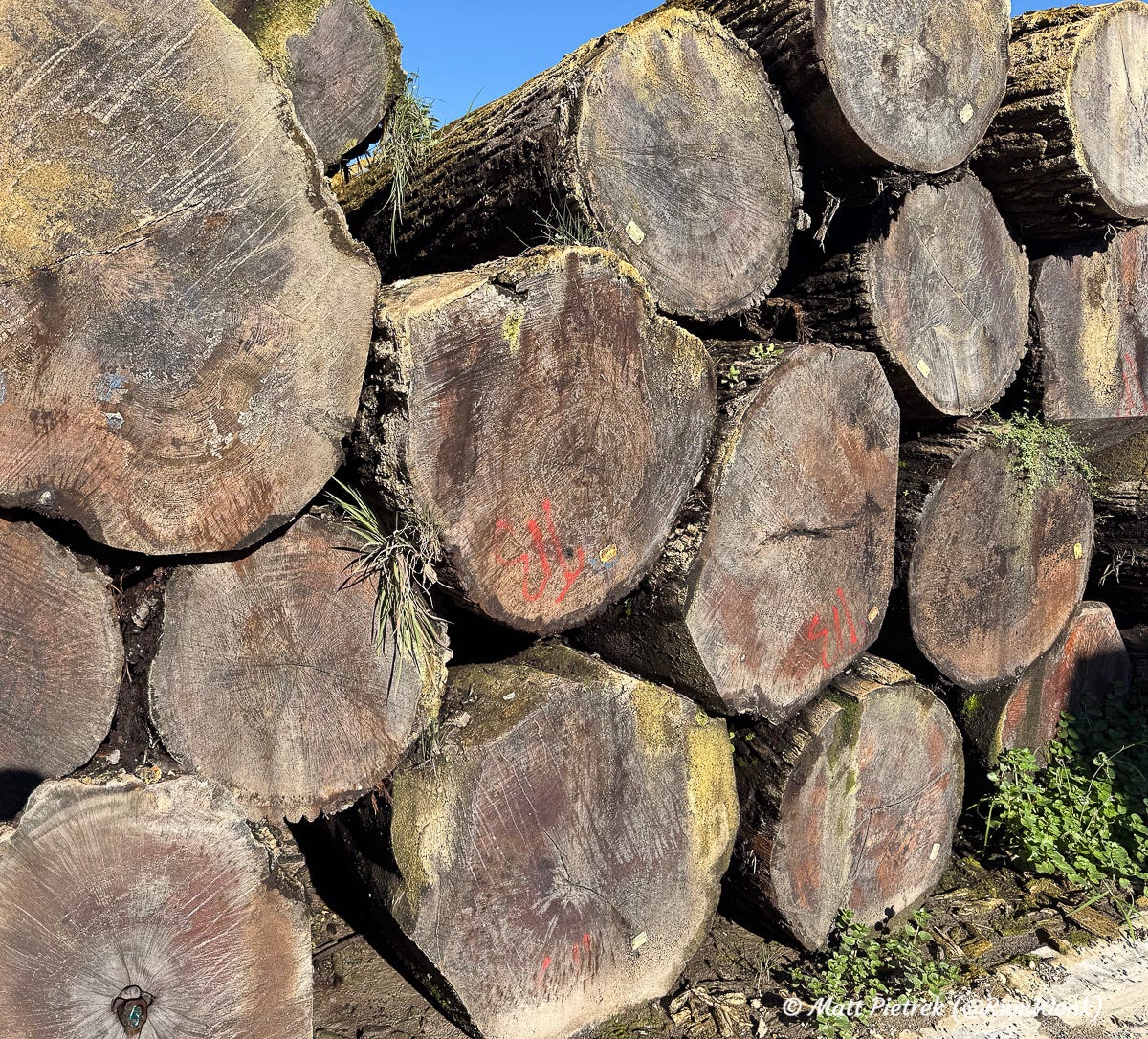
Eventually, the logs are split and cut into rectangular boards that roughly resemble the 2x4 you see used in construction. Here, I’ll call them stave blanks; the French word is merrains.
I’m Blanking
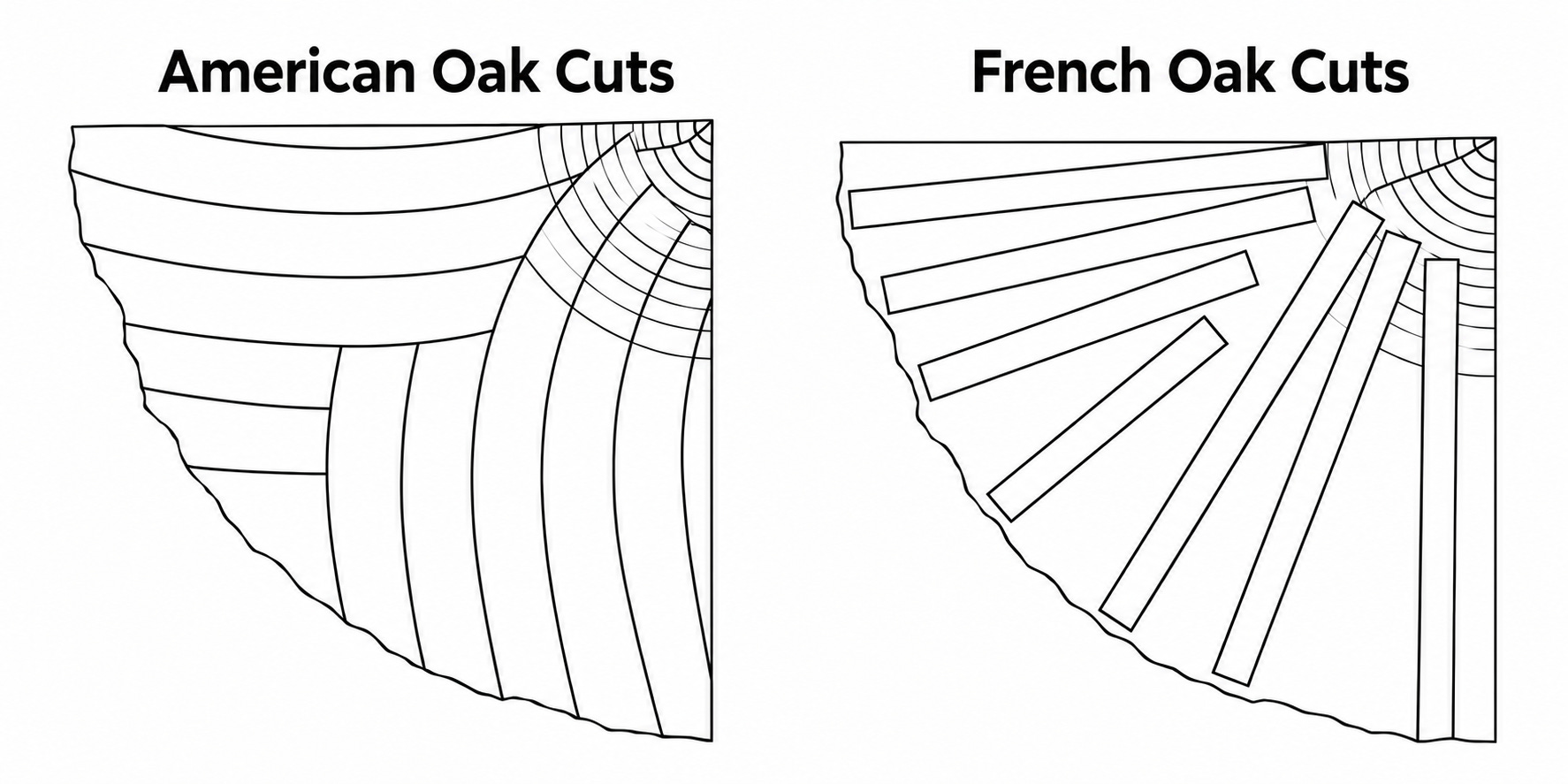
At this point, it’s important to note a critical difference between American and French oak. The cellular anatomy of American oak allows it to be cut in any orientation to create casks that won’t leak. As a result, an optimized cutting pattern can use almost all of the log.
In contrast, French oak’s cell structure requires that the blanks be cut in a particular orientation radiating outwards from the log’s center. If not cut properly, the resulting cask will leak. Creating non-leaking French oak stave blanks requires the logs to be split into thin triangular wedges that are then trimmed into rectangles. As a result, much less of the log is used relative to American oak.
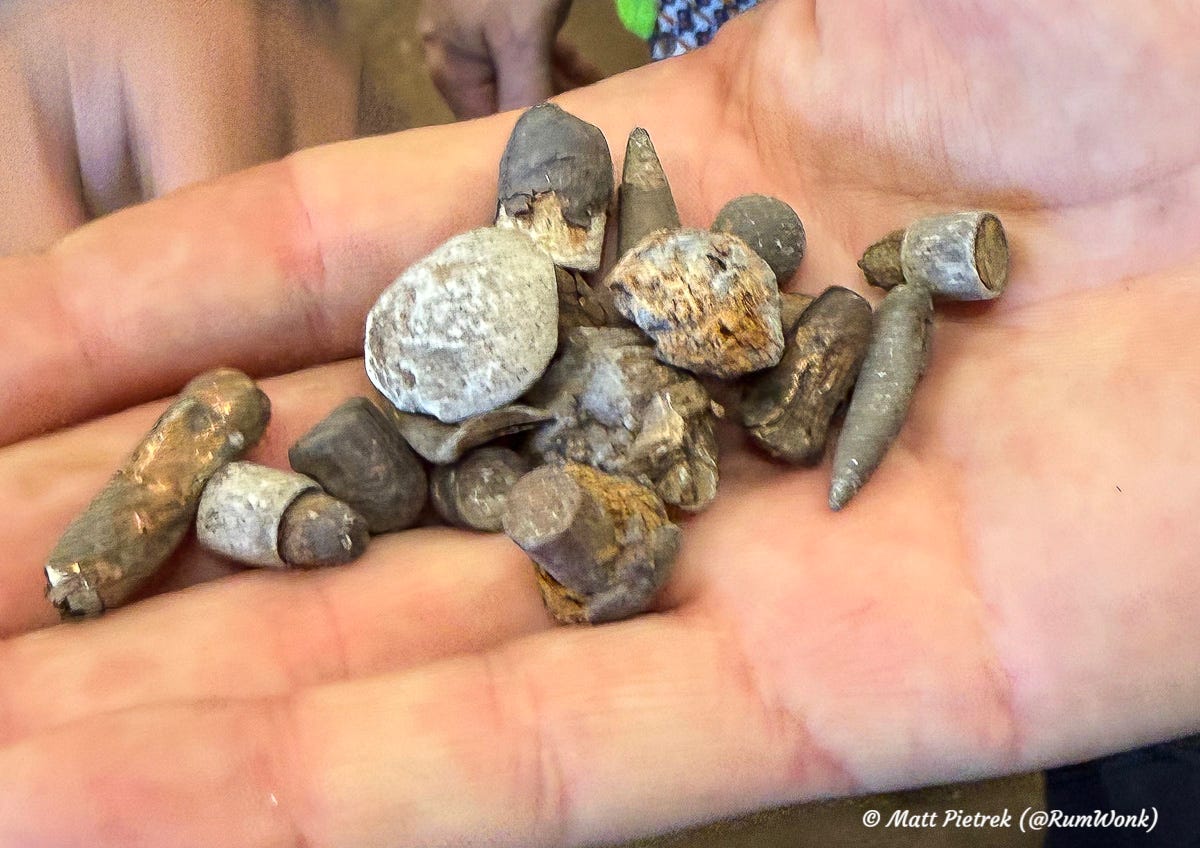
While Baron wasn’t splitting and sawing stave blanks during our visit, we learned something surprising. Due to battles and hunting in France’s forests, it’s common for old bullets to be exposed during the splitting process.
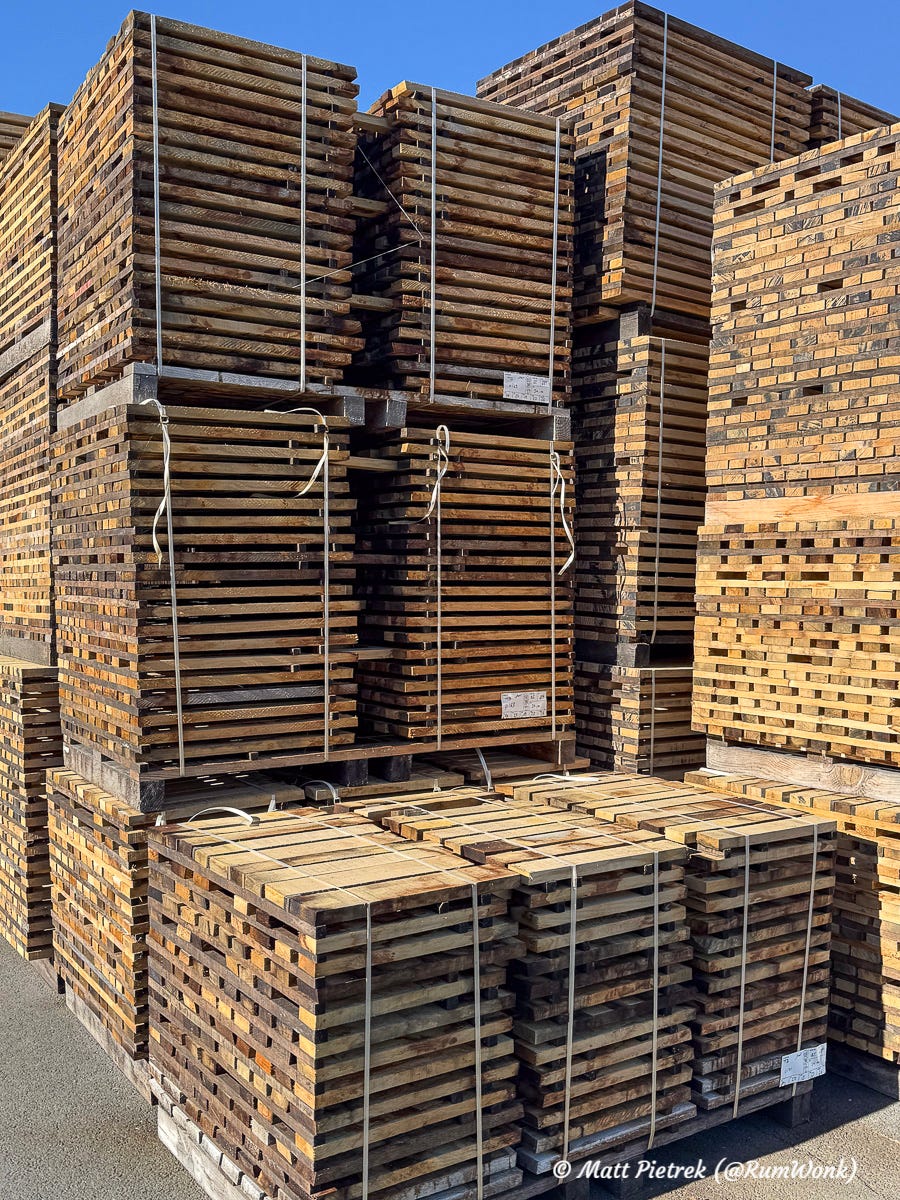
New stave blanks can’t be processed into staves right away. First, they sit outside for three years, exposed to the sun, wind, and rain. This is called seasoning, and it allows unpleasant tannins and other undesirable compounds to leach out of the wood. In addition, the wood’s humidity drops considerably over that long period.
Stave Me!
Once seasoning is complete, coopers cut and plane the stave blanks to the slightly curved shape needed for the particular cask being made. A cooper first visually inspects each stave blank for deformities before feeding it into a machine that planes it into an actual stave.
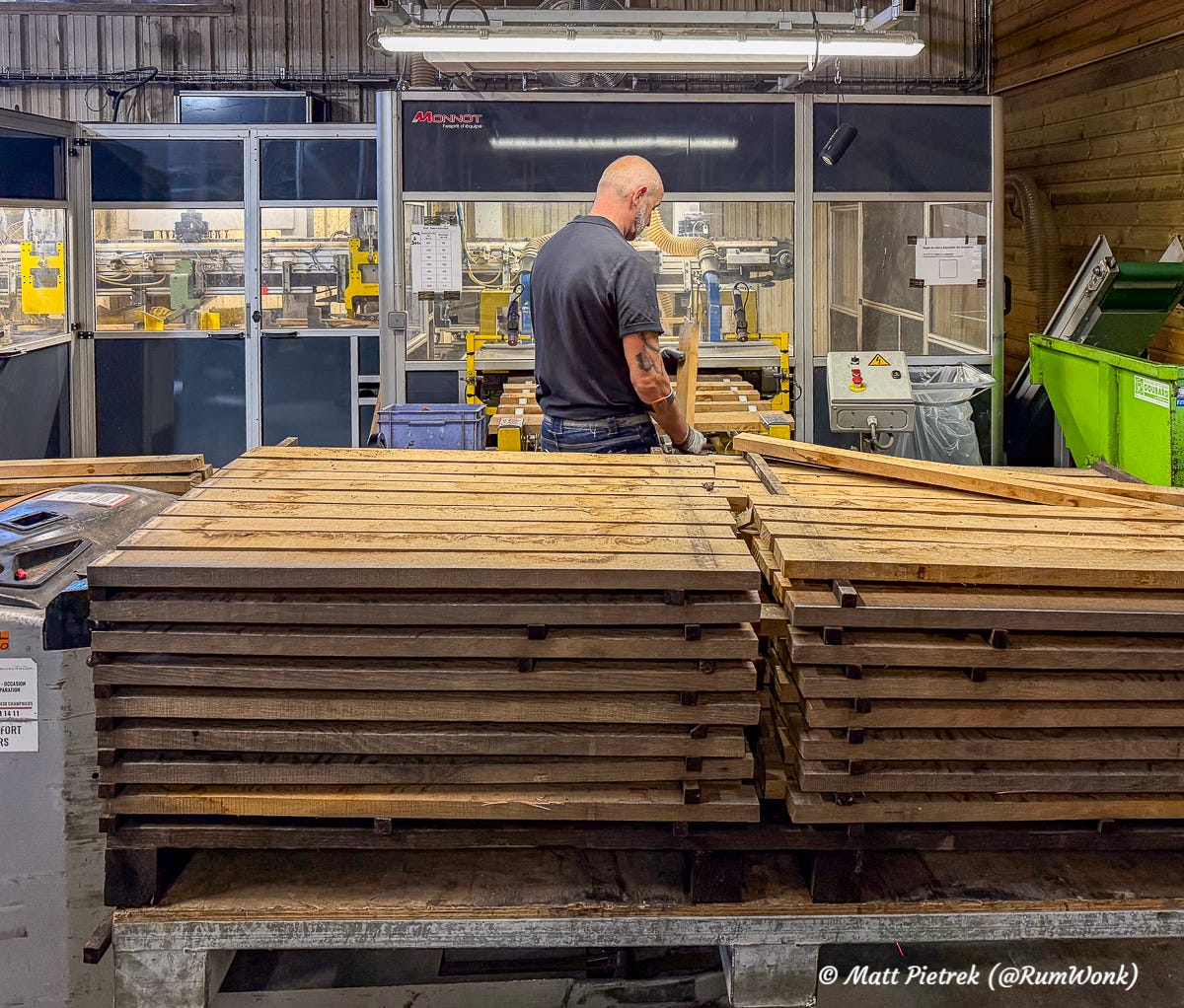
Baron makes a wide range of cask sizes, between 200 and 600 liters, so each stave’s length, curvature, and beveling are tuned to the cask type it will help form.
A cooper sorts staves leaving the planer into various bins based on their physical characteristics. Staves with a tight grain pattern are typically used for aging wine, while a looser grain is preferred for spirits.
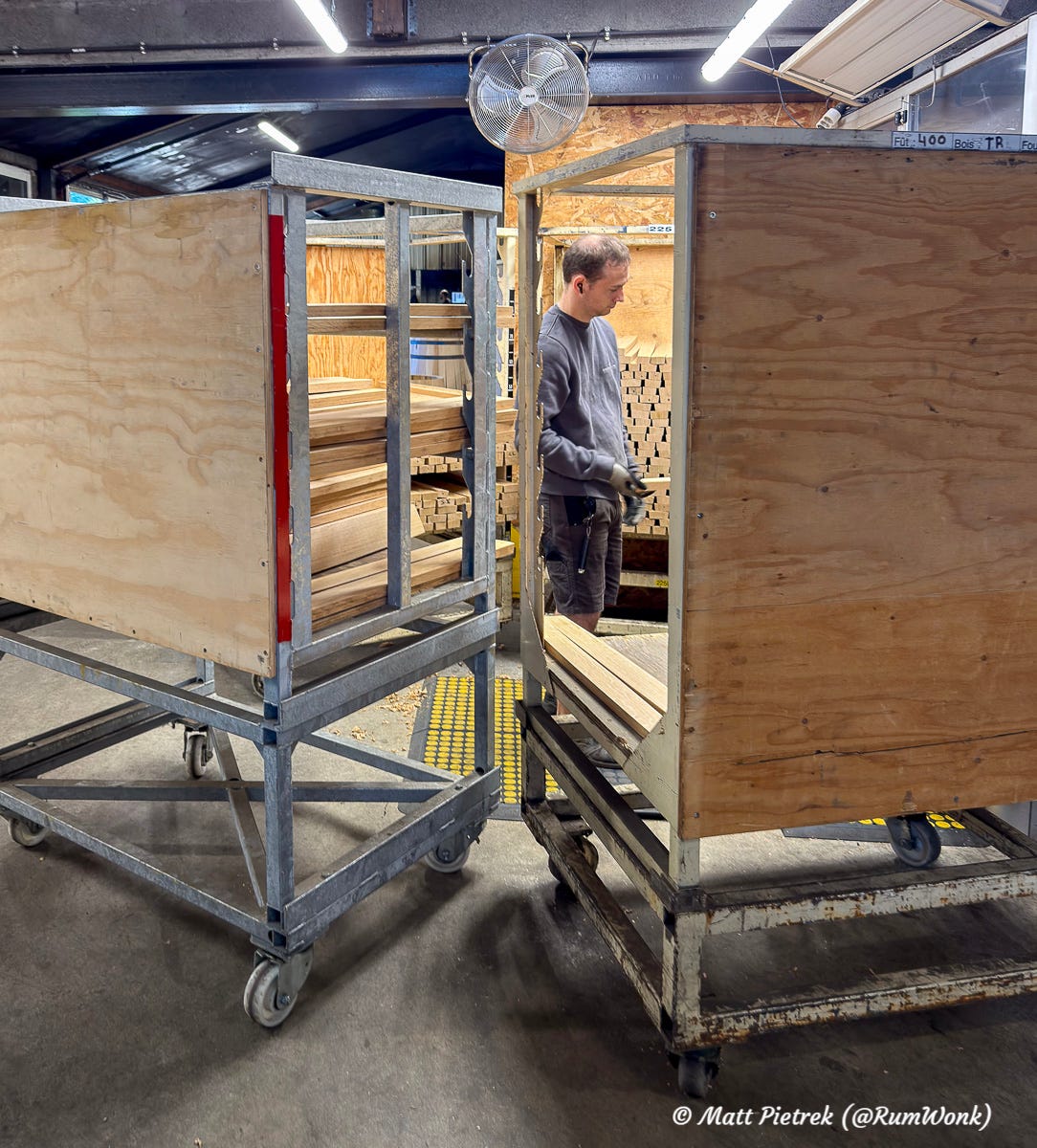
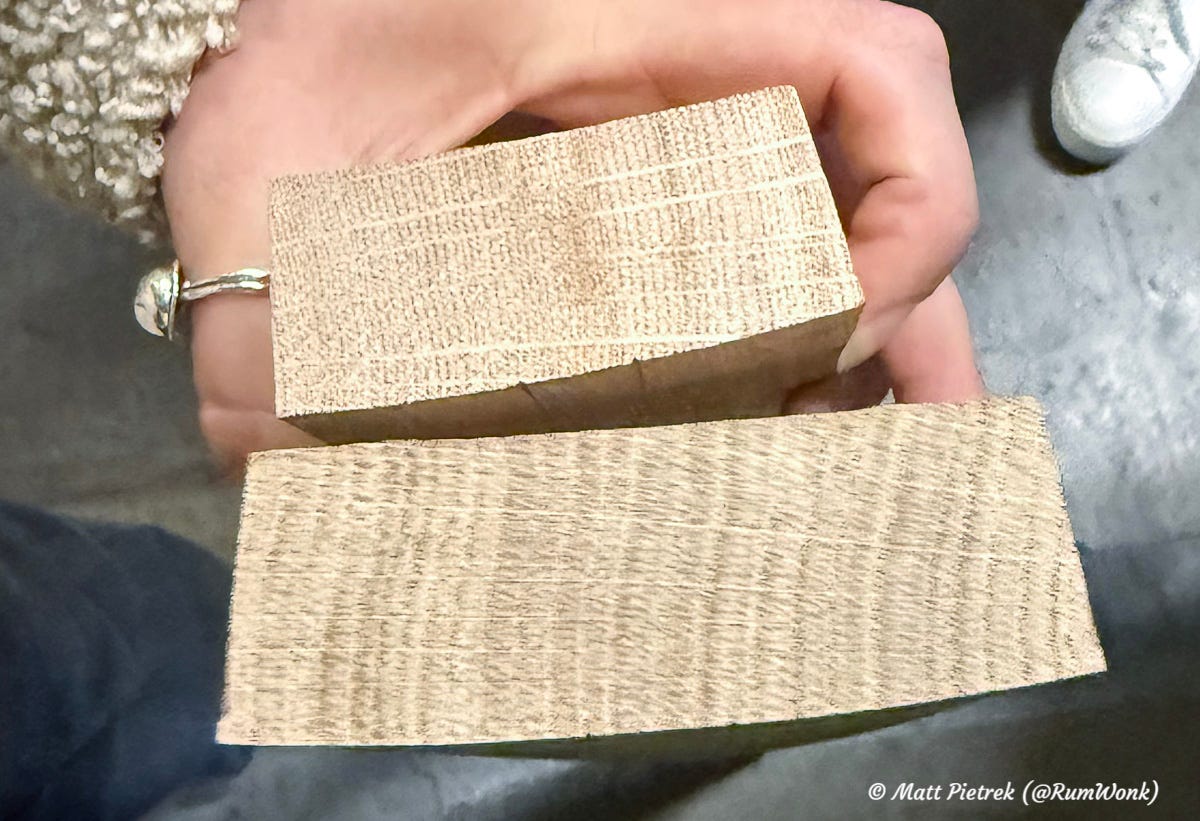
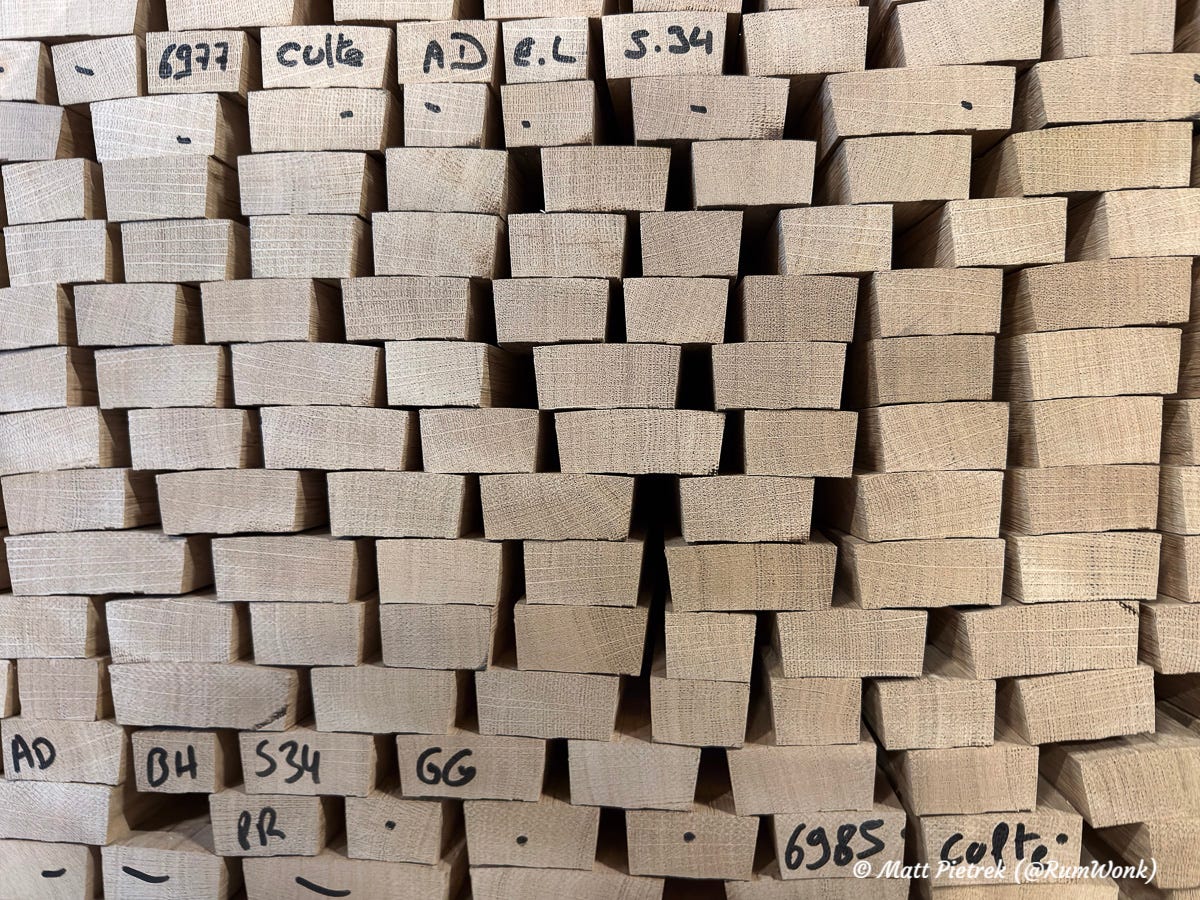
Initial Cask Assembly
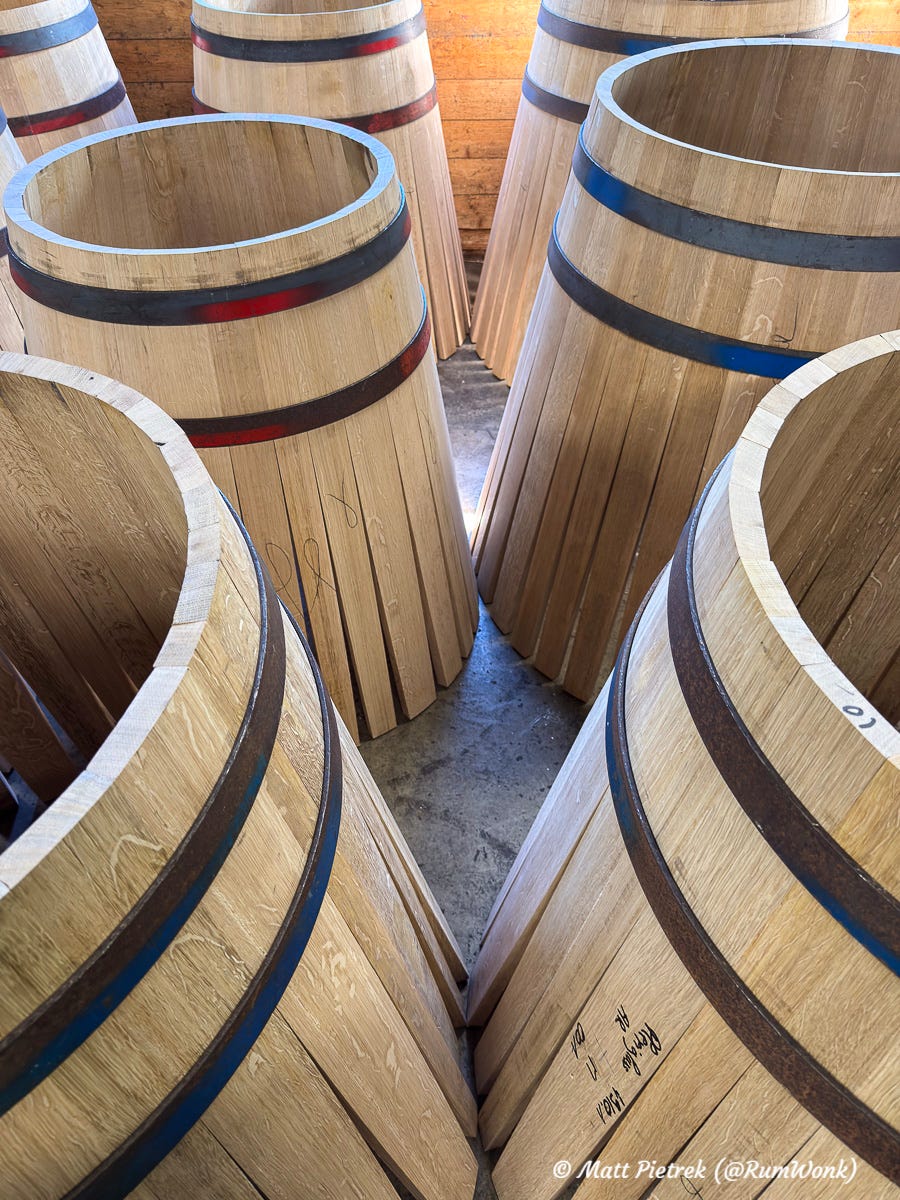
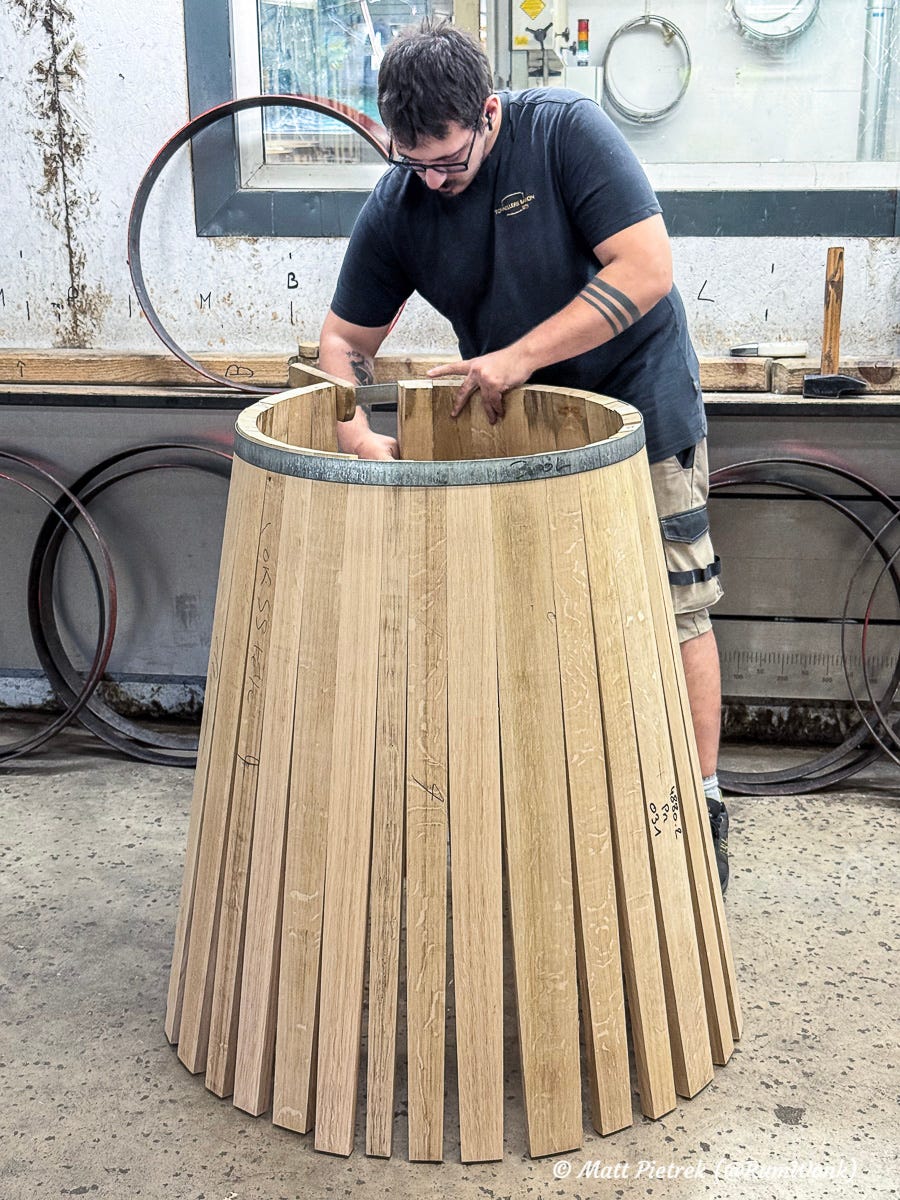
Cask construction starts with a single metal hoop and a stack of staves. Holding the hoop about a meter high, the cooper carefully positions staves around its inner circumference. Once all staves are in place, they pound the hoop down, binding the staves tightly and allowing the whole assembly to be moved without staves falling out.
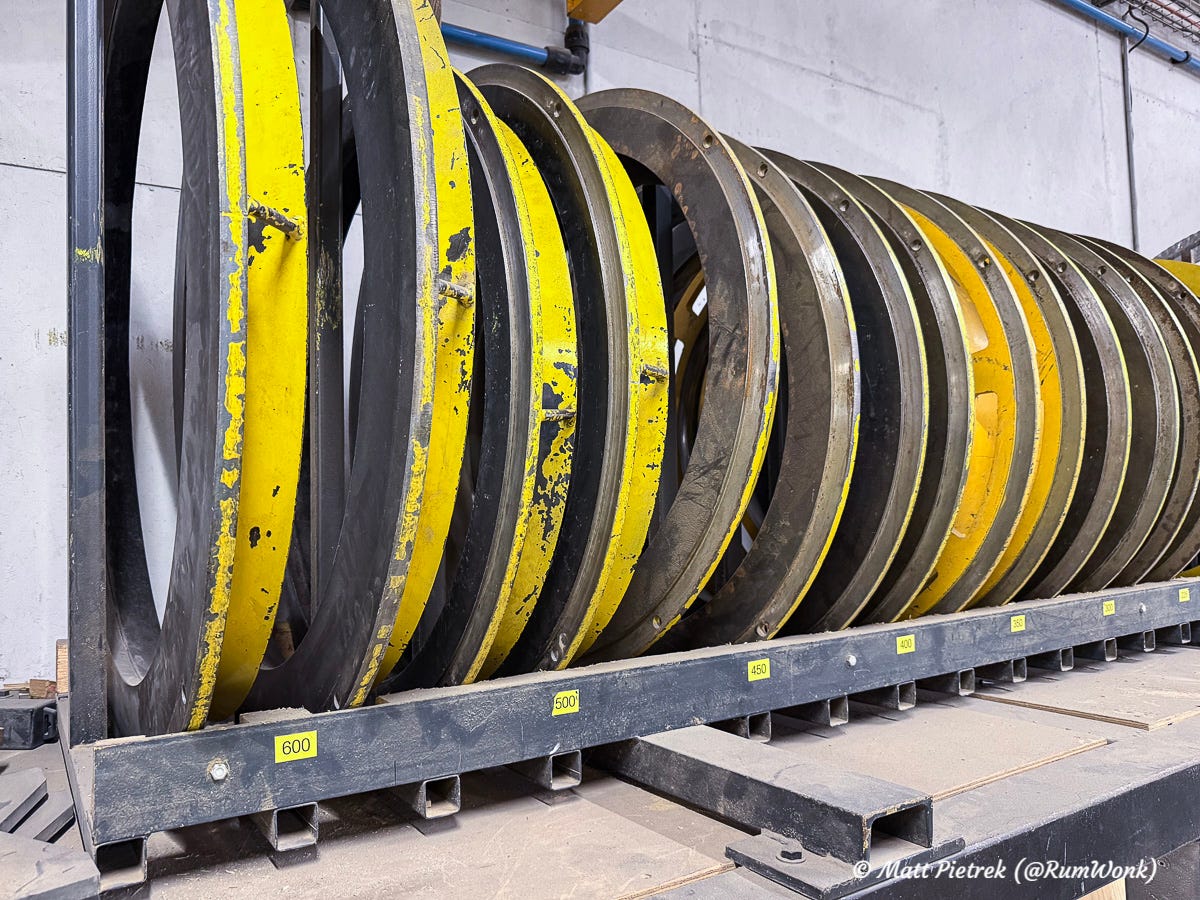
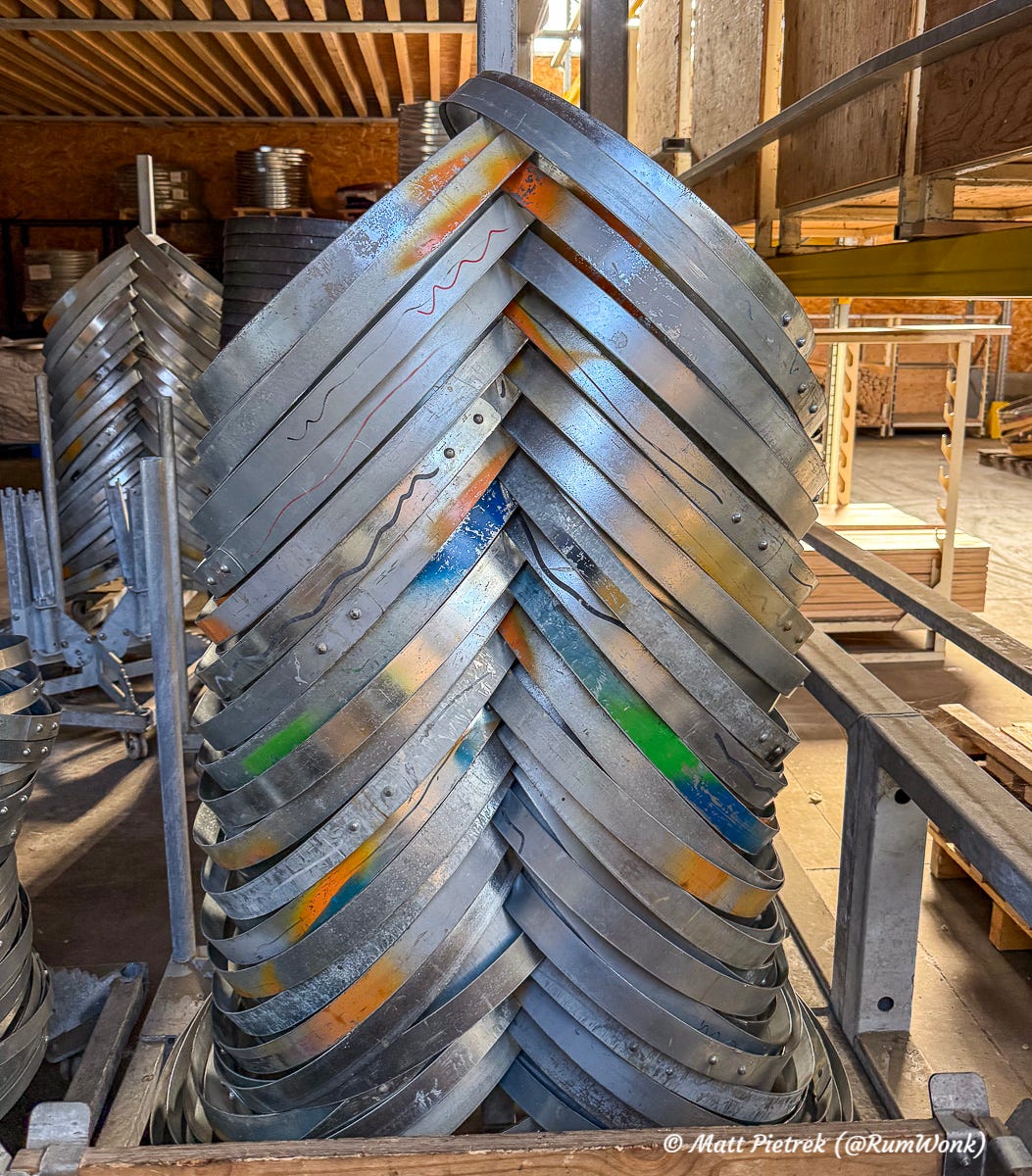
During the cask-making process, hoops are frequently added, removed, loosened, or tightened. The initial hoops are heavy-duty and far less attractive than the final hoops the customer sees when the finished cask is delivered. Throughout the facility, you’ll see racks of hoops in all sizes.
Toasting
Unlike American oak, which is traditionally charred with intense heat for a minute or so, French oak is typically toasted for about an hour, or maybe longer, at much lower temperatures.
Why toast? The controlled application of moderate heat transforms some of the wood components into the desirable flavor compounds associated with French oak aging. And while French oak casks are primarily associated with wine and spirits like Cognac, numerous rum makers around the globe also use French oak. As you might expect, rum makers in the French overseas departments like Martinique are particularly fond of French oak.
Toasting is done with a floor-mounted assembly that emits flames and heat. The fuel is wood discarded from prior steps. A cooper positions the cask assembly over the heating assembly.
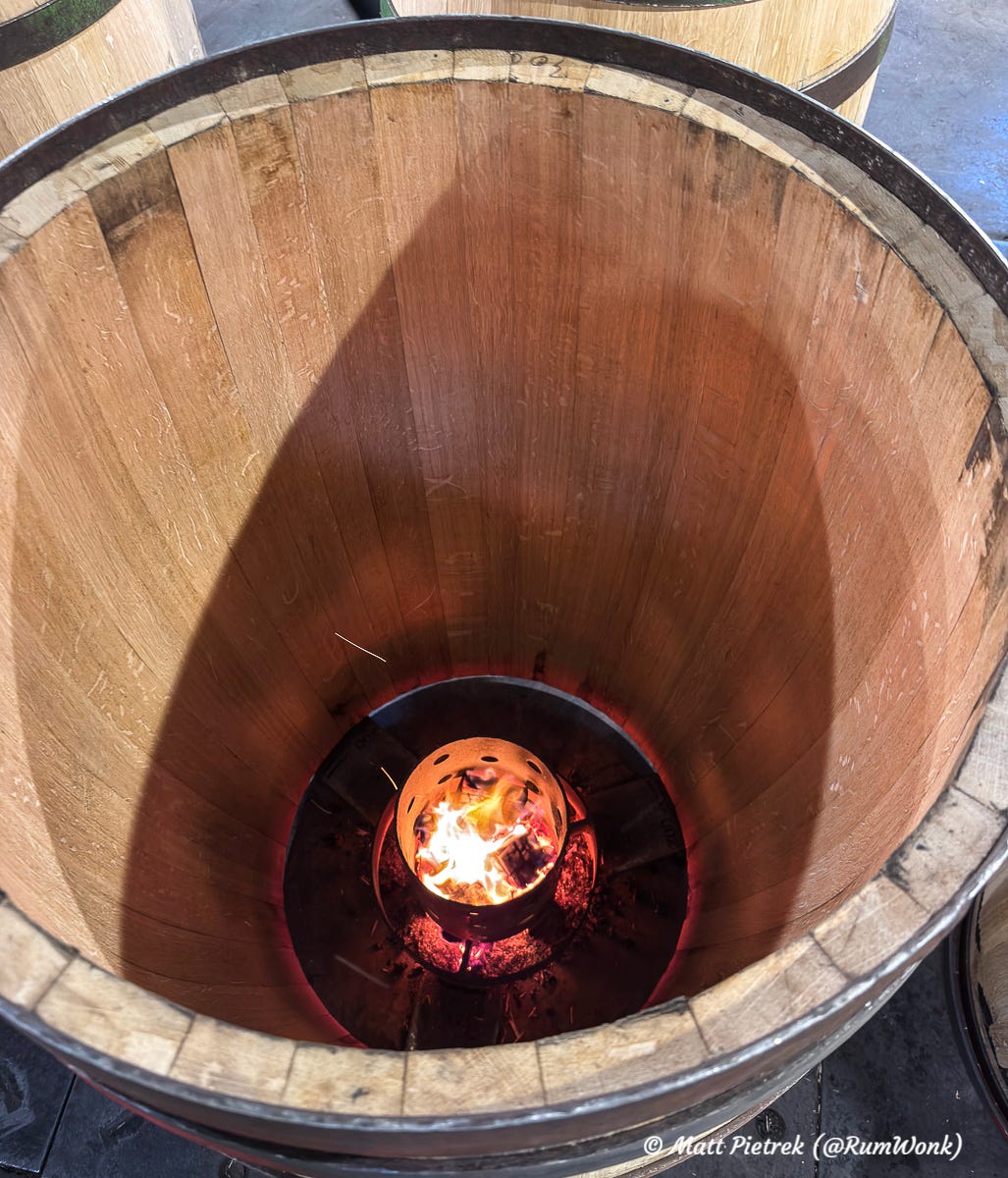
Sensors and a computer track the temperature through the entire process. A screen mounted over each cask shows the current temperature and remaining time. When the monitor prompts them, coopers flip the cask upside down to toast the other end.
Further Assembly
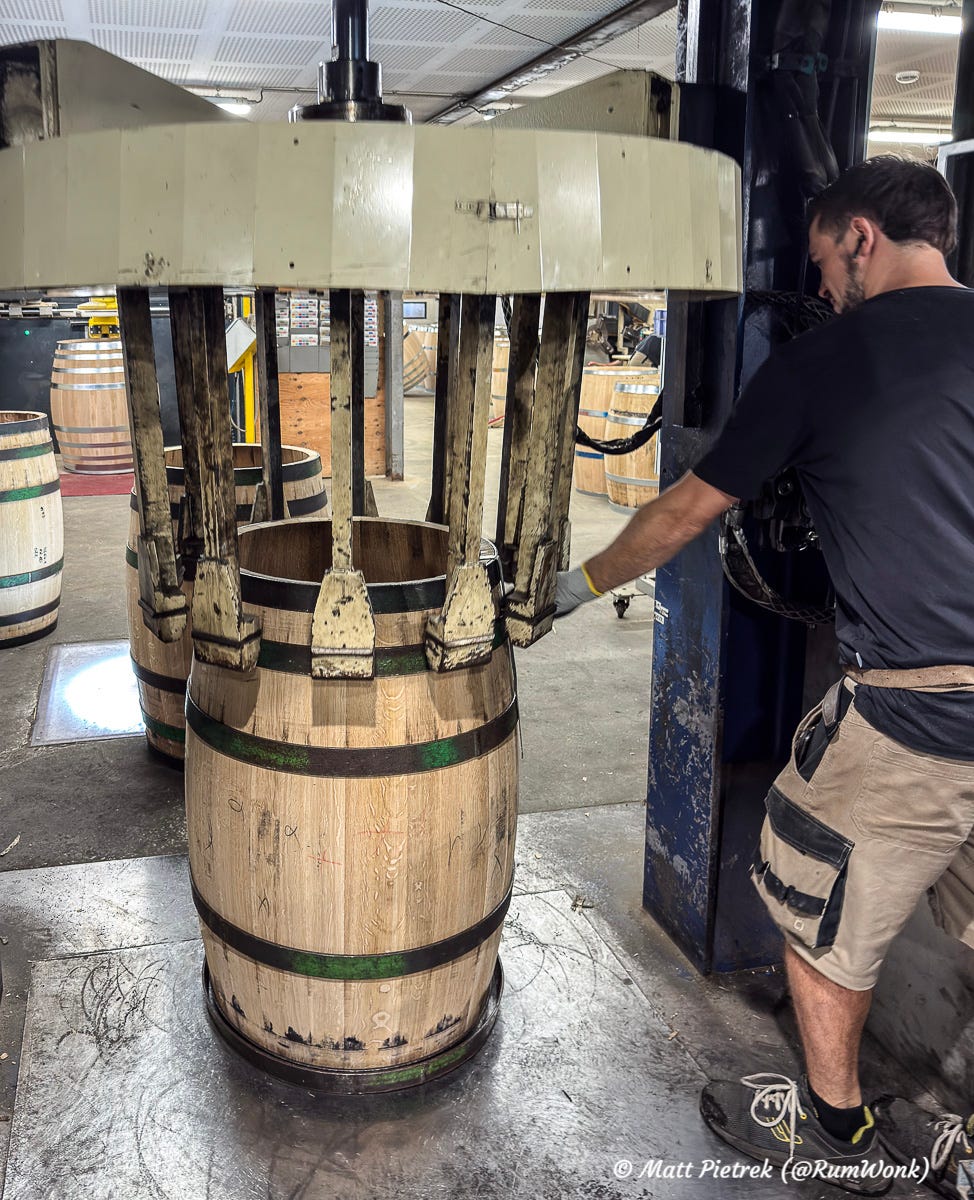
After toasting, more hoops are added to bring the cask closer to its near-final shape. Hydraulic presses push the hoop down from above, saving coopers from hours of mallet swinging and associated arm strain.
At this point, the cask still doesn’t have its two ends (heads) in place, so it’s a good time to sand down the cask’s internal walls. Again, machines save the day, slowly rotating the cask while a cylindrical sander wheel works inside.
Grooves are also cut around the inner circumference of both ends of the cask. The cask head will later be pulled into this groove, known as a croze.
The outsides of the casks are also sanded by another machine that spins the casks. A cooper guides where the sanding belt touches the cask to avoid sanding the metal hoops.
Putting Our Heads Together
Elsewhere, the cask heads are assembled. Coopers start by preparing shorter staves that will eventually be laid side by side to form a square. First, a groove pattern is cut on both sides of the staves. These interlocking grooves prevent the staves from sliding apart when they’re all pressed together.
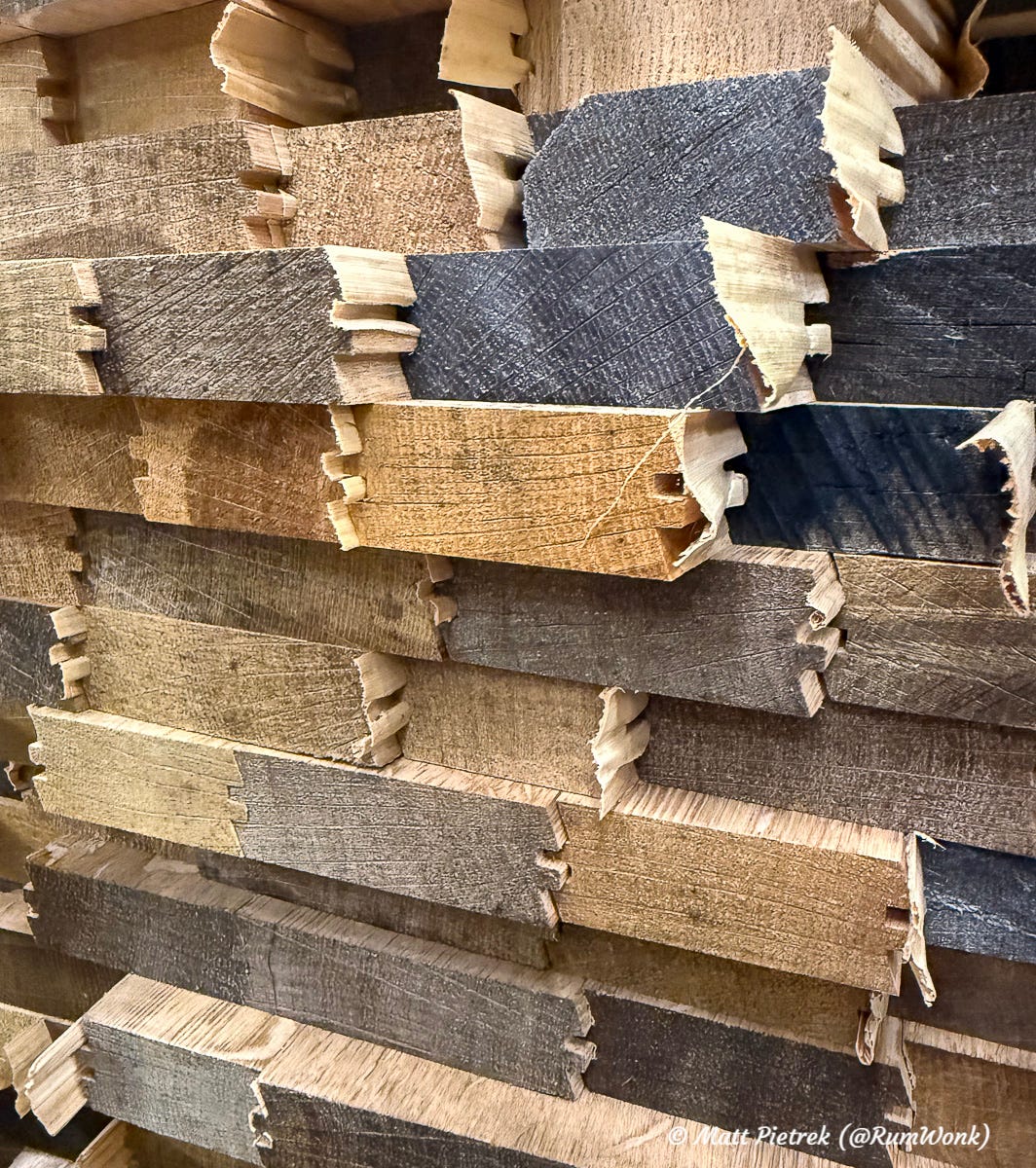
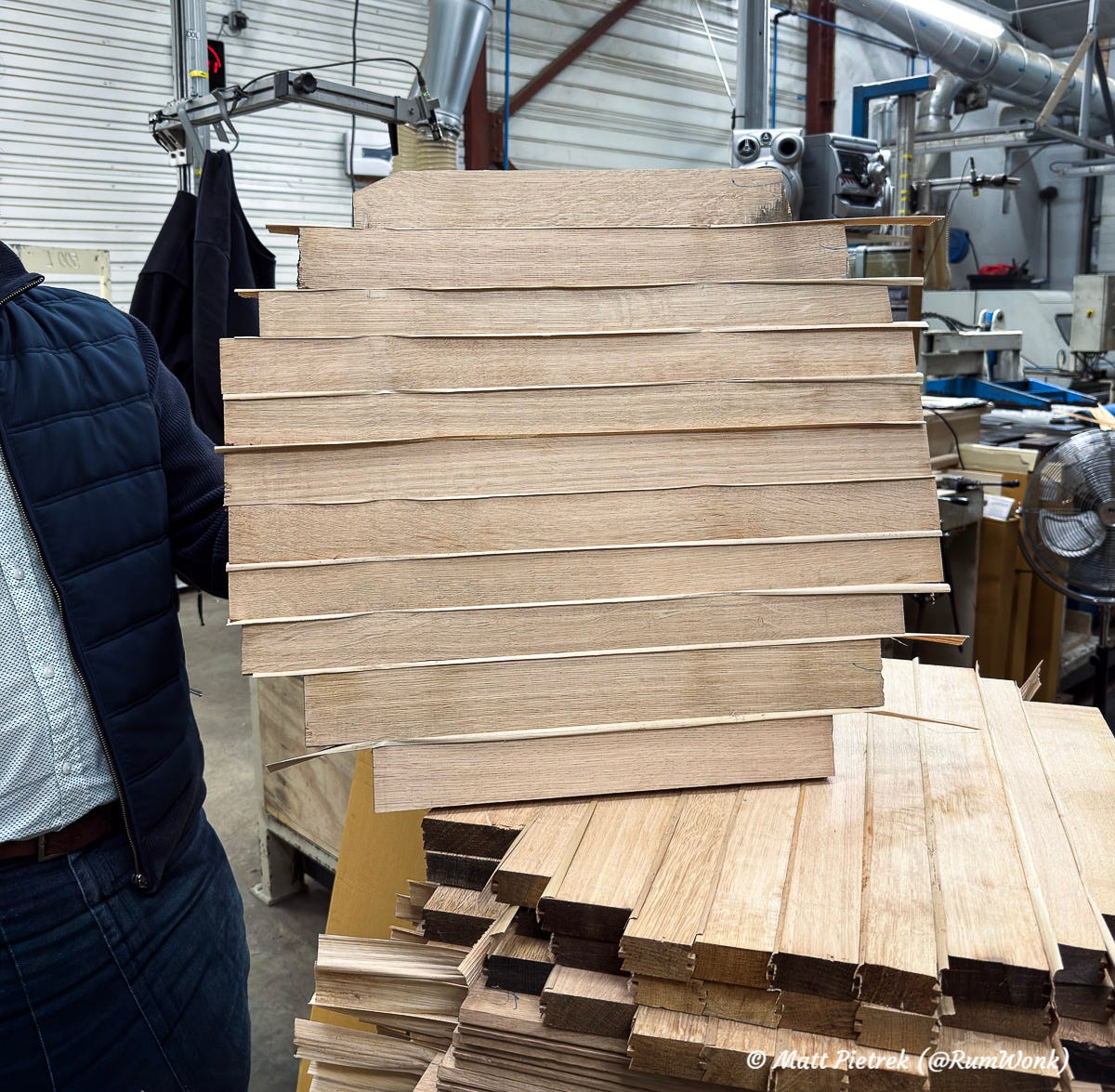
To prevent leakage through tiny gaps between adjacent staves, a very thin reed is glued in place, creating a gasket.
Once all the staves are joined into a square, a machine rotates the head to cut a circle and tapers the edges so that they’ll fit into the croze at each end of the cask body.
Final Steps
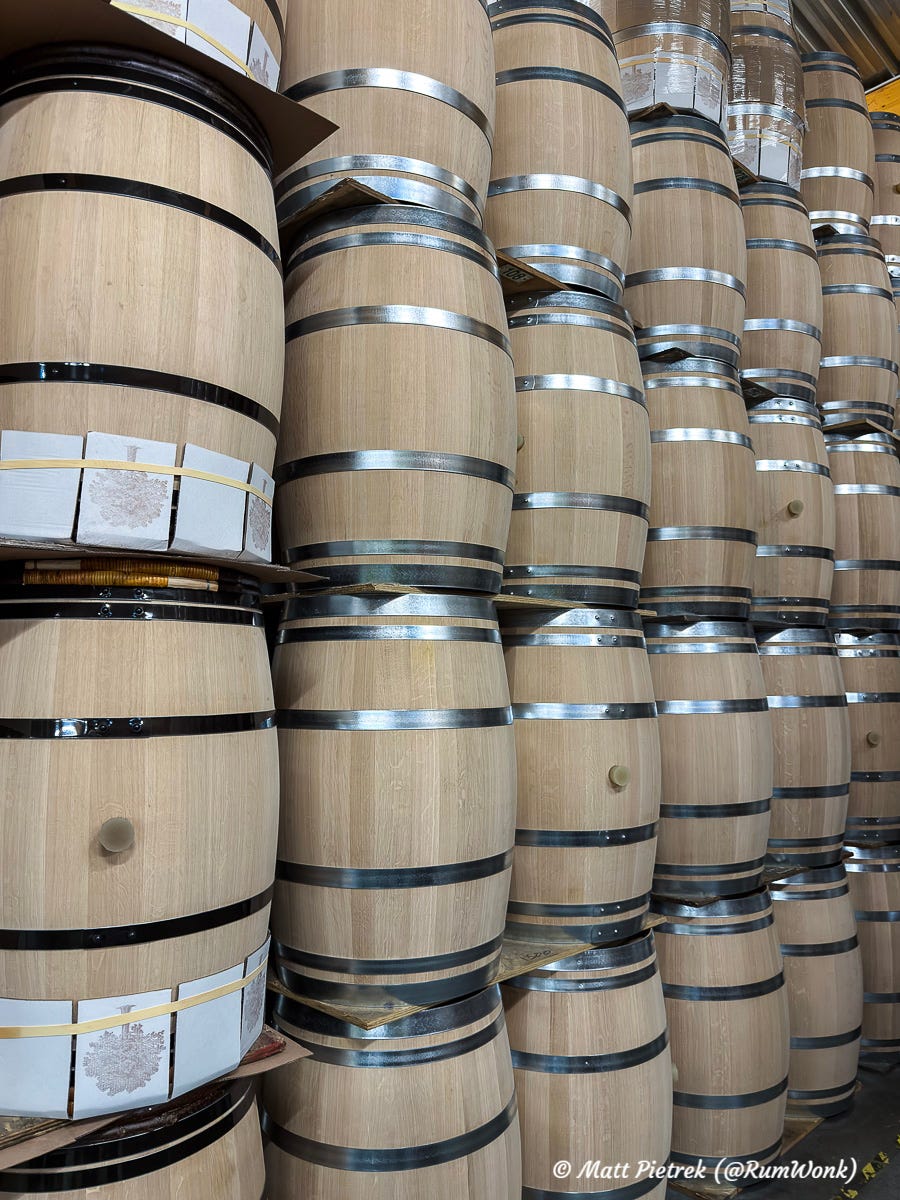
The last few steps, after the main cask and the cask heads are joined, include fitting the final hoops, which look much nicer than the intermediate hoops. The cask is then pressure tested to ensure it has no obvious leaks.
Naturally, a tonnellerie will want to put its name on the cask head, much like your car says Hyundai or BMW. In the old days, this might have been done with a branding iron. These days, laser etching is the norm and is much more adaptable than branding. In addition, the customer’s logo can also be added to the cask head.
Dust Up
You may have missed it in the photos above, but many of the coopers don’t need to wear dust masks, despite how much cutting and sanding occurs. Most of the machines at Baron do the cutting and sanding inside contained chambers. A vacuum hose system pulls air from the chambers to a central spot, where the sawdust accumulates before they’re pressed into wooden “bricks” about the size of a Spam can.
Wrap Up
Despite all the photos and videos above, the full cooperage process includes much more. If you ever get a chance to visit a cooperage, don’t pass it up!
Should you wish to experience French oak aged rum, I would first look toward rum makers in Martinique, Guadeloupe, and Réunion. With a little effort, you can even find molasses-based rums from the latter two. Here’s an article about that:

For more information and photos from other cooperages I’ve visited, see these two articles on my Cocktail Wonk site:
Also, I’m always looking for ways to improve how I share information, so let me know in the comments what you think of this type of photo/video storytelling.
Rum Wonk is free to for all, but you can help support my independent journalism by buying books from Wonk Press, my publishing company.

(Not So) Hidden End Credits