


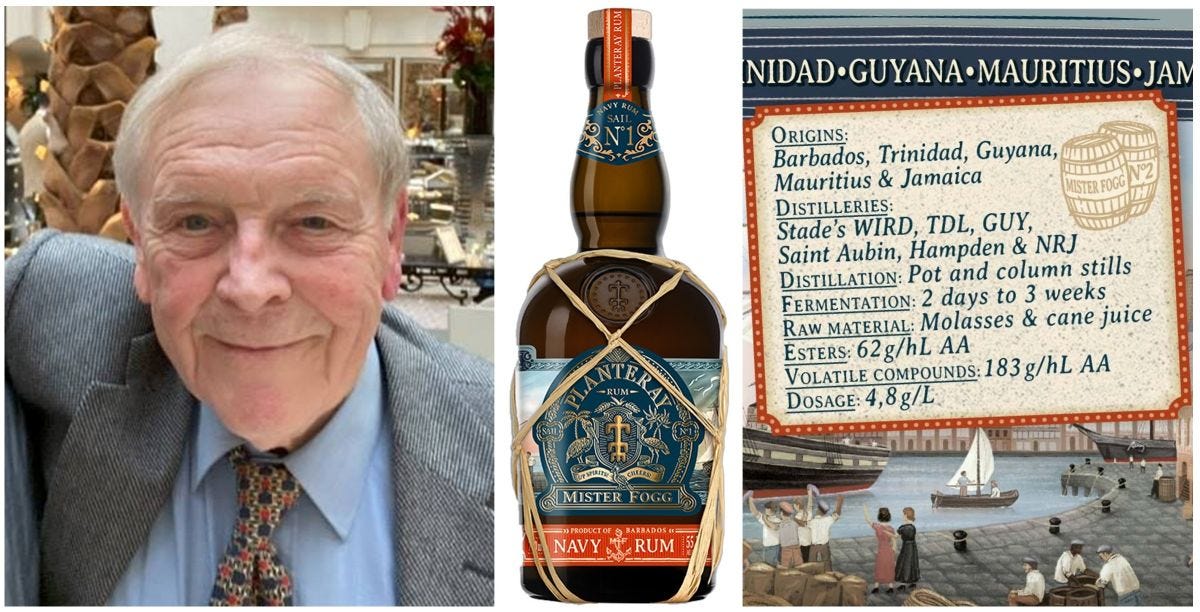
As Planteray’s Mister Fogg Navy Rum, Sail N° 2 reaches store shelves, I’ve seen a wave of questions about what it is, how it relates to Sail N° 1, and how closely it tracks historical Royal Navy rum. While I don’t work for Planteray, my research into Royal Navy and London Dock rums directly informed the project, and I’ve had a front-row view of its development. What follows is some background on how Mister Fogg came to be, and answers to many of the questions I see most often.
Brief Background of Mister Fogg Navy Rum.
In late 2018, Planteray (Plantation at the time) asked me to research Royal Navy and London Dock rum and write a short book about what I learned. I handed in a set of chapters six months later, but Alexandre Gabriel and I continued discussing the topic. Based on references to the Royal Navy aging their rum in large open vats, Alexandre modified two of his vats in France to make a rum inspired by the techniques and rums the Royal Navy used.
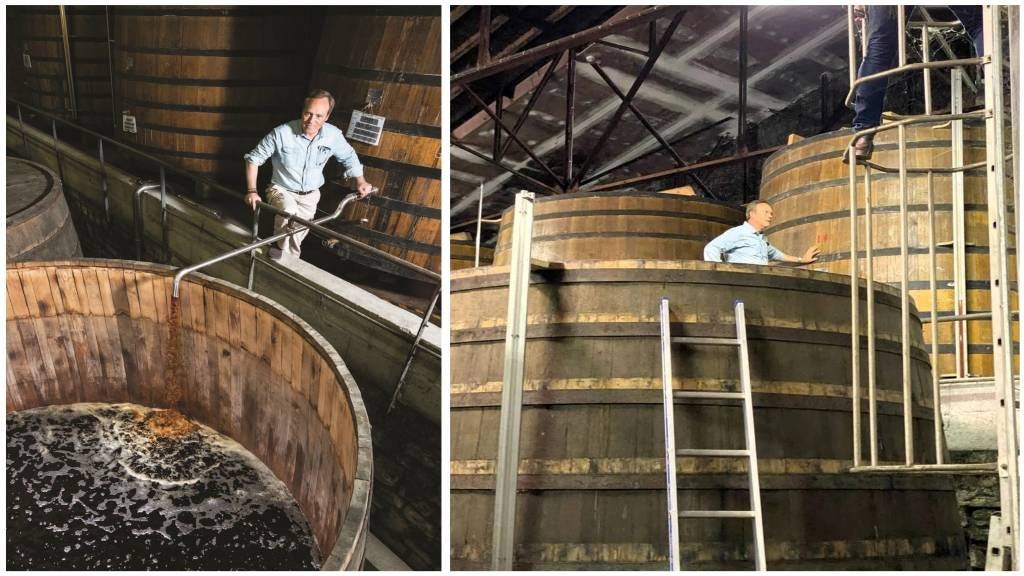
The first batch of Mister Fogg (“Sail N° 1”) was launched at Tales of the Cocktail in 2024, and a second batch (Sail N° 2) was released a year later. While they are different blends, both rely on the style of rums that the Royal Navy was known to use.
For more details on the Mister Fogg project, see this story:

Around the same time, Wonk Press, my book publishing company, released The Rum Never Sets. The book is a greatly expanded version of what I wrote in 2019 and includes chapters by Alexandre that connect the Mister Fogg project to the history that inspired it.
Mister Fogg Q&A
Here are some brief answers to some of the frequent questions about Mister Fogg navy rum.
Who is Mister Fogg?
When Charles Tobias, founder of Pusser’s Rum, started his project, he was connected to Michael Fogg, an employee of the company that sold the component rums to the Royal Navy. Charles later hired Michael, who served for several decades as the commercial director and brand ambassador for Pusser’s.

I met and became friends with Michael during my research. He shared many anecdotes and stories, as well as documents connecting key topics in my research. When Michael passed away in 2020, Alexandre named the rum in his honor, with permission from Michael’s wife, Jayne.
This Cocktail Wonk article tells Michael Fogg’s story in more detail: Remembering Michael Fogg – Conservator of Rum’s Legacy
Is Mister Fogg a Recreation of the Royal Navy Rum?
No, and that’s intentional. Alexandre drew on the techniques and types of rum the Royal Navy used, but creating a replica of the Royal Navy’s recipe at a specific point in time wasn’t the goal. If you want to know exactly what Royal Navy rum tasted like, Black Tot Last Consignment is the real deal. It’s actual Royal Navy rum made in the 1950s and 1960s.
How do I tell Which Edition of Mister Fogg I have?
It’s easy, once you know where to look. While the main label is similar for both editions, the neck band below the cork reads either Sail N° 1 or Sail N° 2.
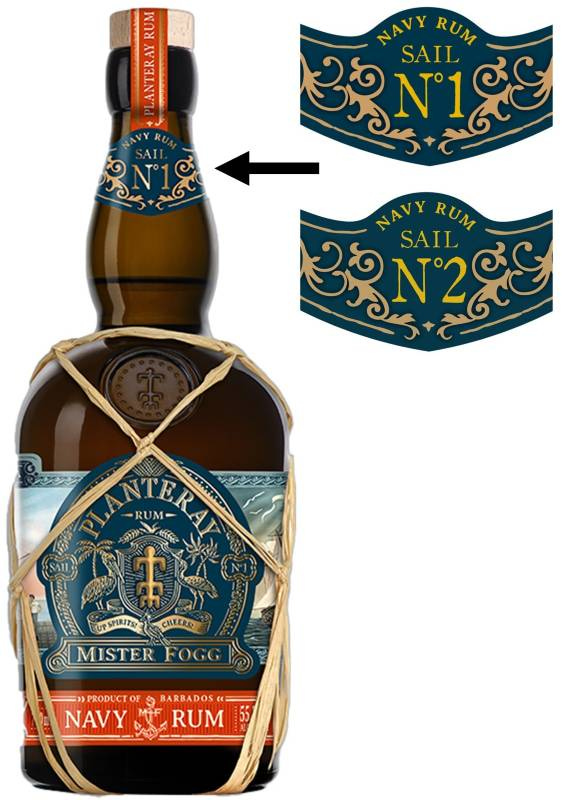
Also, if you have both bottles, see if you can spot all the changes in the main label imagery and text.
Why Sail N° 1 and Sail N° 2?
The two open vats used to make Mister Fogg hold enough rum to make around 35,000 bottles. Because the rum continuously flows between the two vats for many months, only one batch can be made at a time.
Anticipating future demand for this rum beyond just 35,000 bottles, Planteray planned a series of sequential limited editions. The two batches so far share the same primary name, Mister Fogg, but are differentiated by a batch number, i.e., Sail N° 1, Sail N° 2, etc. The two batches are distinctly different, as noted in the next question.
Will there be a Sail N° 3? I certainly hope so! But there’s nothing I can report on thus far.
Are Sail N° 1 and Sail N° 2 the same?
No, and that’s also intentional. Most rum releases rely on a recipe that’s used repeatedly to make each batch. But as my research turned up, the rums that the Royal Navy used changed frequently due to pricing and availability. However, the navy blender(s) sought to retain the core flavor profile. This ethos influenced how the two Mister Fogg batches are different.
The Sail N° 1 blend is:
43% Barbados: West Indies Rum Distillery
36% Trinidad: Trinidad Distillers Ltd (aka Angostura)
17% Guyana: Demerara Distillers Ltd
4% Jamaica: Clarendon and Long Pond
The Sail N° 2 blend is:
35% Trinidad: Trinidad Distillers Ltd (aka Angostura)
34% Barbados: West Indies Rum Distillery
20% Guyana: Demerara Distillers Ltd
6% Mauritius: St Aubin Distillery (cane juice)
5% Jamaica: Clarendon, Long Pond, and Hampden
As a point of reference, the Royal Navy’s blend in the mid-1900s was:
60% Demerara (mostly pot still)
30% Trinidad (mostly or entirely Caroni)
10% other (changed over time, but included Barbados, Australia, Natal, and Mauritius)
The exact recipe used in 1962 is detailed in The Rum Never Sets book.

How do Sail N° 1 and Sail N° 2 Compare – Taste-Wise?
Everyone’s palate is different, but here’s my take.
Sail N° 1 has distinct spiciness and dried-fruit notes that make me think of fruitcake. Some people say “cinnamon,” but I’d say “cinnamon-adjacent”. I’ve wondered about infusing a bottle of OFTD with fruitcake to see how close the result is to Sail N° 1.
Sail N° 2 is less spicy and less dried fruit. It’s significantly closer in flavor profile to actual Royal Navy rum and rums that seek to replicate that flavor. So far, the ratio of people preferring one over the other is roughly 50/50 in my experience.
What Can I Make with Mister Fogg?
Again, this is a matter of personal taste, and I see folks using Mister Fogg in daiquiris and Mai-Tais. From my perspective, using it as the sole rum in a Navy Grog is a no-brainer. I think it’s also well-suited as a one-rum solution for recipes using the classic Don the Beachcomber blend of Demerara, Jamaica, and something lighter. Think 1934 Zombie or Jet Pilot here.
Pro-tip: Sail N° 1 in particular works well in stirred, rum-forward drinks. Consider the Foggroni, a rum-based Negroni with adjusted component ratios:
Foggroni – Matt Pietrek (2024)
1.5 oz Mister Fogg (Sail N° 1 preferred)
1 oz sweet red vermouth
0.75 oz Campari
Stir over ice. Strain into a chilled coupe or other small vessel
Why Can’t I Find Sail N° 1?
Planteray makes so many expressions that it’s not feasible to release each in every market around the globe. For reasons I’m not privy to, Sail No. 1 was designated for the US market; however, a small number of bottles found their way to certain EU markets. I’m told that Sail N° 2 is destined for the US and most major EU markets, but not the UK as of yet.
Is Mister Fogg Sweetened? If so, Why?
Per the label, both Sail N° 1 and Sail N° 2 have a dosage of 4.8 g/L. In this case, the dosage is from burnt sugar cooked in a copper kettle in Barbados.
While this may raise some eyebrows, especially those with strong feelings about additive-free rum, it’s historically consistent with Royal Navy practice. Rather than using E150a as many modern spirits do, the Royal Navy used moderately burnt caramel to color their rum. The small amount of sugar remaining in the caramel affected the measured alcoholic strength. (See next question for further details.)
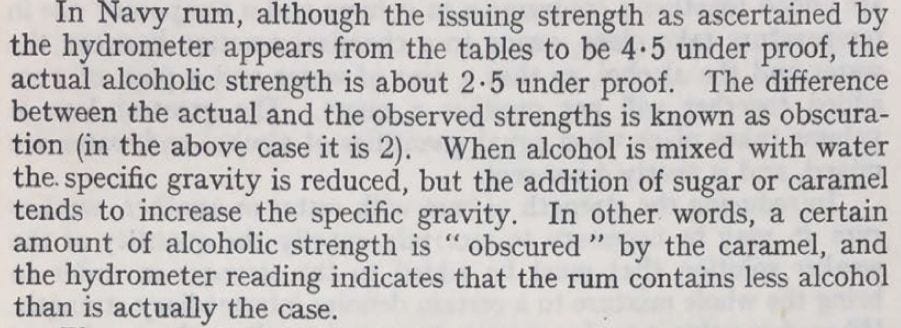
The Royal Navy documented this practice in several 1900s-era victualling manuals, and Mister Fogg specifically emulates this historical practice.
Why is Mister Fogg bottled at 55.7% ABV, not 57% ABV, or 54.5% ABV?
The traditional tool used to measure alcoholic strength is known as a hydrometer. This simple tool uses the relative density of ethanol and water to ascertain the percentage of alcohol. The presence of anything in the spirit other than ethanol or water alters (“obscures”) the stated percentage, albeit in a consistent manner.
The Royal Navy victualling manual notes that without the added caramel, a hydrometer would measure the navy’s rum at 2.5 degrees underproof. But with caramel, the hydrometer reads 4.5 degrees underproof. In ABV units, with caramel, 54.5% ABV, without caramel, 55.7% ABV.
These days, ABV is measured using a much more reliable method that ignores the obscuration effect. The Mister Fogg label states an ABV of 55.7% ABV using this method. However, if the ABV were measured with a hydrometer, the 4.8 gr/liter of dosage in Mister Fogg would cause the hydrometer to read 54.5% ABV.
Simply put, Mister Fogg is emulating what the Royal Navy blenders did.
That’s all for now! Did I miss anything? Leave your questions in the comments.

I just wanted to take the time to say that I find your scholarly work very informative and elucidating. I have a much better appreciation for British Navy style rum and its rich history. Thank you for the well cited and researched articles.
I had the pleasure of tasting the individual rums used in this blend, as well as the blend itself in SF several months back. We were apparently the first to try it stateside, which was an exciting thing to know!
It's a delicious blend! I loved the first one as well, and still have a couple bottles at home. I haven't seen the new bottle for sale yet.