


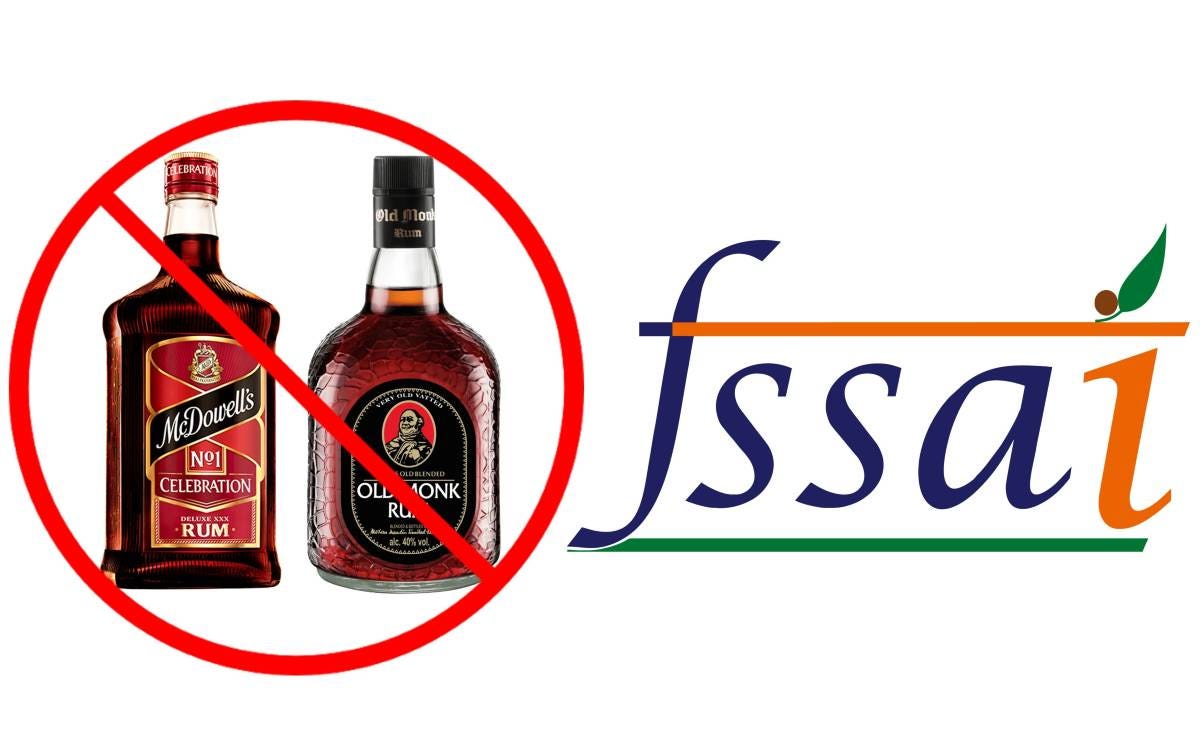
Recent rum-related news from India has been making headlines in the mainstream press. In a press release, the Food Safety and Standards Authority of India (FSSAI) announced that some of the country’s most iconic rum brands, including Old Monk and McDowell’s No. 1 Celebration, could no longer be sold.
Technically, the ban applies to specific expressions made at specific facilities in India. The banned expressions also extend to certain whisky brands, but this is a rum newsletter after all.
Within the spirits trade, it’s an open secret that Indian-made spirits were essentially just neutral spirit and flavorings, so seeing a government agency crack down on two well-known brands is surprising.
The reasoning behind the FSSAI’s ban on certain products has two dimensions. The first is:
…an existing malpractice wherein manufacturers, instead of creating products through maturation and/or from base materials such as molasses, malt, or grapes to develop their flavour naturally, use spirit/neutral alcohol primarily, which has no specific flavour and therefore add flavour externally.
Such products are not only sub-standard but are also misrepresented by using the names of standard categories [like rum]. At best, they can be identified as Rum-flavoured Spirit ... Further, the front of the pack completely fails to disclose the true nature of the product.
This is no small matter, as Diageo-owned McDowell’s is often cited as one of the world’s top-selling rum brands. But after initially challenging the FSSAI ruling in court, Diageo quickly reversed course and agreed to reformulate McDowell’s to comply with India’s regulations.
The second aspect of the government’s crackdown is false age claims by Old Monk:
The claim of “7 years old blended” in the label of Old monk XXX Rum variant was also found to be misleading. The major ingredient of the rum is neutral (unmatured/unaged) spirit, while the matured rum spirit is only a minor ingredient of the rum (less than 5% as per investigation findings). This is also a clear violation … as the age claim of the spirit should be from the youngest of spirit in the blend…
Misleading age claims have long been an Achilles’ heel for the rum category, but typically it’s a handful of Spanish heritage producers drawing fire. Old Monk is a new front in the fight.
Before we get to why the FSSAI took action, it’s worth noting that while all the brands it targeted are of Indian origin, FSSAI could have prohibited non-Indian brands from being sold in India as well. Let’s look at why.
Rum’s Lesser-Known Regulations
In spirits industry and certain nerdy rum enthusiast circles, 99.9% of rum regulation discussions focus on geographical indications, aka GIs. A GI dictates what can be labeled as rum (or other spirit) from a specific region.
For instance, Martinique’s AOC is a French law dictating all conditions that must be met to say “Rhum de la Martinique” and “Appellation d’Origine Contrôlée” on the label. Similarly, Jamaica’s rum GI defines the requirements to use “Jamaica Rum” on the label.
Much lesser known are the equally important, and arguably more consequential regulations about what can be legally labeled and sold as rum — regardless of where it was made. Different regions around the globe have different rules.
I collectively referred to these regulations (national and multinational) as rum standards in my Modern Caribbean Rum book. Chapter 17 is a 30-page deep dive into rum’s geographical indications and rum standards across a dozen-plus regions.

Existing rum standards from various regions are far less stringent than geographical indications. Nonetheless, they are very important as they define the baseline requirements to be called just “rum”, rather than something like “rum spirit drink” or “flavored rum.” If you think that being made from sugarcane is sufficient, read on.
Rum standards across various regions have some key differences, including:
Some regions require a minimum aging period to call it rum.
Some regions require bottling at 40% ABV or higher, while others only require 37.5% ABV—or lower.
Some regions allow distilling up to 95%, others to 96%, and others don’t specify a maximum ABV.
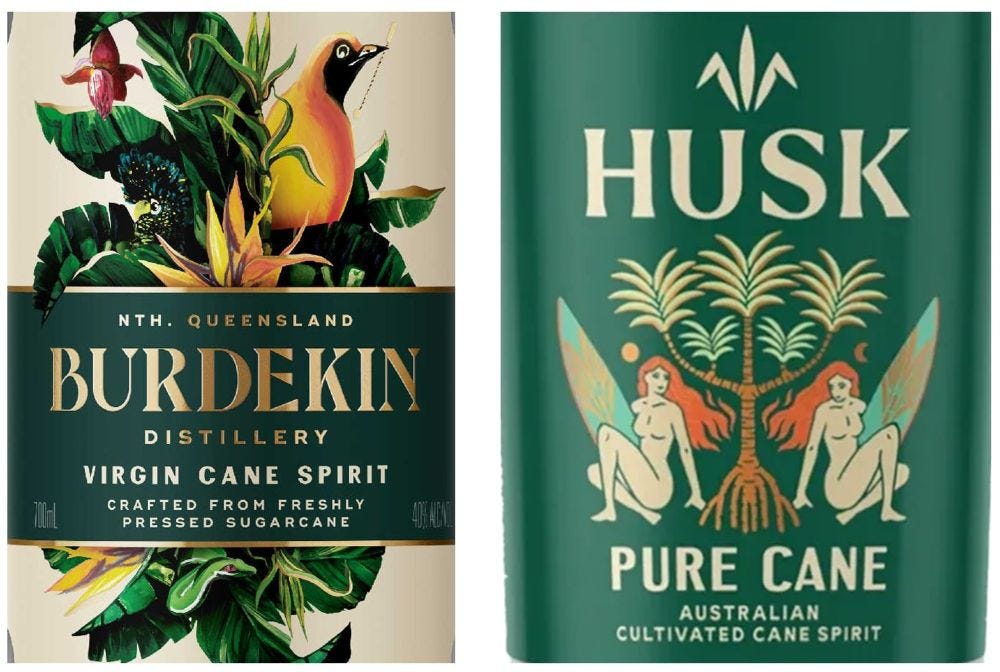
These differences have real-world effects. For instance, unaged rum like Wray & Nephew White Overproof and unaged Martinique AOC rums can’t be sold as “rum” in Australia. Instead, they must be labeled as something like “cane spirit” or “spirit drink from sugarcane.” Likewise, Wray & Nephew White Overproof (presumably) can’t be sold as rum in India as its ABV exceeds what India’s regulations allow.
Rum Standards Around the Globe
Here are summarized rum standards for a few key regions worldwide. Note that in some cases, a region’s requirements may span several regulations.
Caribbean Community (CARICOM)
What can be sold as rum in CARICOM member countries like Barbados, Jamaica, and Guyana:
Obtained by distilling fermented sugarcane products or byproducts like molasses. Distillation must be less than 96% ABV. Smells and tastes like the result of fermenting and distilling sugarcane. Flavors may be added up to 2.5 percent by volume, with or without sugar. Bottling at 40% ABV or higher. Any caramel used must derive from sugarcane.
European Union Spirit Drink Standard (EU) 2019/787
What can be sold as rum in any European Union member country:
Obtained by distilling fermented sugarcane products or byproducts like molasses. Distillation must be less than 96% ABV, and the distillate must taste and smell like rum. Flavoring is not allowed. Bottling at 37.5% ABV or higher. Sweetening up to 20 grams/liter is allowed. Any caramel used must derive from sugarcane.
United States
What can be sold as rum in the US:
Obtained by distilling fermented sugarcane products or byproducts like molasses. Distillation must be less than 95% ABV. Bottling at 40% ABV or higher. While not specific to just rum, “blending materials,” e.g., sweeteners, must be less than 2.5% by volume.
Australia
What can be sold as rum in Australia:
Obtained by distilling fermented sugarcane products or byproducts like molasses and must taste and smell like rum. It must be matured in wood for at least two years. Bottling at 37% ABV or higher. No maximum distillation strength is specified.
India
What can be sold as rum in India:
Obtained by distilling fermented sugarcane products or byproducts like molasses. It may also be made from neutral, rectified, or distilled spirit of agricultural origin. It must taste and smell like rum. Bottled between 36% and 50% ABV. Sugar and permitted additives may be added, but caramel is the only permitted coloring. No maturation is required unless labeled “matured,” which requires at least one year in wood or with wood chips.
What About Bumbu?
Previously in the Rum Wonk newsletter, I took aim at Bumbu’s claim as the #1 Super-Premium Rum in the World, when the brand’s top-selling expression, The Original, is clearly not rum, per rum standards for the US, EU, and elsewhere.

While you might think that Bumbu’s issue is similar to what caused India to ban Old Monk and McDowell’s, it’s not. Bumbu (the brand) isn’t labeling or selling The Original as “rum.” The TTB legally classifies it in the US as a “rum specialty.” In the EU, it’s labeled as a “spirit drink.”
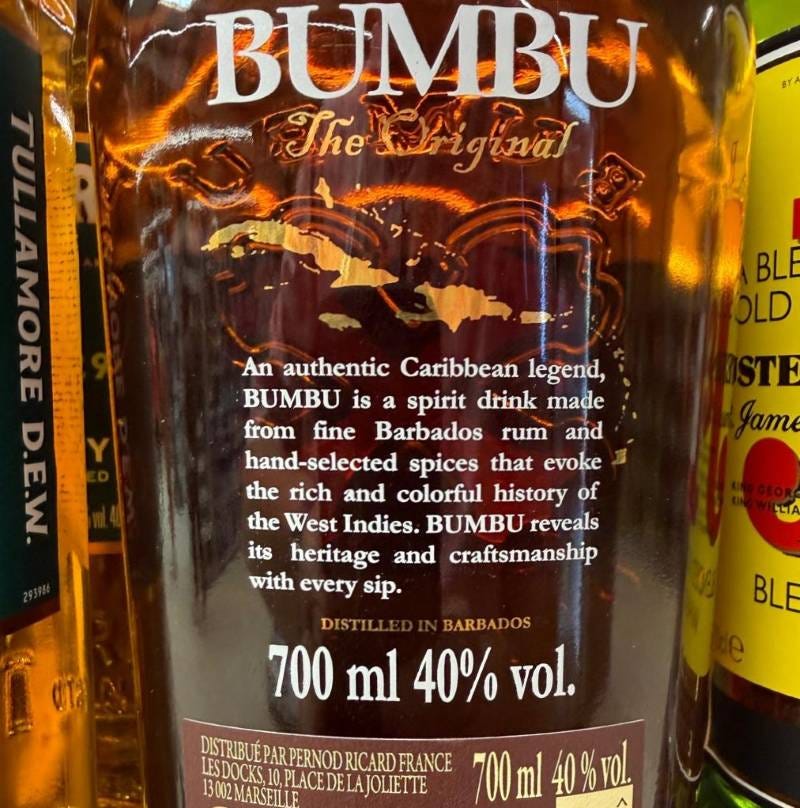
From this angle, Bumbu (the brand) conforms to national or regional labeling rules. The problem is that retailers and the trade press constantly refer to The Original as “rum” rather than “flavored rum” or a “spirit drink.” Look at liquor store labels and online listings, and you’ll find The Original consistently lumped in with actual rums like Mount Gay, El Dorado, and Saint-James. Unfortunately, since most consumers don’t read labels closely, they assume Bumbu The Original is rum. This is nothing new and technically not the brand’s fault. But when the brand began blurring the line itself, including in a recent press release, it went too far, and I called it out.
Wrap Up
The requirements for what can be called “rum” have been part of national laws for decades or longer. Simply put, the FSSAI decided that Old Monk and McDowell’s #1 Celebration rum weren’t compliant with what can be sold as rum in India. Again, FSSAI could have taken similar action against non-Indian-made spirits; after all, rum standards apply to all rums sold in a country, not just domestically made rums. However, in India’s case, imported rums are much smaller players in India’s vast spirits market—the country has 1.5 billion people.
Sadly, actual enforcement of these laws is often lax, especially when it comes to rum. (Call Fireball a “bourbon” and watch for hellfire rained down from organizations like the Kentucky Distillers Association.) Example #1 of lax enforcement when it comes to rum is the US TTB’s label approvals for “sorghum rum” and “sugar beet rum”, both of which were in clear contradiction to the US standard of identity for rum.
Rum advocates like me have become used to such slights. So, when India’s regulators took forceful and public action regarding a non-rum being sold as rum, it brought a glimmer of hope, as well as much-needed attention to a critical part of establishing rum’s reputation as a premium spirit.