


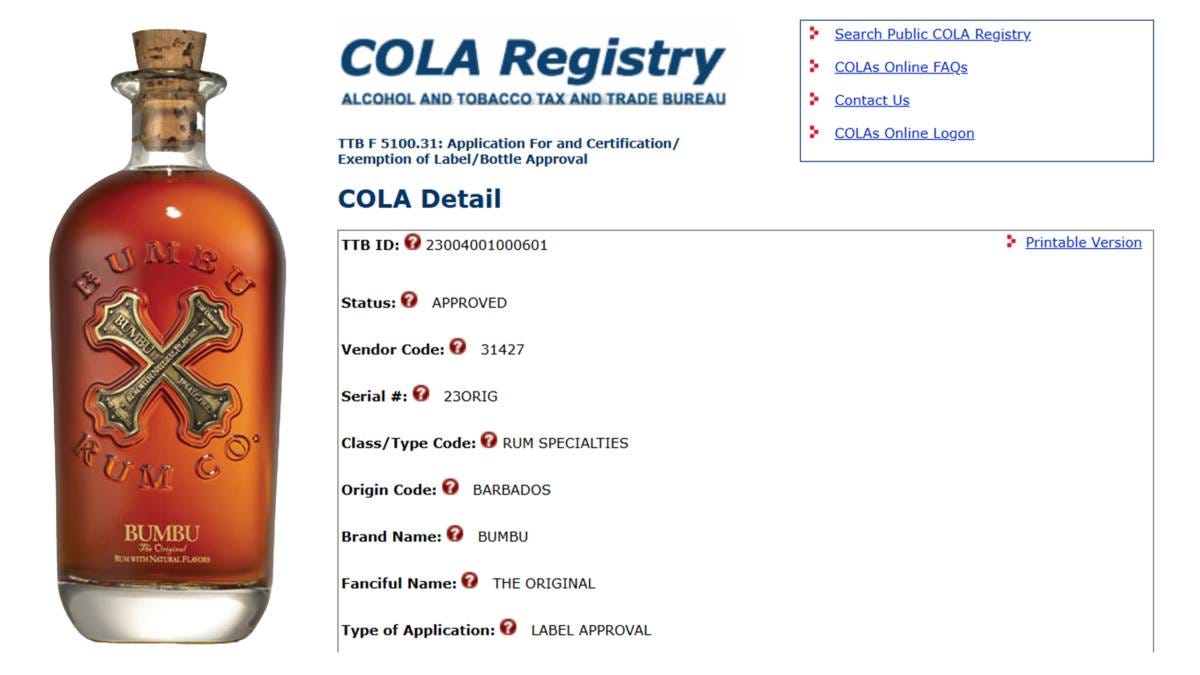
During my daily review of Google News alerts for rum, I did a double-take, swiftly followed by a groan, when I saw BevNet’s story, Bumbu Named the #1 Super-Premium Rum in the World for Second Consecutive Year:
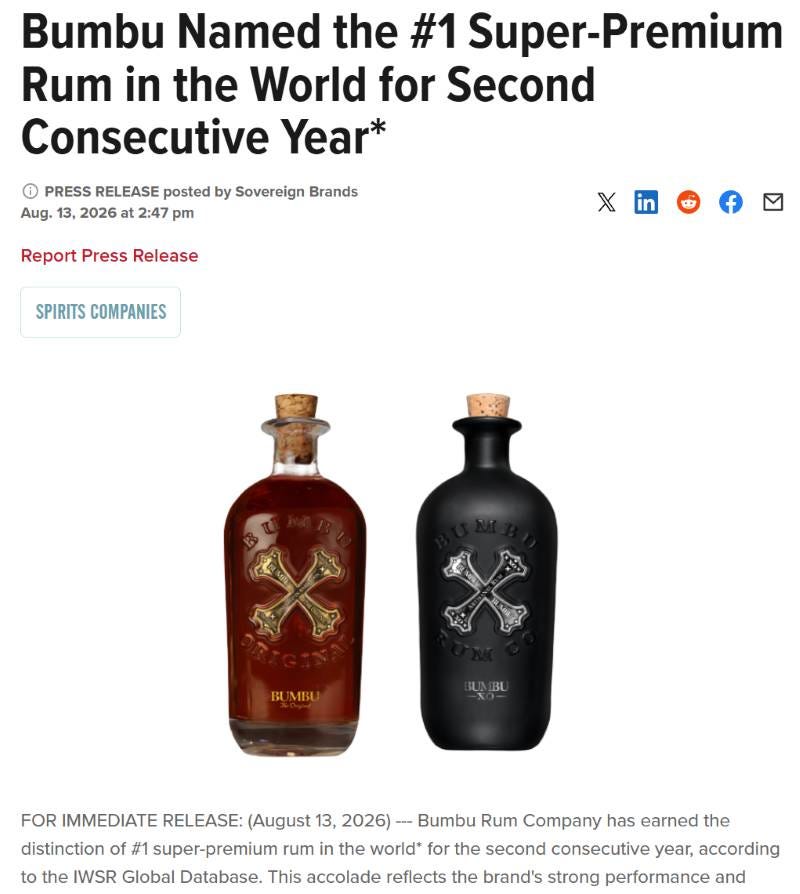
It’s hardly news to readers here that Bumbu gets a lot of hate from rum purists. So, before continuing, I will state up front that I have no issue with Bumbu’s liquid. It’s not my cup of tea, but I heartily acknowledge that products like Bumbu have a place on store and bar shelves. If people enjoy a product like Skrewball Peanut Butter Whiskey, more power to them. Drink what you like, and all that jazz.
My problem is that the statement in Sovereign Brand’s press release—Sovereign is Bumbu’s parent company—obfuscates what type of product Bumbu actually is. In particular, it claims a more prestigious product category than the product actually is. Yes, there are hairs to be split on this point, and I’ll get to that later. But by way of an analogy, imagine if Skrewball claimed to be the “#1 Selling American Whiskey?” If they did, the hailstorm of vitriol from actual American Whiskey makers would be immediate. But when it comes to a rum-based product? Most people, including spirit news outlets that should know better, shrug and move along.
Government regulations around the world define categories and subcategories for alcoholic beverages of all stripes. Within the US regulations, the product types related to rum include:
Rum
Cachaça
Flavored rum
Rum liqueur
Rum specialty
Any rum-based product that does not meet the definition below cannot be legally labeled or sold as rum. Instead, it will be assigned to one of the other types listed above.
27 CFR §5.147(a):
“Rum” is distilled spirits distilled from the fermented juice of sugar cane, sugar cane syrup, sugar cane molasses, or other sugar cane by-products, at less than 95 percent alcohol by volume (190° proof), having the taste, aroma, and characteristics generally attributed to rum, and bottled at not less than 40 percent alcohol by volume (80° proof); and also includes mixtures solely of such spirits.
All alcoholic products sold in the US must have their label approved by the US TTB. Among other things, the label approval application includes the product type (e.g., rum, flavored rum, or whatever). As luck would have it, we can peek into the TTB’s public database and find the label approval information for any product. Here’s Bumbu The Original’s current label approval:
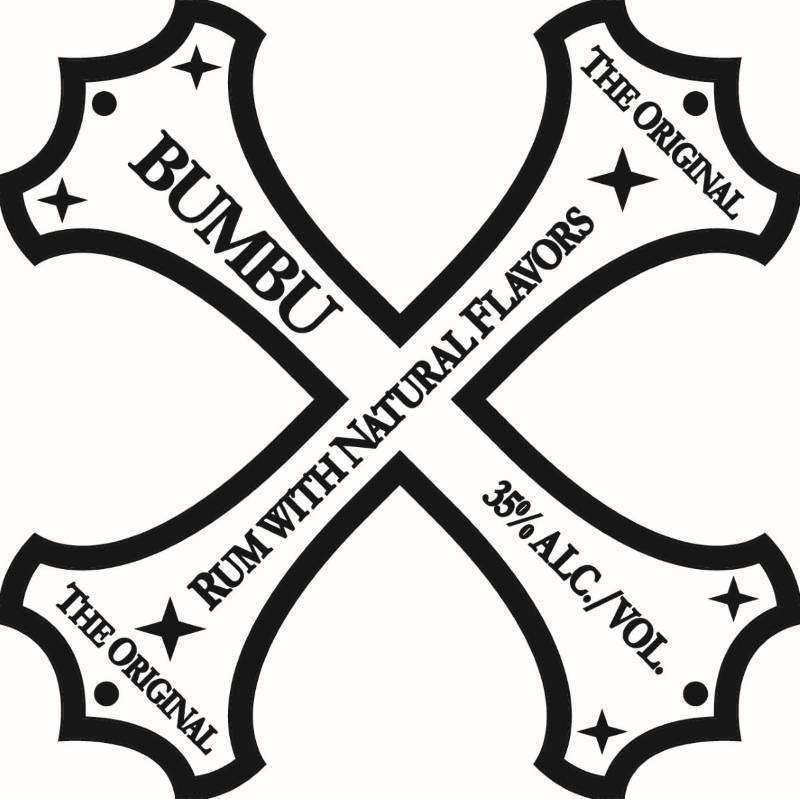
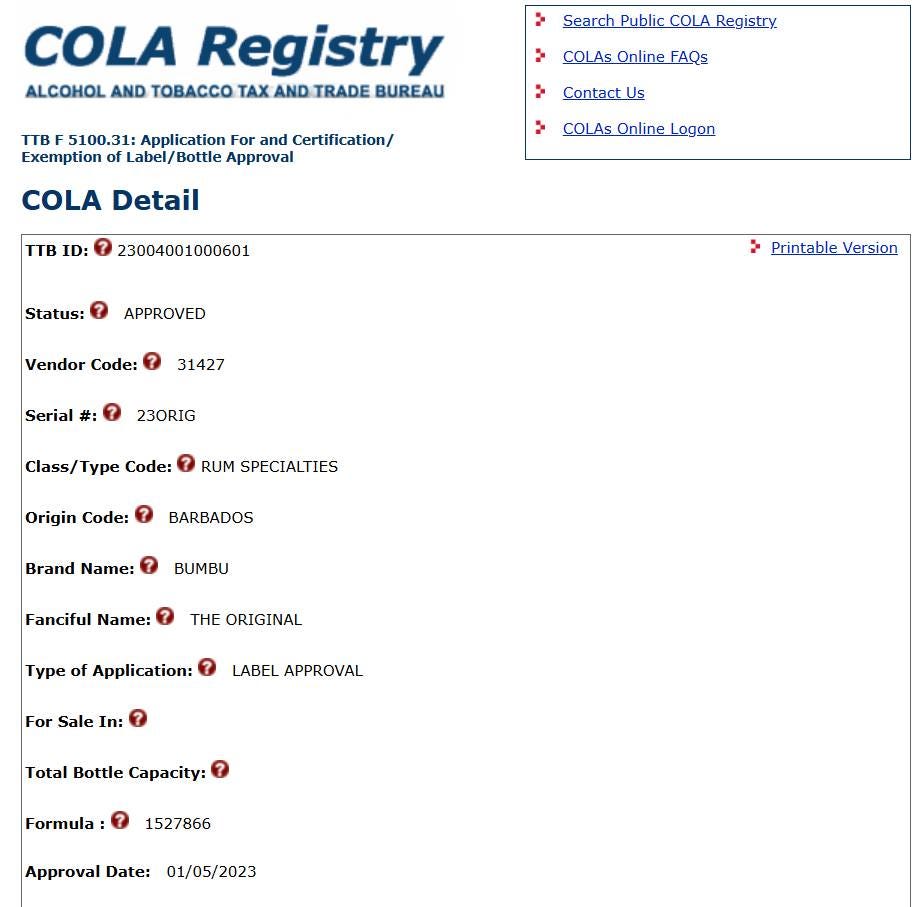
As it turns out, Bumbu The Original is officially a rum specialty. If you scrutinize the front label, it doesn’t say “rum”; it says “rum with natural flavors.” Clearly, the brand knows Bumbu Original isn’t rum, at least in the US.
In the EU, it’s not a rum either, in part because of its sugar content. Under EU regulations, rum can contain up to 20 grams/liter of sugar. According to Sweden’s Systembolaget, which lab tests the products it sells, Bumbu Original contains 47 grams/liter. Systembolaget also notes it as SMAKSATT SPRIT (“Flavored Spirit”).
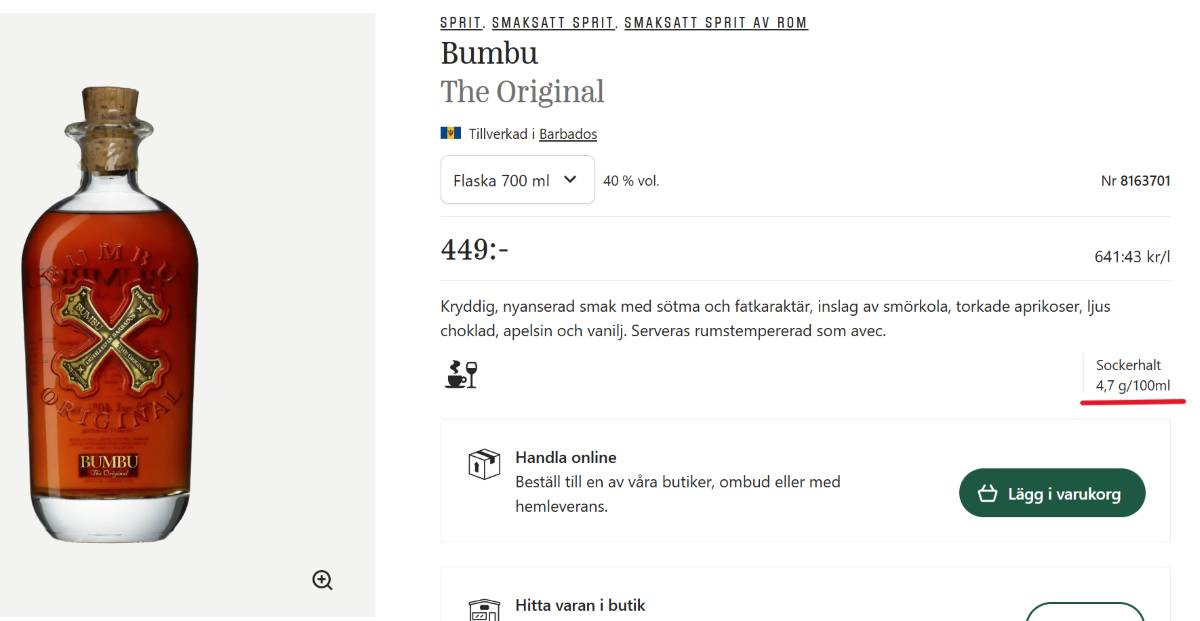
Given this, it’s not surprising to me that a class action lawsuit was filed concerning Bumbu being promoted as rum in 2023.
Bumbu XO
It’s worth noting here that Bumbu is a brand, not a single product. Besides “The Original”, there’s also Bumbu XO and Bumbu Cream. The latter is what it sounds like; the former (“XO”) is legitimately “rum” in the US:
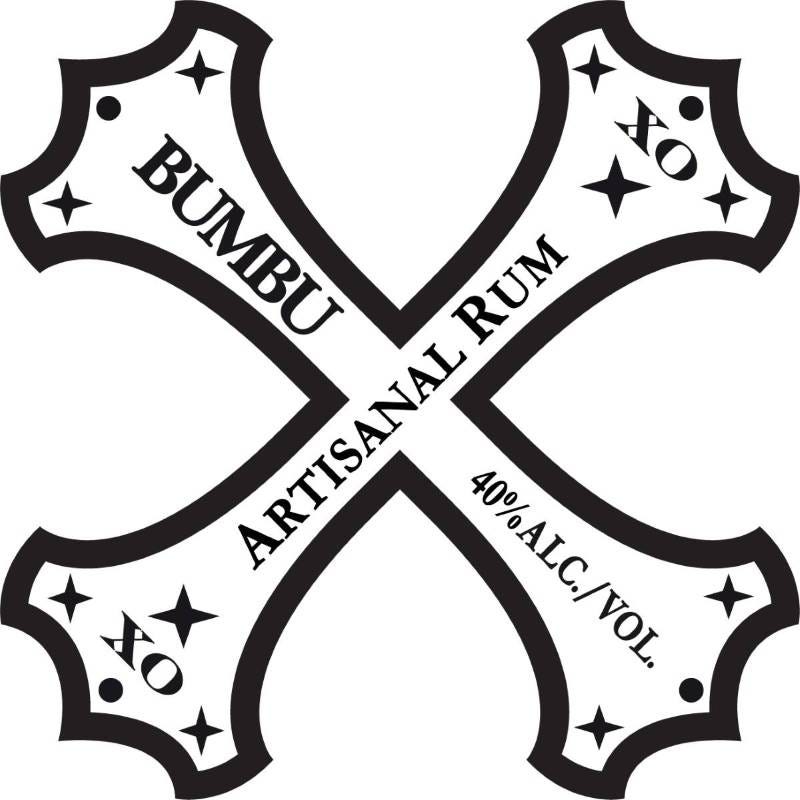
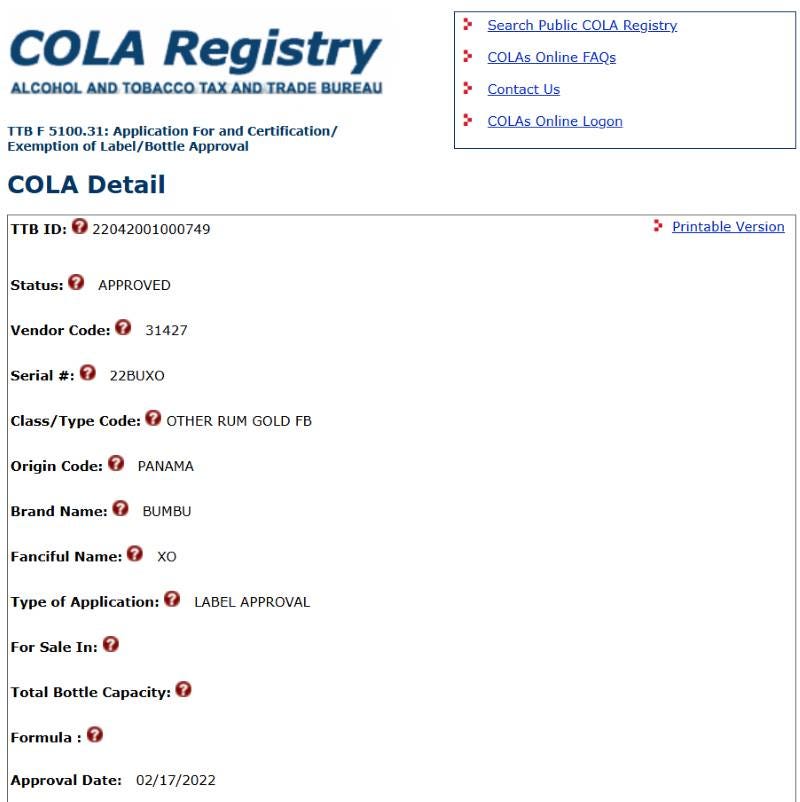
I don’t have sales figures for each of Bumbu’s SKUs. Still, given their price points and other circumstantial data points like what’s on store shelves, we can reasonably expect most of the brand’s sales come from non-rum products, i.e., Bumbu The Original and Bumbu Cream. The RumX page for Bumbu The Original has over 1800 reviews and a 7.0 average rating, while the RumX Bumbu XO page has nearly 400 reviews and also a 7.0 rating.
The Problem and Why It Matters
When Bumbu’s press release starts with, “Bumbu Rum Company has earned the distinction of #1 super-premium rum in the world* for the second consecutive year…,” it’s disingenuous. Sales of non-rum products, i.e., The Original and Cream, should not be attributed to rum sales. It’s as simple as that. And if by some stroke of luck, sales of Bumbu XO by itself were enough to make it the #1 seller in the “super-premium” category, then the brand should say that.
With its vast diversity of styles and centuries-old traditions, the rum category should easily place it in the uppermost echelons of distilled spirits, both in consumption and in respect relative to its peer spirits. But as a whole, the rum category struggles with misperceptions: “It’s just for fruity drinks,” or “It’s too sweet,” or, among whiskey drinkers considering rum, “It has no rules.”
We enthusiasts know these tropes are completely untrue, but the average consumer doesn’t. Single-country spirits like Bourbon or Scotch whisky are much easier to educate on than rum, which has hundreds of high-quality expressions made in dozens of countries.
Brands that misrepresent their products as “rum” add to the problem, as do spirits retailers who intermingle rum and non-rums on their shelves. I guarantee you, you won’t find Fireball or Jack Daniel’s Apple stocked in the bourbon section of a reputable retailer. But rum? Who cares! Or so it seems.
Also not helping rum’s case are certain spirits trade publications and tasting competitions that are clueless about the distinction between rum and flavored rums, and/or cling to obsolete style descriptions like white, dark, and overproof. It’s an uphill battle, and I’m here for it.
For a deeper dive into the Bumbu story, see this prior article:

Note: The class action lawsuit against Bumbu ended in 2025. If anyone has access to the PACER database, please let me know what the court records say.

As we know, plenty of these "best selling in-category" spirits aren't in their relevant category. Fireball was often mis-represented as whisky among my peers when I was in undergrad (poor souls). Kraken and Capt. Morgan were what folks thought of for "rum" and flavoured vodka-based liqueurs were "vodka". I had had the good fortune to receive a quality spiritual education from my father, so I didn't fall for any of that.
Certainly sad that "freedom of speech" is often taken as "freedom to lie". My favorite example is the huge vodka producer in Texas who "hand makes their vodka in pot stills," well sure you can run your purchased, column still, neutral spirit through a pot but does that really make it hand made pot still product?? Thanks for digging into this Matt.