


France-based Pernod Ricard and US-based Brown-Forman, both large-scale alcoholic beverage conglomerates, recently confirmed that they are in discussions described as a “merger of equals.” When such mergers become a possibility, my thoughts turn to what that might mean for the rum brands involved.
Pernod Ricard’s flagship rum brand is Havana Club—the Cuban-made version. Pernod also owns a majority stake in La Hechicera from Colombia. As for Brown-Forman, it acquired the Diplomatico brand a few years ago. However, the distillery that makes Diplomatico, Destilerías Unidas (DUSA), was not part of the transaction.
Brands as Team Players
Most conglomerates like Pernod and Brown-Forman operate like a sports team, with each brand as a player. Some are star players and receive much of the marketing attention. Others are journeyman players, filling a particular role necessary to field a whole team. A baseball team without a catcher is hobbled compared to one with a competent catcher.
Within the spirits industry, a conglomerate’s star player opens doors for the company’s other players. Pernod’s reps selling Jameson and Absolut have more than just a foot in the door with distributors and on-premise accounts, so that they can incorporate smaller brands like La Hechicera, Olmeca tequila, and Redbreast Irish whiskey into their dealmaking. A broad portfolio covering the major spirit and liqueur categories can help create diversification and, hopefully, steady income, which is what big companies crave. Look at the truly big players like Bacardi, Diageo, LVMH, etc., and you’ll find they have a brand at each position, e.g., vodka, Scotch whisky, American whiskey, rum, tequila, cognac, and so forth.
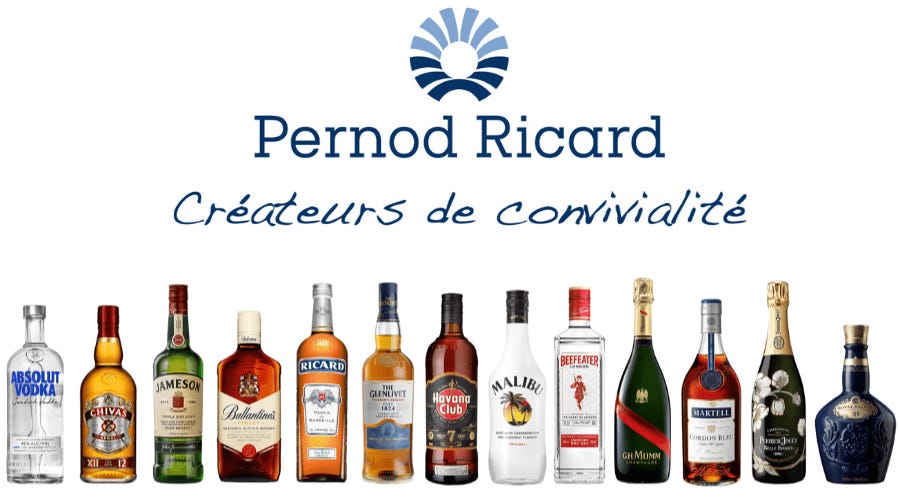
When two businesses merge, all assets are evaluated to see how they fit into the new team structure. Duplicate roles without a strong reason otherwise are eliminated. When it’s employees, layoffs occur. When it comes to brands, they’re sold off or otherwise traded.
Mergers aren’t the only reason why a spirits conglomerate might dispose of a portfolio brand. A brand might simply be underperforming. Or a portfolio as a whole might be struggling, perhaps by over-diversification. Selling off non-strategic brands raises cash and provides a sharper focus for the remaining brands.
Back to the Future
With the above context in mind, let’s ponder which brands could have new corporate owners at some point. The potential Brown-Forman / Pernod Ricard merger is a good place to start because we know all the players involved:
Havana Club (Cuban-made)
La Hechicera (majority ownership)
Diplomatico
Malibu (Pernod Ricard) isn’t listed here as it’s a rum-based drink rather than rum.
What notable here is that all three brands are Spanish-heritage style rums with significant stylistic overlap. I have no specific knowledge of either company’s plans, but Havana Club is by far the most well-known and strategically important, so it is unlikely to go anywhere. As for the others, we’ll have to wait and see.
In a broader context, the spirits industry has been under enormous financial pressure over the last year or so, due in part to an overall decline in drinking, tariff-war challenges, and a “bust” following the COVID-era “boom.” The biggest players are no exception, and a recent article notes, Major Spirits Brands Are Sitting on a $22B Glut of Unsold Inventory. The companies listed in the article are Diageo, Pernod Ricard, Campari, Brown-Forman, and Remy Cointreau.
Word on the street is that at least one—and possibly more—marquee rum brands are quietly being shopped around. I won’t speculate here, but it’s a useful exercise to enumerate all the big players and their rum brand portfolios. Perhaps consider who may be particularly in a pickle, so to speak. Also, consider that publicly traded companies may be under more investor pressure than privately held companies.
Here’s a snapshot of the situation today, along with color commentary:
Bacardi Limited (Privately Held)
Bacardi / Havana Club (USA-only brand) / Castillo
Banks
Pyrat
Bacardi clearly won’t be parting with its legendary, house origin brands. However, Banks and Pyrat were acquisitions.
Diageo (Publicly Traded)

Captain Morgan
Zacapa (co-owned with the Botran family)
Bundaberg
Don Papa
McDowell’s No. 1
Pernod Ricard (Publicly Traded)
Havana Club (50/50 joint venture with Cuba Ron S.A., a Cuban-state entity)
La Hechicera
Havana Club is unlikely to go anywhere, given how much Pernod Ricard invested in creating the partnership with the Cuban government, as well as Havana Club’s global recognition.
While not listed above, Pernod Ricard has a stake in Bumbu that could become a majority share. (Yes, Bumbu has an actual rum among its offerings.)
Campari Group (Publicly Traded)
Appleton Estate / Wray & Nephew / Kingston 62 / Coruba
Trois Rivières
La Mauny
Duquesne
Appleton is a marquee rum brand, and Campari’s ownership is well-known. The Martinique brands, less so outside of France.
Rémy Cointreau (Publicly Traded)
Mount Gay
Rémy Cointreau has invested quite a bit of money into Mount Gay in the last decade, including a new sugar mill, acquisition of sugarcane fields, and distillery upgrades.
Brown-Forman (Publicly Traded)
Diplomatico
LVMH (Publicly Traded)

• Eminente (exact ownership structure is unclear, but may involve Cuba Ron S.A.)
Suntory Global Spirits (Privately Held)

Cruzan
La Martiniquaise-Bardinet (Privately Held)
Saint-James
Depaz
Dillon
Bally
Rhum DBM
Domaine de Bellevue
Rivière du Mât
Cacique
Negrita
Old Nick
Island Signature Rum
La Martiniquaise-Bardinet has a very strong position in the French market and owns a majority stake in Marie Brizard Wine & Spirits. Clearly, they don’t see an issue holding multiple rum brands making the same type of rum. See France’s Largest Rum Maker Hides in Plain Sight for a deep dive on this company.
Spiribam / Groupe Bernard Hayot (Privately Held)
Rhum Clément
Rhum J.M.
Chairman’s Reserve
Admiral Rodney
Bounty
La Belle Cabresse
La Cayennaise
Cœur de Chauffe
Arcane
Beach House
While originally rum-only, Spiribam has aggressively expanded beyond French rum in recent years. Like La Martiniquaise-Bardinet, they don’t see an issue holding multiple rum brands offering similar styles of rum.
Maison Ferrand (Privately Held)
Planteray (Formerly Plantation)
Stade’s
Canerock
Not a traditional conglomerate like bigger players like LVMH. All of Ferrand’s brands began as internal projects. The acquisition of the West Indies Rum Distillery in Barbados didn’t include brands.
Edrington (Privately Held)

Brugal
Mostly focused on whisky/whiskey. Brugal is its only non-whisky brand.
William Grant & Sons (Privately Held)

Sailor Jerry
O.V.D. (Old Vatted Demerara)
Wood’s
Proximo Spirits (Privately Held)

Kraken
While lesser known than many of the other conglomerates, they are a tequila powerhouse, leading with Jose Cuervo. Another portfolio heavy hitter is Bushmills. Proximo also distributes Ron Matusalem in the US, but doesn’t appear to own the brand. In 2025, Proximo divested US-based Owney’s Rum.
Wrap-Up
While a distillery or brand changing corporate ownership might seem of minor consequence, numerous ownership changes in the past two decades prove otherwise. Conglomerates often go bargain-hunting, then invest heavily in sprucing up their acquisitions. Done right, these investments help elevate the rum category as a whole. Among recent purchases:
Edrington’s purchase of Brugal in 2008
Diageo’s purchase of 50% of Zacapa in 2011
Campari’s purchase of Wray & Nephew / Appleton in 2012.
Rémy Cointreau’s purchase of the Mount Gay distillery in 2014.
Spiribam’s purchase of St. Lucia Distillers in 2016
Maison Ferrand’s purchase of West Indies Rum Distillery in 2017. (The Stade’s brand is one result of the purchase.)
That’s all for now! Post your thoughts (or speculation!) in the comments.

Great article Matt, as usual and well researched.
Im terms of guessing - i would look for if the brands play to the strengths of the mothership.
-for where Diageo wants to make a difference, the low-priced segment Zacapa won't help them
Look like you’ve missed Santa Teresa’s acquisition by Bacardi
Bacardi + Santa Teresa couple will be similar to Havana + diplomatico
Best regards
Jm