


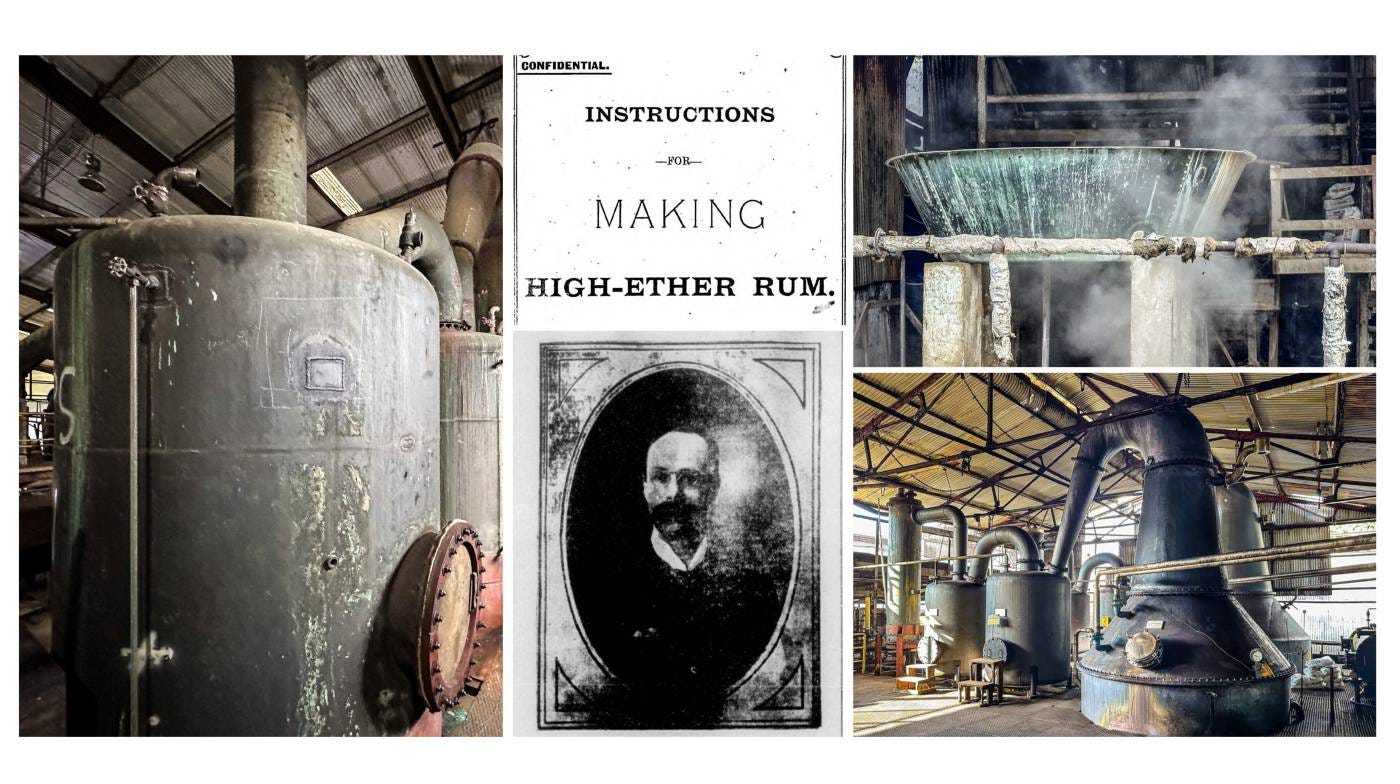
Welcome to the fourth and final part of the Making Funky, High Ester Rum series.
In part 1, we covered the formation of flavor molecules (“congeners”) during “normal” fermentation, including how cerevisiae and pombe yeast differ.
Part 2 covered how stressing pombe yeast under acidic conditions leads to the production of more esters, including more complex esters not normally seen during regular fermentation.
Part 3 covered bacterial fermentation, which produces more complex acids that, in turn, yield more complex esters. Bacterial fermentation can occur simultaneously with yeast fermentation or as a separate process. Muck, the hyperbacterial sludge used at certain Jamaican distilleries, is an example of a separate bacterial ferment.


Below, we’ll examine an unusual process invented over a century ago that supercharges ester formation during distillation. Rather than tweaking fermentation parameters, this process employs some chemical jujitsu, forcing esters to form at the last possible moment before the rum exits the still. The resulting rums have ester levels five times (or more) than what’s achievable by fermentation alone, and well above what Jamaican regulations have allowed since 1935.
H.H. Cousins – Island Chemist
If you’ve read Part 3 of the series, you may remember H.H. Cousins, who popped up briefly in the description of muck. If a Hall of Fame for Jamaica’s 350 years of rum making were created, Cousins would be a first-ballot shoo-in.
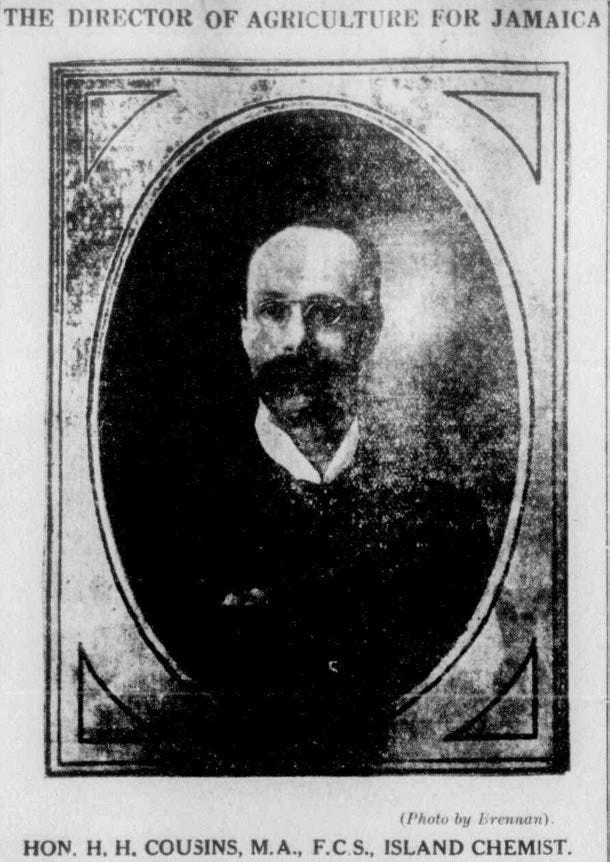
Herbert Henry Cousins (1869-1949) was an Oxford- and Heidelberg-educated chemist who was appointed island chemist for Jamaica in 1900. At the time, the British government was panicking over reduced revenue from its Caribbean colonies, largely due to the decline of the sugarcane industry. The proposed solution was to throw money at the problem, creating research stations and staffing them with young, brilliant scientists like Cousins.
Between 1905 and 1908, Cousins and his team (Allan and Ashby) prolifically wrote about all aspects of Jamaican agriculture and rum, and their fermentation research is arguably among the most groundbreaking rum research of the era. In 1908, Cousins was named Director of Agriculture for Jamaica, a position he held until 1932.
To learn more about H.H. Cousins, see the Boston Apothecary blog, which has several pieces about the work of H.H. Cousins, including one story on the Cousins document we’ll look at below.
Instructions for Making High-Ether Rum
In 1906, Cousins published Instructions for Making High-Ether Rum, a pamphlet that remained confidential for many years and was nearly impossible to obtain, even for a determined researcher. But for anyone with a chemistry-oriented interest in rum, it’s well worth reading and rereading several times until you’ve absorbed everything Cousins says.
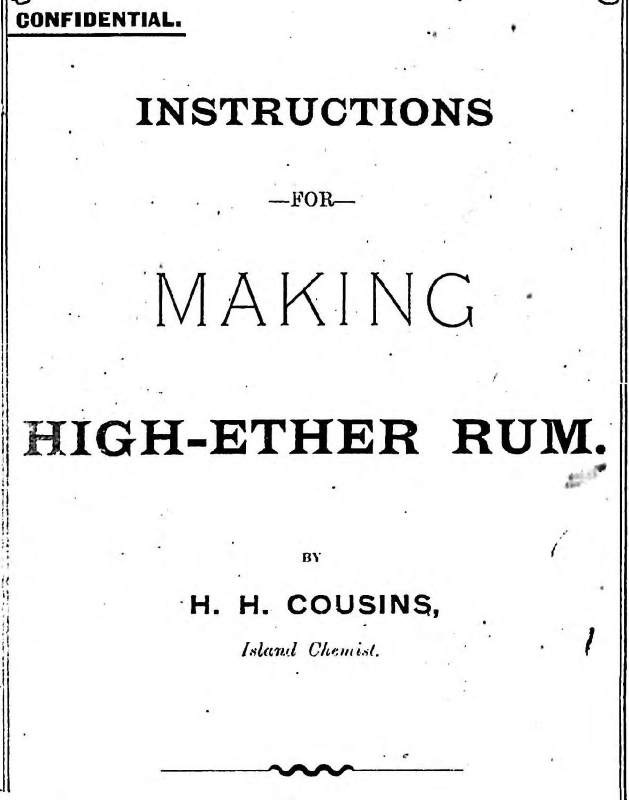
If the word ether, rather than ester in the title has you puzzled, Cousins explains early on:
It should be understood that the terms ‘Ethers’, ‘Compound Ethers,’ and ‘Esters’ as applied to rum all mean the same.
In that era, ‘ether’ was the common trade term, but scientists had adopted ‘ester’ to differentiate these molecules from surgical anesthetic ethers. Two very different things!
The first part of the paper outlines and describes five categories of rum, e.g., “CLASS III - Special Rums of Medium Ether Content”. The paper also notes that German blenders were willing to pay handsomely for high-ester rum—the higher the ester level, the higher the price. Cousins also notes that German chemists had gone so far as to create artificial Jamaica rum flavor:
So energetic are the makers of artificial rum flavours that last year every estate in the island was presented with a small sample of essence of Jamaica rum made in Germany which was recommended for improving our ordinary rums !
Cousins and the Jamaica distillers certainly weren’t going to roll over at this affront. In the paper’s final pages, Cousins drops the hammer — a new process that creates ester levels four times higher than those in rums the island had previously sold to German blenders. Cousins believed his process would cause the German blenders to put away their artificial flavoring nonsense:
Moreover, the [German] law requires the chemical rum to be sold as “Artificial” or “Kunst” Rum, whereas the blended High Ether rum would be sold as “Blended Jamaica Rum.” It is obvious that even if we could sell a 4,000 Ether rum at 10s per gallon the profits would be enormous.
While Cousins called his technique the High Ether process, distillers and rum nerds today call it the Cousins Process. And before I can explain the Cousins Process in layperson’s terms, we must first internalize the principles on which the technique relies.
General Laws of Ether Production
To help his readers understand his new process, Cousins outlined some principles of ester formation. I’ve summarize them here, usings Cousins’ own words, in italics.
Ethers Can Be Created or Destroyed
Alcohol + Acid = Ether + Water.
[However] The action … is readily reversed : e.g. Ether + Water = Alcohol + Acid.
Given a certain amount of alcohol and acids in a watery liquid… there will always be a certain maximum amount of ethers that can exist at any time…
In short, chemical equilibrium at work.
High Acidity + High Alcohol Makes More Esters
“A common clean wash at 1% acidity will yield a 200 ether rum, whereas a Trelawny liquor at 3% acidity will give a 1000 ether rum.”
Basically, the more attendees at a party, the more likely (molecular) hookups will happen. Alcohol and acid molecules love to hook up to create esters.
Water Inhibits Ester Creation
The less water in proportion to spirit present, the more ethers produced… a certain amount of acidity will give ten times more ethers … [at] 60 per cent alcohol as compared… [to] 6 per cent of alcohol.
Water is the unwanted “third wheel” when acid and alcohol molecules date.
Heat and Ester Creation
The production of ethers is slow and takes time. Five days are required at the ordinary temperature for a full production of Ethers in a liquid. If heat be applied, however, the action is greatly expedited.
Heat speeds up chemical reactions; the same ester formation that takes five days at fermentation temperatures happens much faster at distillation temperatures.
Quality Not Quantity
Typically, more than 99% of the esters in rum are ethyl acetate, which is composed of an ethanol molecule and an acetic acid molecule, both readily present during fermentation. Ethyl acetate is, well…. fine…, but it’s not the ester that has rum geeks singing its praises. More complex esters are what give Jamaican and other “exotic” rums their particular flavor profile, even at much lower concentrations than ethyl acetate.
Cousins notes:
Acetic Ether. This forms the chief ingredient of the Ethers of rum…. Acetic Ether has a pleasant fragrant smell and gives a pleasant taste to rum. When present in excess it stings the nose when smelling rum in a glass…By itself, Acetic Ether is of very small value as a rum flavour. … An increase in the Acetic Ether content of a common, clean or even a high-class rum, if not supported by an increase in the other Ethers in suitable proportion will not add to its intrinsic commercial value.
As for the more complex esters, Cousins says:
The Higher Ethers are oily liquids of boiling point far higher than that of alcohol … They are possessed of most attractive fruity smells. Caproic Ether has a sweetish fruity smell, Caprylic Ether a strong smell of pineapples… The merest trace of Caprylic Ether will dominate a large volume of spirit so as to give it a fragrant smell of pineapples that is very lasting….
Naturally, Cousins’ technique explicitly targets these heavier esters.
Operating the High Ether Process
Having reviewed the optimal conditions for ester formation in the abstract, let’s examine how Cousins designed a process that meets those conditions.
As we saw above, the optimal conditions for ester formation include a hot, highly alcoholic liquid. Specific types of acids, e.g., butyric, caprylic, and capric, are added to this liquid, providing an optimal environment for the alcohol and acid molecules to combine into esters, and in particular, more desirable esters.
Adding acids to the fermented wash won’t cut it, as the wash is around 5% ABV, which is too low for optimal ester-creation conditions.
Is there somewhere in between the start and end of distillation where these acids could be added? With the right type of pot still, yes!
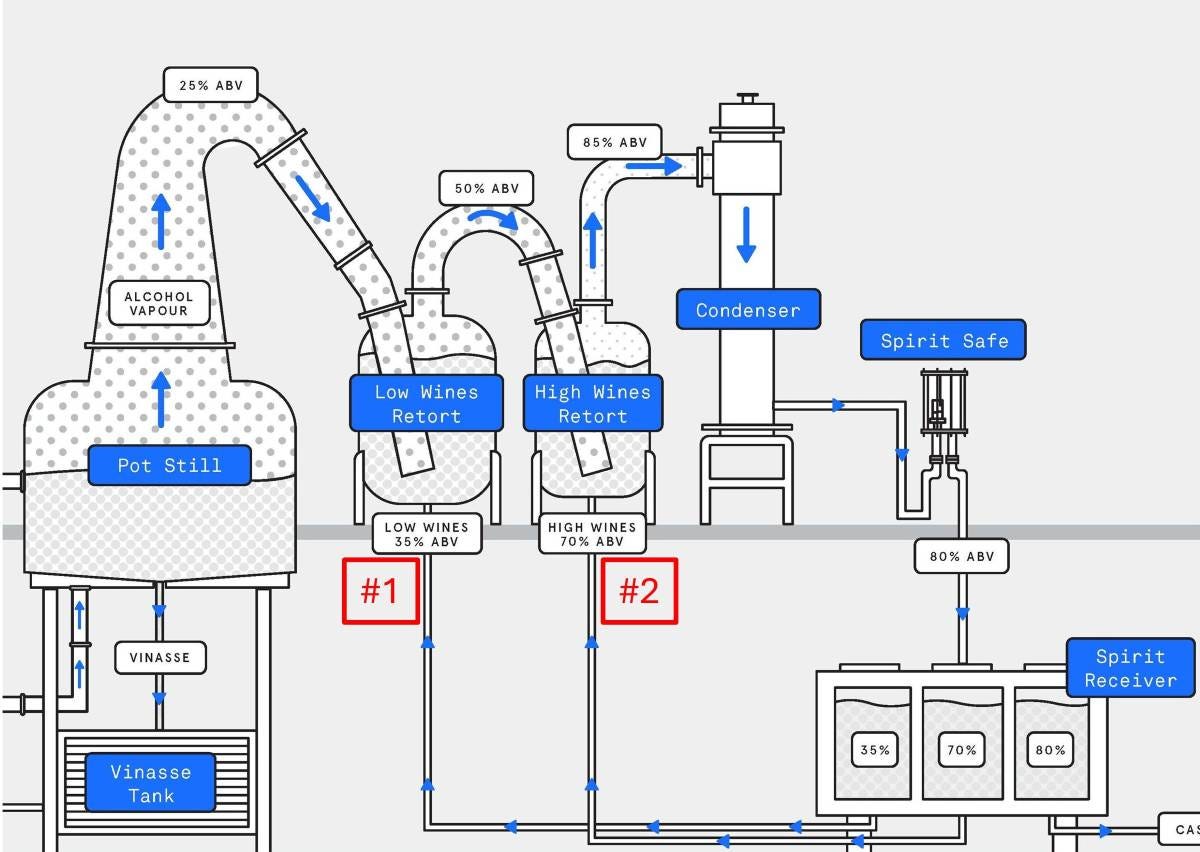
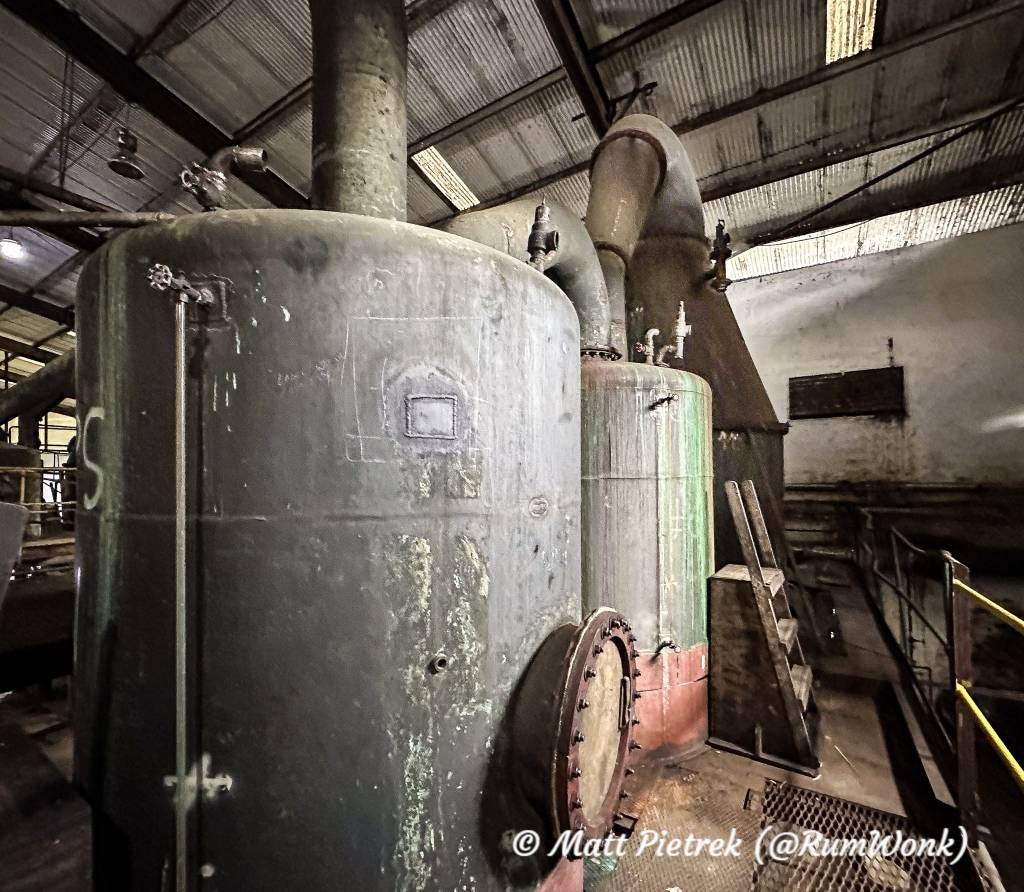
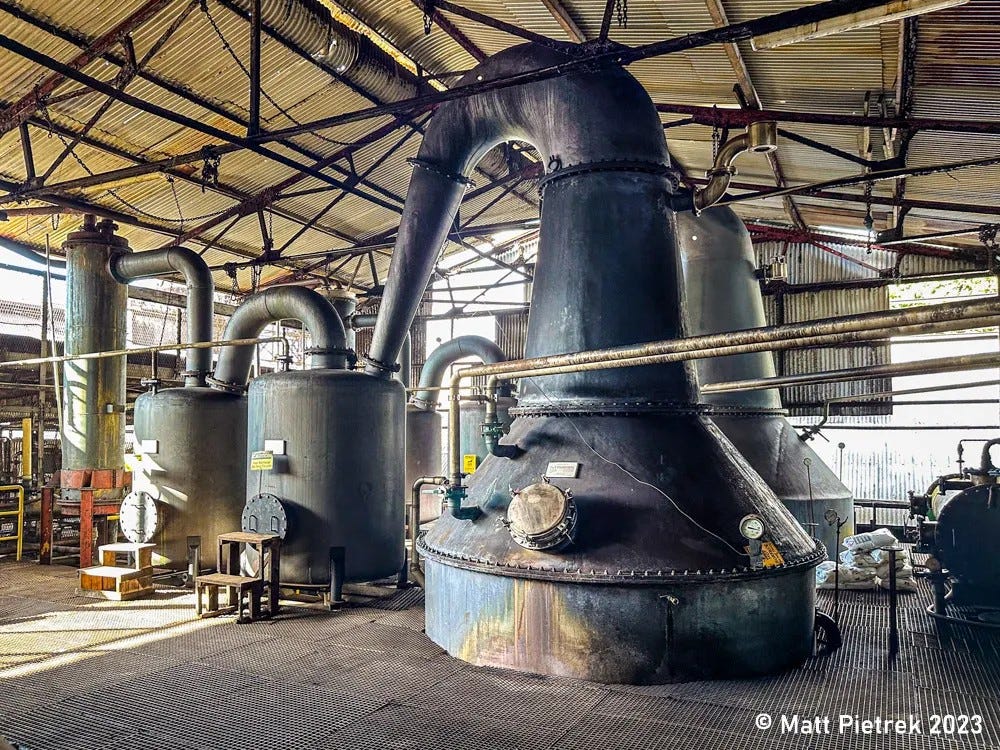
Jamaica’s distilleries are famous for using double retort pot stills. Regardless of whether the Cousins process is used, the 1st retort (“low wines”) is first filled with low wines from prior distillations. Likewise, the 2nd retort (“high wines“) is filled with high wines from prior distillations.
The only twist with the Cousins process is that the acids are added to the high wines before charging the 2nd retort. Once distillation is underway, the high wines retort has a high ABV, high heat, and lots of acid—perfect conditions for creating esters.
Acid Hacking
In the above, I handwaved past the part about where these desirable acids come from. Fortunately, Cousins tells us exactly where to look:
The lees from the retort, or the two retorts where such are in use, contain acids identical in kind and similar in proportion to the acids existing in the Ethers of the rum which has been obtained from the distillation. If we can recover these acids and introduce them into the next charge of High Wines we shall greatly increase the content of Ethers in the rum.
For those unfamiliar with distillation, “lees” are the liquid remaining in a still or retort after distillation completes. While the lees in the retort have desirable acids, they’re diluted in water, so they’re not usable as-is. The question becomes: how are these acids extracted into a form that can later be added to the high wines before charging the 2nd retort?
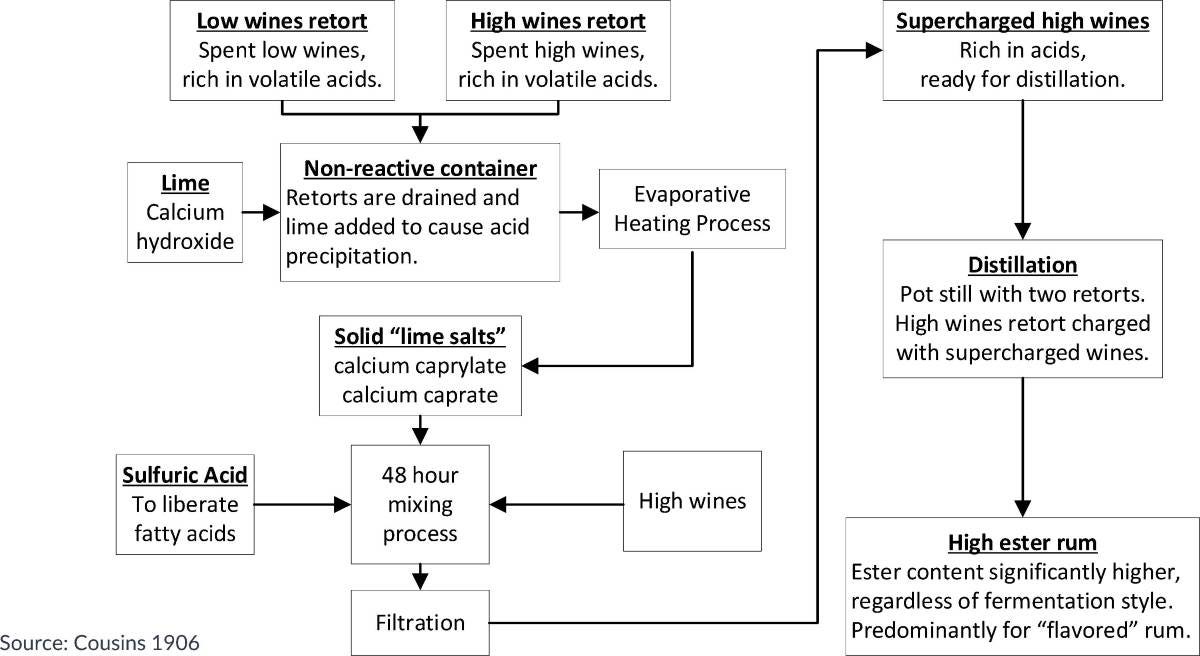
The technique Cousins developed involves three steps, two of which involve chemical reactions. I’ll explain the steps at a very high level because most readers aren’t chemists.
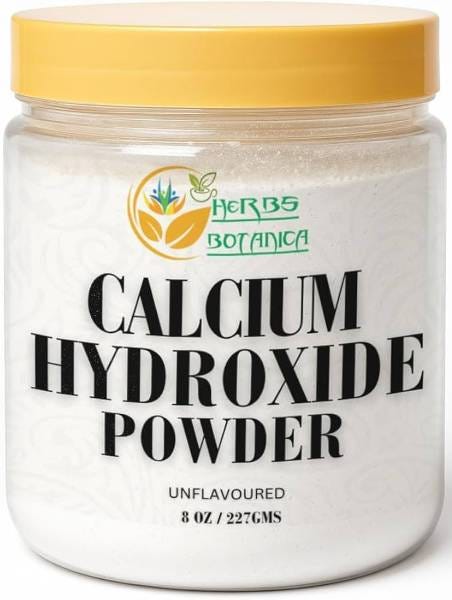
Calcium hydroxide, a white powder commonly used in food processing and certain plasters, is added to the lees from the retorts. A chemical reaction occurs, causing the acids in the lees to bind with calcium molecules. The results are “salts” like calcium butyrate, calcium caprylate, and calcium caprate. You’ll see these salts used in food additives and gut-health products.
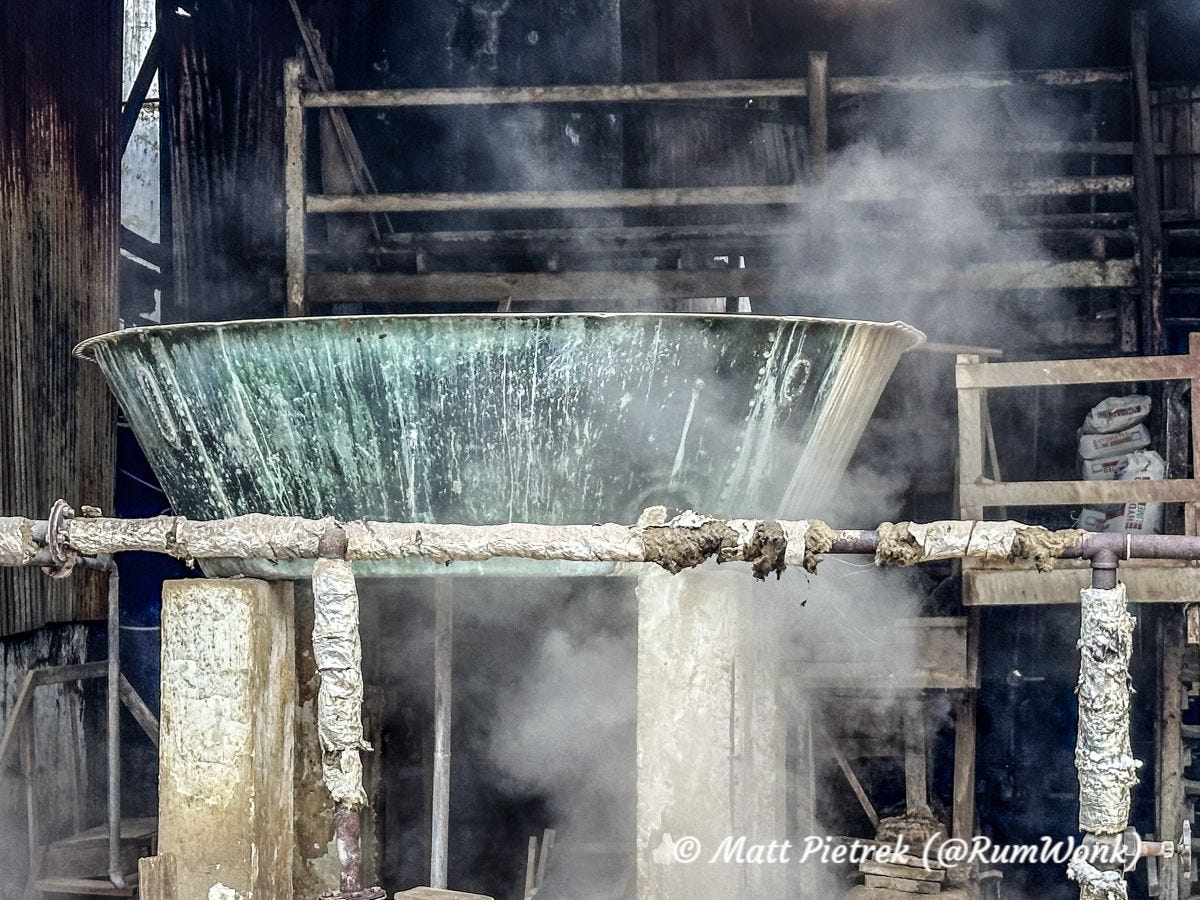
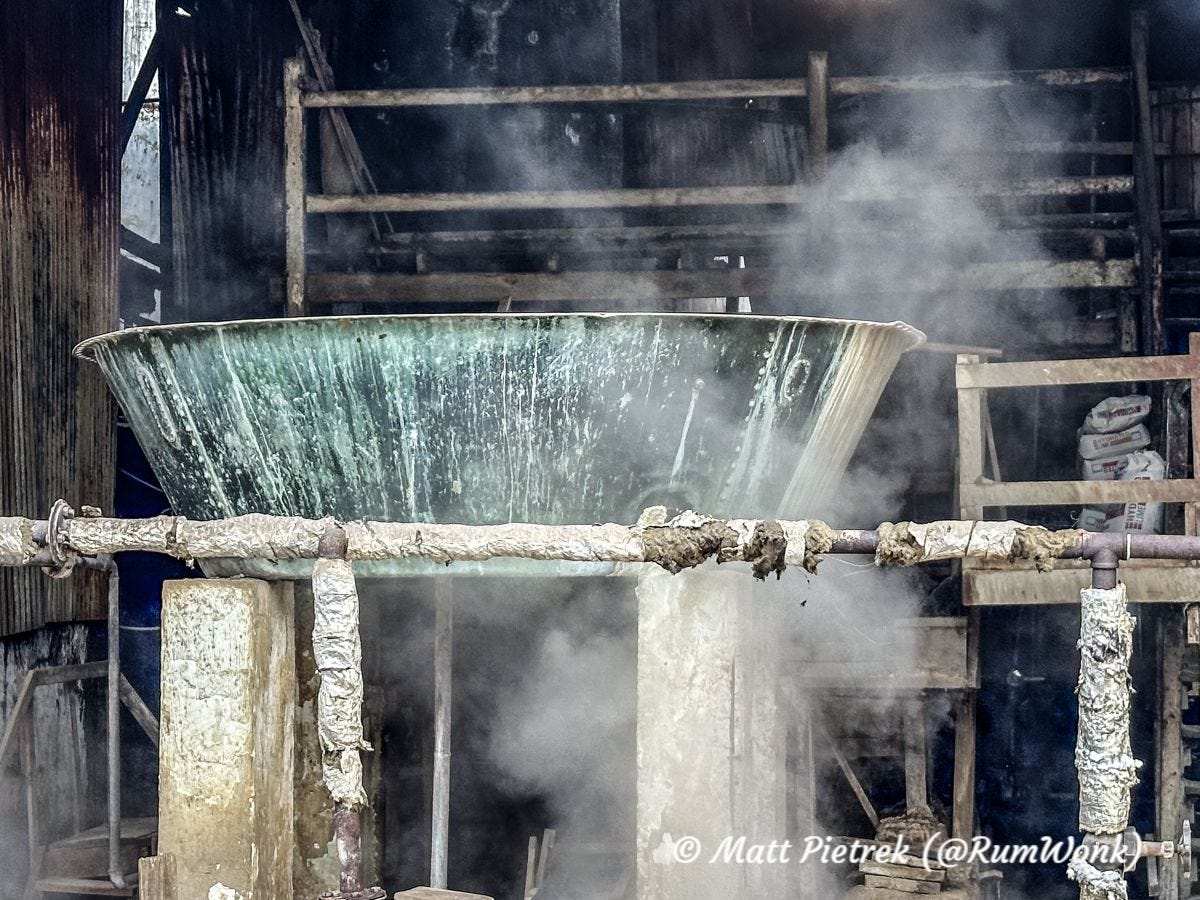
The resulting liquid, full of these salts, is then dried by slowly heating it in an open tank to drive off the water. The dried salts can be stored for later use.
Ether salt drying at Hampden Estate, Jamaica When ready to perform Cousins Process distillations, the dried salts and sulfuric acid are added to the saved high wines several days before the 2nd retort is filled. The sulfuric acid “steals” the calcium from the salt molecules created in step 1, and creates calcium sulfate, while freeing the butyric acid, caprylic acid, and capric acid molecules.
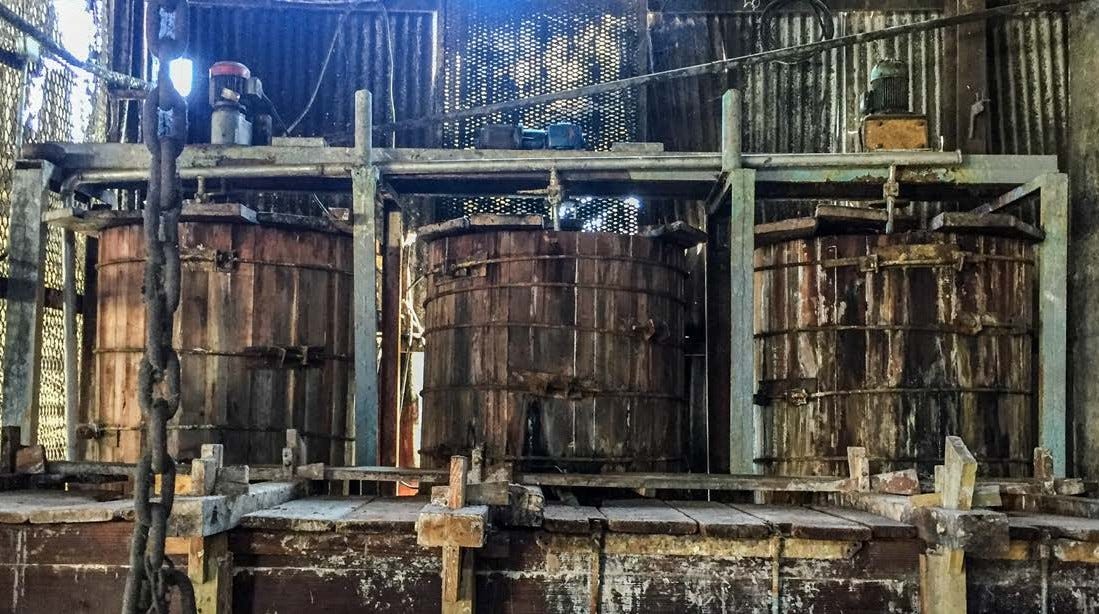
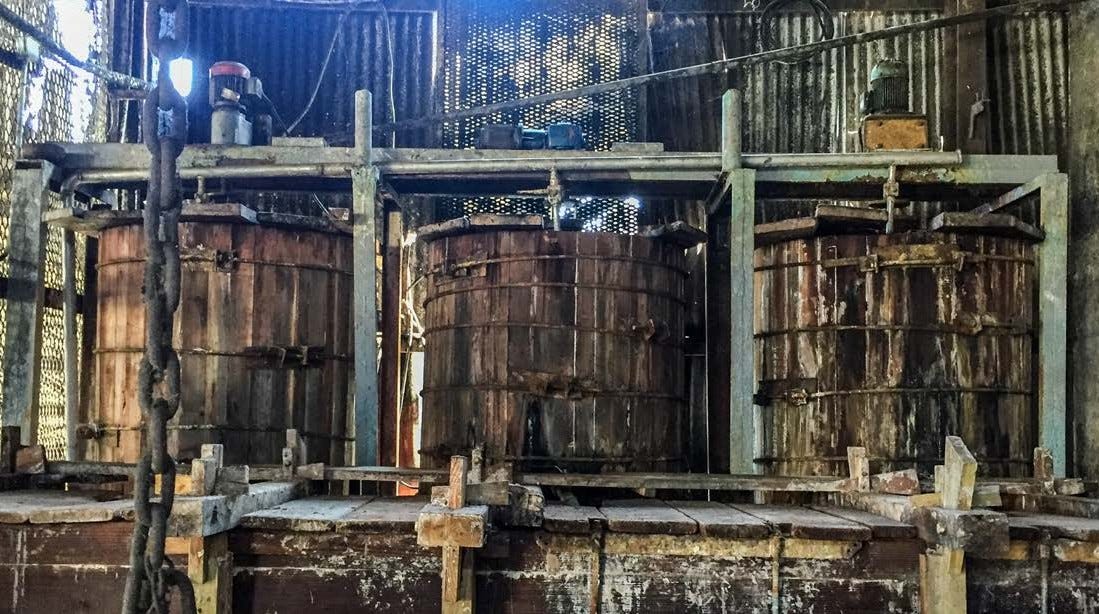
Tanks for combining high wines, ether salts, and sulfuric acid, Hampden Estate, Jamaica In case you’re concerned about adding sulfuric acid to what’s being distilled, there’s no need for concern. Its boiling point is high enough that very little, if any, will pass out of the 2nd retort and into the collected rum.
In short, the acids are moved from the retort lees of one distillation to a high wine charge of a subsequent distillation. The movement uses a two-step chemical process with an intermediate drying stage. The Cousins process document provides many more technical details, which I have omitted here; my goal is simply a high-level overview for a mostly non-distiller audience. This diagram, used with permission by Brett Stiegerwaldt, outlines the process graphically.
Aftermath
Hampden Estate was an early testbed for the process, as noted in a 1906 Jamaica Gleaner article:
The process is being tested on a commercial scale at Hampden estate in St. James where a special plant has been installed for the purpose… The rum produced at Hampden is claimed to possess four times the flavouring power of that producible by the ordinary process and to be peculiarly suitable for the use of blenders on the continent.
Cousins patented the process and assigned the patent to the rum producers’ association:
So far as manufacture is concerned the High Ether Process has been proved a complete success. Its novelty has been accepted by the U.S. Patent office after official enquiry and patents have been granted in the United Kingdom, Barbados, Trinidad and British Guiana.
Elsewhere, it was noted:
As the process is applicable to Whisky and Brandy it is possible that it. might find use for reinforcing the ether content of these spirits, and that Royalties might be obtained from the foreign rights under the Patents.
To my knowledge, no whisky or brandy makers have used the Cousins Process for a commercially available product. If you know otherwise, let me know!
Shortly after Cousins stepped down as Jamaica’s Director of Agriculture in 1932, the island passed Law 18 of 1934, which empowered the governor to set the maximum ether levels for rums. A newspaper story at the time noted,
It is thought that if the manufacture of high ether rum is not controlled, such rum if sold in a foreign market might be used to dilute spirits and the resultant mixture sold as rum to the detriment of the good name of Jamaica rum.
This restriction remains in effect today, over 90 years later. The DOK mark from Hampden, the TECC mark from Long Pond, and New Yarmouth’s NYE/WK mark are all in the 1600 esters level range, the maximum that Jamaican rum regulations allow. You can see all known Jamaican distillery marks on my Jamaican Rum Marques Roundup page.
The Cousins Process Today
I’ve personally seen the Cousins process in use at Hampden Estate. It’s also my understanding that some variation of it is also used at Long Pond and New Yarmouth. In a future story, I’ll describe its use at another Caribbean rum distillery, albeit outside Jamaica, and not traditionally known for making super-funky rum.
Also, for you distillers, Brett Stiegerwaldt and John Hayes (Lyon Rum, Cotton & Reed, respectively) recently posted a great video on the American Distilling Institute YouTube channel. It covers many of the topics this series covered, including the Cousins Process. Here’s the link:

Great work, congratulations for this serie of articles! I can see to which country you're heading next, can't wait to read about it already. The more I read about esters and the complexity of the craft around them, the more I get curious about other volatile compounds - how can one make a highly aromatic rum without the use of all the techniques you have described.
There are a lot of questions surrounding this technique, and honestly, it doesn't look great.
Ester rum was being made long before Henry Cousins ever showed up in Jamaica in the 20th century.
Even in his own paper, he admits that the idea of using the ester number was practically laughed at by traders, who only trusted their own tasting -since esters don't directly correlate with flavor.
Most of the acids he describes, the ones heavier than butyric acid, are completely insoluble in water. So were they even present in the retort lees to begin with? That's a real question.
If this supposedly well-known technique is so good, then why did Jamaica ban the sale of such rum ? And if it really works, why hasn't anyone else picked it up and started mass-producing competitive rum elsewhere?
If esters are the key, then why not just go all the way and produce "rum" chemically? That would be far simpler, and the result would be just as good-chemically pure esters are readily available on the market. Maybe esters aren't actually that important after all?
You can make "ester rum" just as easily without any of this. The whole thing reads more like a tall tale for tourists and rum geeks than a real manufacturing process.
"In order to explain this apparent contradiction we must remember that the fruit ethers though contributing a great deal, do not contribute everything to the aroma, and also that even if they did, that it is quite possible to have too much of a good thing . It has been found for instance, that by the mere addition of fruity ethers to a neutral spirit, it is not possible to imitate exactly the aroma of a genuine rum. If this were so, in all probability, Jamaica rum manufactured in Jamaica, would belong to the glories of the past !" (P. Greg)