


The end of 2025 marks my 12th year as a spirits and drinks writer. As each year ends, I review which stories received the most responses, which were my sentimental favorites, and a few stats—I’m a techie/engineer at heart, after all.
First, the stats: subscriptions to Rum Wonk grew by 43%, and the paid subscriber count increased by 14%. (A hearty thanks to those who financially support this site!) My total story count was 26, a bit lower than usual. However, preparing for and moving to France takes a lot of time! So does growing a publishing business. My 2026 goal is to get my story count back up.
Top Five Stories by Page Views
Per page views recorded in Google Analytics, here are the top five Rum Wonk posts of 2025. Unsurprisingly, Jamaican rum was the top topic.
Hurricane Melissa’s Impact on Jamaica’s Rum Makers
When Hurricane Melissa devastated Jamaica in October, the global rum community collectively held its breath, awaiting news about the island’s rum makers. While it took many weeks to assess the damage, my top story of the year provided early details.

Jamaica Rum Styles Primer
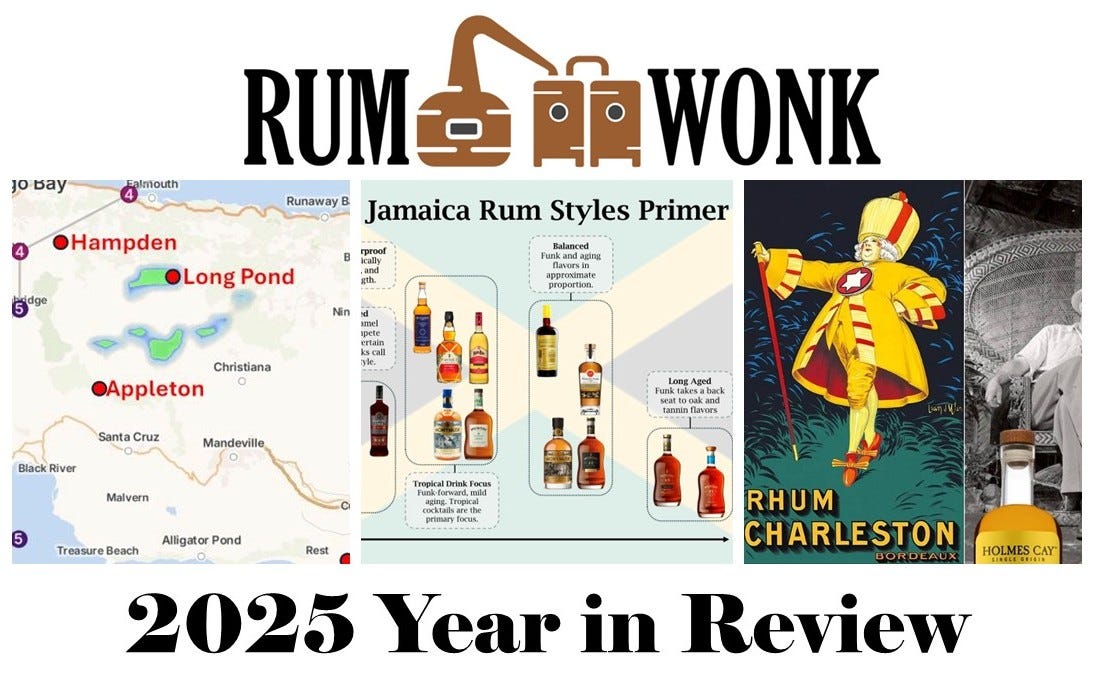
Gone are the days when “Jamaica rum” was adequate to describe the island’s wide range of rums. Today, Jamaica’s distilleries make a variety of substyles, but all based on the island’s fermentation-derived “funk.” This article and accompanying infographic enumerate the core substyles. While not everyone agreed with my grouping and naming, it sparked some lively conversations around how to think about Jamaican rum.

The Essential Tiki Rum Style That Disappeared
Back in the original era of Tiki drinks (1930s-1960s), Don the Beachcomber and Trader Vic often used “Martinique rum” in their tropical concoctions. But they weren’t using the rhum agricole that’s synonymous with Martinique today. While the island’s producers don’t make this style of rum anymore, other French departments do, and their rums are gaining traction with a new generation of tropical bartenders.

Dunder, Muck, and Acid - Demystifying Jamaica Rum’s Secret Sauce
There’s much myth, misunderstanding, and lore around how Jamaica’s rum makers supercharge flavor creation during fermentation. This story lays out the facts about each of the additional fermentation components that most other rum makers eschew.

Equiano Rum - What Happened?
The rum world was shocked when “Global Rum Ambassador” Ian Burrell announced he was stepping away from the Equiano rum brand that he co-founded. While Burrell alleged that the company’s trademark had been misappropriated, public records show there was much more to the story. Among the details, a company grappling with financing challenges as it sought to grow, and a connection to Uncle Nearest whiskey, itself under pressure from creditors.

Top Five Stories You May Have Missed
Rum Wonk has never been about reviews and chasing the latest “must-have” releases. Instead, the focus is on medium- to -advanced-level topics for dedicated rum enthusiasts. These stories didn’t make the Top Five in page views, but they are prime examples of what this newsletter is about.
Mai Tai Rum(s): Myths and Mistakes
During the tiki revival of the past two decades, it’s almost become gospel that Trader Vic’s “original” Mai Tai recipe called for an ounce each of Jamaican rum and Martinique rhum agricole. However, a close reading of the historical record, including Vic’s own words, shows that 2 ounces of Jamaican rum was always Vic’s preference. And even when Vic started using Martinique rum, it wasn’t rhum agricole. Simply put, things change, and Martinique rhum wasn’t always rhum agricole.

Why does that Indie-Bottled Rum Cost $100?
High-end, independently bottled rums often have eye-watering prices, and European consumers have a much larger selection of such rums. But when you see where the money paid for a bottle goes, you may be shocked that any brand even bothers releasing such rums in the US.

Where Does Mount Gay’s New Silver Rum Fit In?
While the title might seem like a run-of-the-mill review, this story decidedly isn’t. Rums that are colorless and clear are typically lumped into an amorphous “white rum” category, when in reality, most fall into a small set of distinct, well-defined styles. Mount Gay’s new “Silver” rum is an exception, but discussing it provided an opportunity to advocate a more informed and nuanced way to think about clear rums.

It’s Not All About Esters When It Comes to Rum
Esters are a class of organic compounds that give flavor to rum, but other types of organic compounds often dwarf their contribution to a rum’s flavor. However, in high-end rum circles, ester levels are usually the center of attention. This article dives into “volatile compounds,” a much more inclusive and meaningful measurement of rum flavor.

When is a Column Still Not a Column Still?
“Pot still” and “column still” are common ways of classifying rum. But this overly simplistic distinction fuels significant misunderstanding of distillation and flavor. Even some distillers seem to misunderstand the distinction. This can lead to tasting competitions awarding medals based on erroneous data. This story covers the bare basics of distillation theory to expose this common misunderstanding.

Thanks to all who’ve read Rum Wonk stories in 2025. Stay tuned for much more rum-soaked wonkery in 2026!
